
Livraison le jour même ou le lendemain

Qualité garantie

Débloquez vos offres de bienvenue: Livraison GRATUITE | Jusqu'à -80 % | 30 jours d'essai gratuits à JoyPlus
Téléchargez l'application
A well-organised kitchen isn't just about aesthetics. It's the promise of more serene mornings, better-preserved food, and ultimately, real savings. Yet, the market is flooded with solutions that look great in photos but prove disappointing in practice. As a Product Expert at Joybuy, my mission is to guide you through the jungle of offers to make choices that are both smart and sustainable.
Before you fill your shopping cart, let's review the 3 most common pitfalls that turn a good investment into a new source of clutter.
To establish a kitchen organisation system that stands the test of time, you need to look beyond the marketing and focus on a few key technical criteria.
The choice of material is crucial for the use, durability, and hygiene of your containers.
A container is only truly effective if its locking system is reliable. Pay close attention to the silicone seal. It should be thick enough and, ideally, removable for a deep clean, thereby preventing mould growth. For boxes, four-sided clip systems provide uniform pressure and a better seal. For bags, a sturdy zip closure is preferable to a simple press-seal that can open easily.
Good organisation is, above all, optimised organisation. Opt for square or rectangular shapes, which are much easier to stack and store than round ones. Ideally, containers from the same range but in different sizes should be able to stack stably for truly effective fridge and cupboard storage. Also, consider solutions that make use of "wasted" spaces: hanging or adhesive organisers can free up valuable space on your shelves.
Rather than an impersonal list, here are targeted solutions for specific profiles and uses.
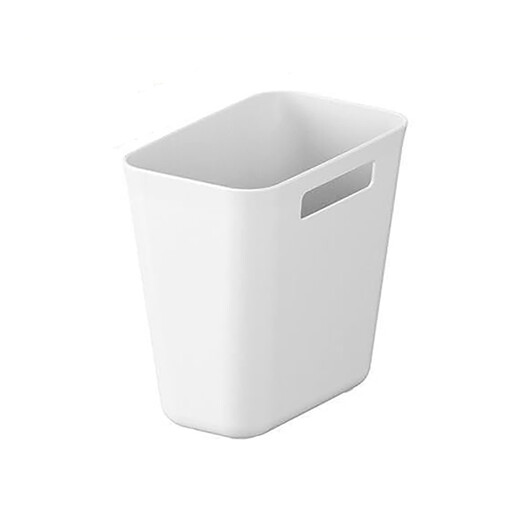
Why this choice: Ideal for those who are short on shelf space. These boxes utilise often-overlooked vertical space: inside a cupboard door, on the side of the fridge, or on a tiled wall.
This isn't just another bulky set, but a targeted solution that solves a specific space problem. It helps you avoid the useless "all-in-one" trap.
Drill-free installation and versatility for storing small items (spices, packets, etc.) in the kitchen or bathroom.
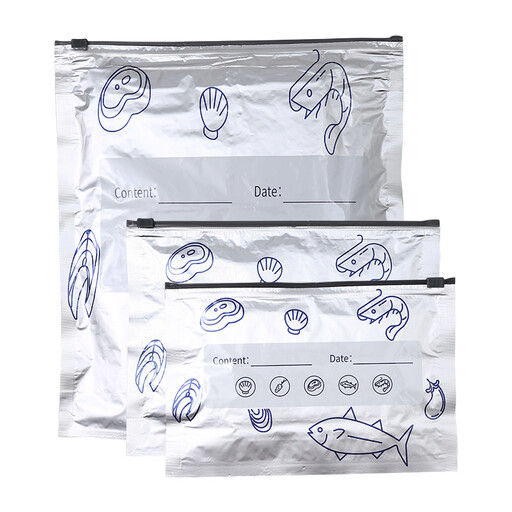
Why this choice: Perfect for those who buy in bulk or freeze sensitive foods like meat and fish. These reusable freezer bags are designed for maximum protection.
It avoids the "false airtightness" trap. Its multi-layer composite material (PET/AL/PE) is a true barrier against light and air, while the zip closure ensures a far superior seal than simple press-seal bags.
Protection against oxidation and odours, reusable, and features a writing area for easy date tracking.
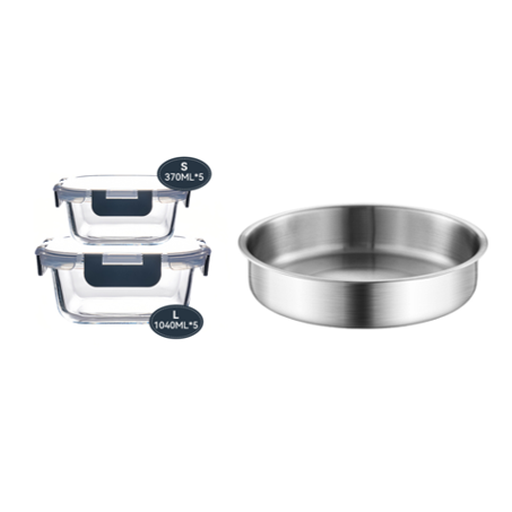
Why this choice: This set is designed for those who prep their meals for the week and demand versatility and durability. It combines glass food storage containers and a sturdy plate.
It tackles the "unsuitable materials" pitfall head-on. The borosilicate glass doesn't stain and is oven-safe, while the clip-on lids guarantee a reliable seal, a far cry from the unpredictable performance of low-end plastics.
A complete system: versatile glass containers (freezer, oven, microwave) and an unbreakable stainless steel plate for everyday use.
We have curated a complete selection of products that meet our quality and safety criteria.
For glass and stainless steel, a standard wash with hot, soapy water is usually enough. If a stubborn odour persists in a plastic container, let it soak in a mixture of water and baking soda. The best practice is to always remove the silicone seals from the lids to wash them separately, and let all parts air-dry completely before storing them.
Only containers made of borosilicate glass are designed for this purpose. This type of glass has low thermal expansion, which allows it to withstand extreme temperature shocks without shattering. Ordinary glass (soda-lime) would shatter under such stress. Always check for this specification before you buy.
Their longevity depends on the material's quality and how they are maintained. A well-made composite bag can be reused dozens of times. To maximise its lifespan, wash it by hand with a mild detergent, rinse it thoroughly, and make sure it is completely dry before storing. Avoid storing sharp objects (bones, fish bones) inside and replace the bag as soon as you notice any deterioration of the bag or its closure.