
Livraison le jour même ou le lendemain

Qualité garantie

Débloquez vos offres de bienvenue: Livraison GRATUITE | Jusqu'à -80 % | 30 jours d'essai gratuits à JoyPlus
Téléchargez l'application
Choosing a kitchen knife set can be a daunting task. Between tempting marketing promises and the sheer number of options available, it's easy to end up with blades that dull in a few weeks or knives that are simply unsuitable for daily use. As a product expert at Joybuy, my mission is to guide you. Let's break down the common pitfalls to help you make an informed choice.
To avoid these pitfalls, simply focus on a few key technical points. These are what make all the difference in the quality and durability of your future kitchen knife set.
The blade is the core of the knife. Most kitchen knives are made of stainless steel, an alloy that offers an excellent compromise between edge retention, corrosion resistance, and ease of maintenance. Certain steels, like 40Cr13, are known for their balance of hardness and rust resistance, making them a reliable choice for everyday use. The key takeaway: don't just trust the "stainless" label; prefer brands that are transparent about the type of steel they use.
There's no need to aim for a dozen knives for a good starter set. Three to five well-chosen pieces are far more effective:
Opting for a knife set with a block or a kitchen case is a real bonus for storage and safety. But be warned, the quality of the blades should always take precedence over the container.
The handle must ensure a secure and comfortable grip. The most common materials are:
Also, remember to check the knife's balance. It should feel natural in your hand, without tipping forward or backward.
To help you visualise these criteria, here are a few options suited to different types of users.
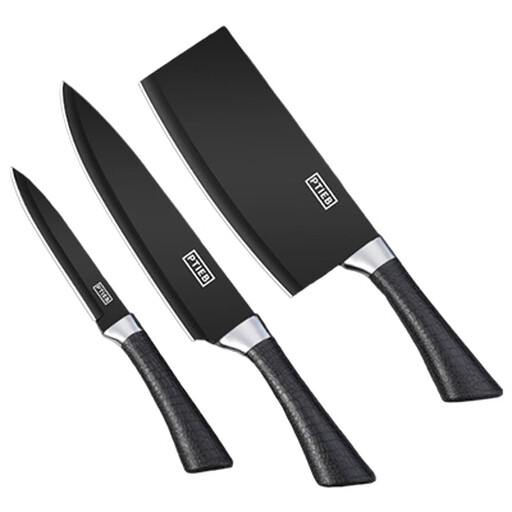
Who is it for? A starter set that gets straight to the point: it covers the essential needs (slicing, peeling, dicing) without cluttering your drawers. Ideal for a first kitchen or for simple, effective daily use.
By focusing on the three most useful blades, it avoids the trap of the useless XXL set. The bonus: each knife has its own sheath, protecting the blades without requiring a bulky block.
A compact and functional trio. Each knife comes with its own sheath for safe storage, even in a drawer.
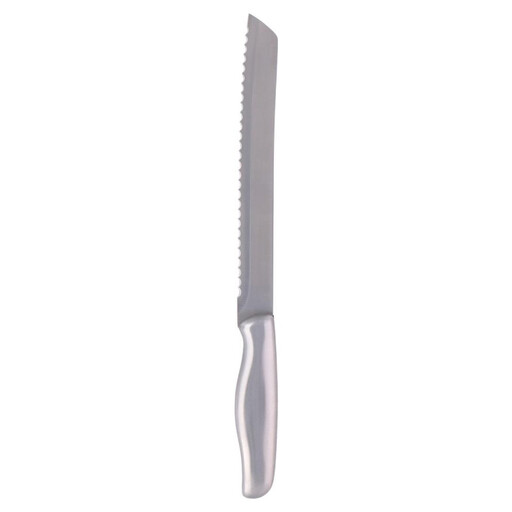
Who is it for? Perfect for those who enjoy variety in the kitchen and entertaining guests. This set includes steak knives, which are very practical for dinners, in addition to a complete range of prep tools.
Although generous in size, this set remains perfectly organised thanks to its wooden knife block, which ensures order and safety. The selection is coherent, covering both preparation and table service.
An ultra-complete set with its own storage block, covering all needs from prep to serving. All in a harmonious design.
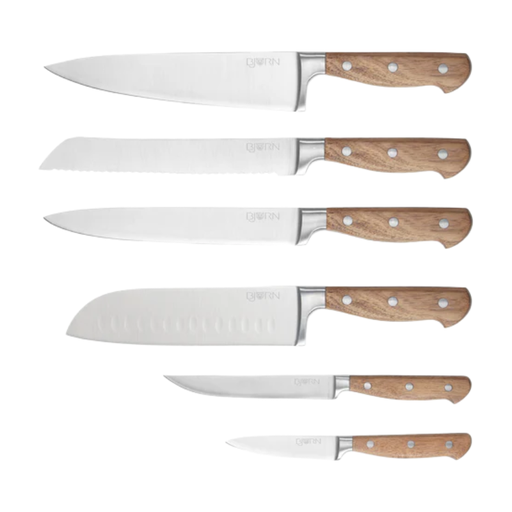
Who is it for? For those seeking the perfect balance between modern aesthetics and flawless functionality. Its sleek design and ergonomic handles will find a natural home in any contemporary kitchen.
This set focuses on 6 essential knives and skips the superfluous items. Its ergonomic polypropylene handles are designed for an optimal grip, combining style and substance.
High-quality stainless steel blades for a long-lasting edge, and a modern design that enhances any countertop.
We have curated a complete list of products that meet our strict selection criteria and current safety standards.
Even if the label says dishwasher-safe, hand washing is still the best way to preserve the blade's edge and the handle. Washing with warm, soapy water followed by immediate drying is ideal. Remember to sharpen them regularly with a honing steel or a suitable sharpener. Finally, to protect the blades, store them in their block, on a magnetic strip, or in their sheaths.
It's an option we highly recommend, for two reasons: safety and the longevity of the blades. A block prevents knives from banging against each other in a drawer (which damages and dulls them) and drastically reduces the risk of cutting yourself while rummaging through them. A magnetic wall strip is an excellent alternative if your countertop is already crowded.
For home use, stainless steel remains the sensible choice. It is durable, resists rust well, and is hassle-free to maintain. Carbon steel often offers a superior edge, but it is susceptible to oxidation and requires meticulous care. Ceramic, on the other hand, is incredibly sharp and lightweight, but its fragility makes it prone to chipping or breaking on impact. For the vast majority of cooks, a good-quality stainless steel set represents the best possible balance.