
Livraison le jour même ou le lendemain

Qualité garantie

Débloquez vos offres de bienvenue: Livraison GRATUITE | Jusqu'à -80 % | 30 jours d'essai gratuits à JoyPlus
Téléchargez l'application
In the kitchen, a good knife isn't just a tool?: it's an extension of your hand. Yet, faced with a jungle of options, choosing the right model can be a daunting task. Between marketing promises of revolutionary steels and oversized knife sets, it's easy to make a purchase you'll regret. Our goal isn't to sell you the "perfect" knife, but to help you find the one that truly fits your habits, your budget, and will serve you faithfully for years to come.
Let's review the most common pitfalls and the essential criteria for making an informed choice.
For a long-lasting investment, focus on the objective features that truly make a difference.
The choice of blade should be dictated by your most common food preparations.
A knife's steel is an alloy of iron and carbon, with other elements added to modify its properties. For a stainless steel knife, two factors are paramount?:
The tang is the part of the blade that extends into the handle. A full-tang construction (where the tang extends the full length and width of the handle) is a sign of robustness and balance. The handle, meanwhile, must offer a secure and comfortable grip, even with wet hands. Materials range from traditional wood to modern composites or stainless steel, each with its own advantages in terms of aesthetics, hygiene, and durability.
To illustrate how these criteria translate in practice, here are a few models suited for specific needs.
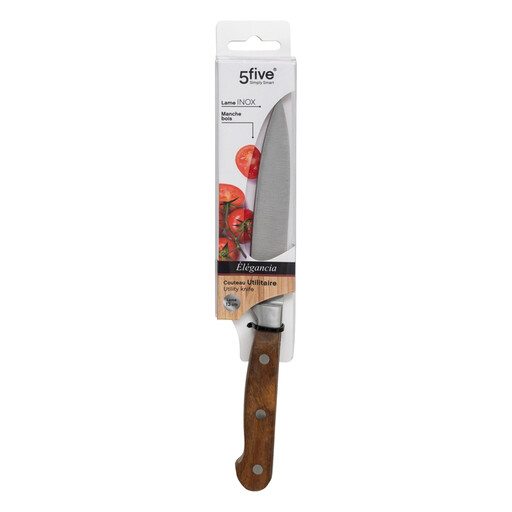
Why this choice? Ideal for anyone seeking a reliable tool for small, everyday cutting tasks: peeling fruit, trimming vegetables, or making a sandwich. Its compact size and simplicity make it a practical and easy-to-handle knife.
This knife doesn't pretend to be a do-it-all tool. It focuses on a specific function with proven materials (stainless steel), thus avoiding the trap of oversold and unreliable gadgets.
Versatile 13 cm blade for high precision. Its simple and functional design is suitable for both home and professional use.
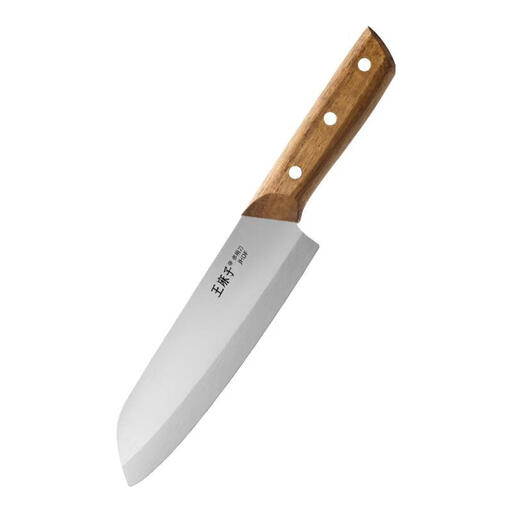
Why this choice? The home cook who loves variety will appreciate the versatility of the Santoku. Its shape is perfect for finely slicing vegetables or fish, offering an effective alternative to the traditional chef's knife.
This is a specialised yet versatile knife that meets a real need without falling into the oversized set trap. It prioritises the functionality of a proven blade and the ergonomics of a natural wood handle.
Versatile 400-series stainless steel Santoku blade. The acacia wood handle provides a comfortable grip and a pleasing aesthetic touch.
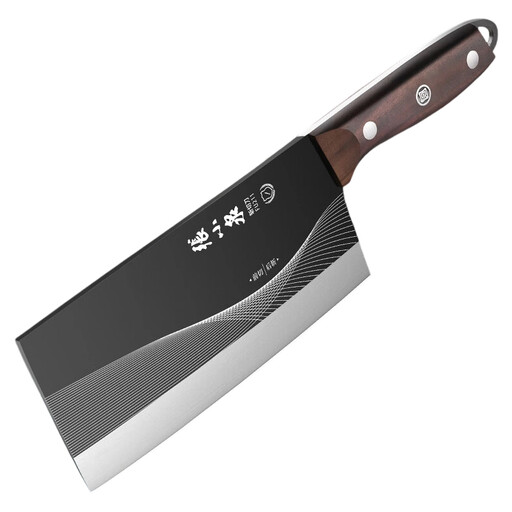
Why this choice? For those who regularly prepare whole poultry, pork ribs, or other bone-in cuts. This type of knife is essential for working with meat without risking damage to your other, more delicate blades.
This cleaver is the antithesis of a gimmick. It's a specialised tool designed for a task that other knives can't handle. It avoids the "do-it-all" knife trap that fails when faced with heavy-duty tasks.
Thick, heavy blade specifically designed for cutting through bone. Its robustness ensures safety and efficiency for heavy-duty work.
Discover our full selection of products that meet our quality criteria and current standards.
Even stainless steel will last longer with proper care. Preferably, wash it by hand with a soft sponge, then dry it immediately to prevent water spots or corrosion. Avoid the dishwasher, as harsh detergents and impacts can damage the blade's edge and the handle. For storage, a knife block, a magnetic strip, or a kitchen utensil holder with separate compartments are excellent solutions for protecting the blade.
It all depends on your cutting style. The chef's knife, with its curved blade, is designed for a rocking motion, ideal for rapid chopping. The Santoku knife has a straighter blade and a flatter profile, making it better suited for a vertical chopping motion, perfect for clean, precise slices. The best way to decide is to hold both in your hand to see which one feels more comfortable for you.
A knife set can be a cost-effective way to get started. However, honestly evaluate the pieces it contains. A basic set including a chef's knife, a utility knife, and a bread knife is often more than enough. For more specific needs, like a sommelier corkscrew or a stainless steel cutlery set, it is often better to buy them individually to ensure their quality.