
Livraison le jour même ou le lendemain

Qualité garantie

Débloquez vos offres de bienvenue: Livraison GRATUITE | Jusqu'à -80 % | 30 jours d'essai gratuits à JoyPlus
Téléchargez l'application
A good kitchen knife should feel like an extension of your hand. Yet, in the jungle of options, it's easy to fall for a deal that seems too good to be true, only to have it end up at the bottom of a drawer. As a product expert at Joybuy, my mission is to help you cut through the marketing noise and focus on what truly matters: efficiency and durability.
Before you take the plunge, here are the 3 most common mistakes to avoid when buying a kitchen knife or knife set.
knife block for just a few dozen euros seems like a steal. In reality, these sets often hide knives with redundant uses or of poor quality, and you'll only ever really use two or three of them. The result: a blade that won't hold an edge and a handle that visibly deteriorates.stainless steel knife depends on its composition (the grade of the steel), which determines its edge retention, corrosion resistance, and ease of sharpening.To make the right choice, a few technical criteria are all you need to separate the wheat from the chaff.
Steel is the core element. You don't need to be a metallurgist; here's what you need to know:
There's no need to overcrowd your drawers. Three or four well-chosen knives are enough to cover 95% of everyday needs:
steak knife, a kitchen cleaver for bones, or a sturdy pair of kitchen shears are there for specific missions and prevent you from damaging your main blades.To put theory into practice, here is our selection that caters to different profiles, all while checking the quality criteria boxes we've just discussed.
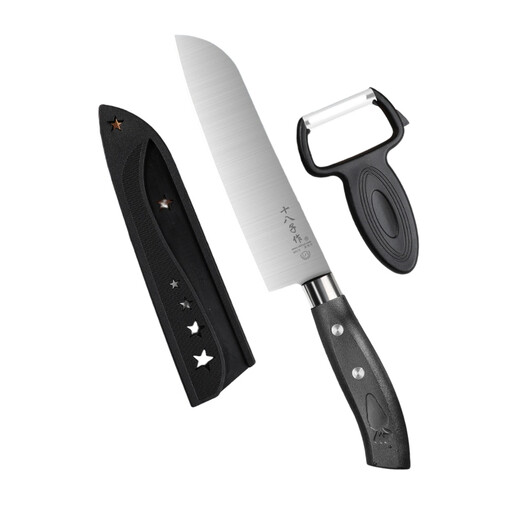
Why we love it: Perfect for a first apartment or for those who want to get straight to the point. This duo covers the basic tasks: cutting vegetables with the multipurpose knife and peeling with the peeler. A simple, effective, and hassle-free approach.
It avoids the "catch-all set" trap by focusing on two genuinely useful tools. No gadgets, just the essentials to get you started in the kitchen.
A budget-friendly and well-designed duo that includes a protective sheath for the blade. A welcome bonus for safety and the knife's longevity.
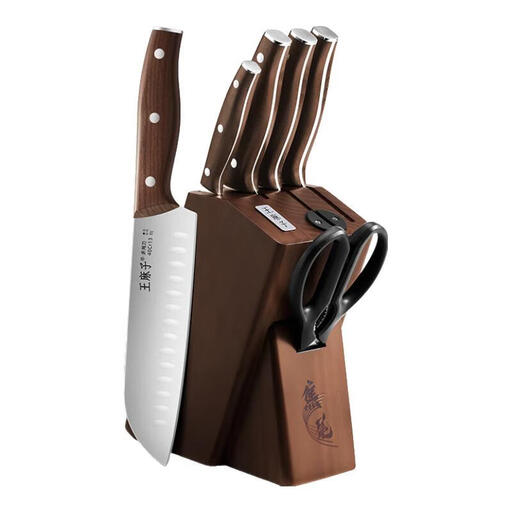
Why we love it: For those who take cooking seriously and are looking for a complete, coherent set. This `kitchen knife set` includes the essentials as well as a `kitchen cleaver` for tougher jobs, all presented in an elegant wooden `knife block`.
It sidesteps the "marketing steel" trap by clearly stating the grade used: a 40Cr13 steel, a reliable and proven choice. Each knife has a clear function—this isn't a filler set, but a well-thought-out arsenal.
Adding the cleaver and kitchen shears to the essential knives makes the set incredibly versatile. The beech wood handles offer a natural and comfortable grip.
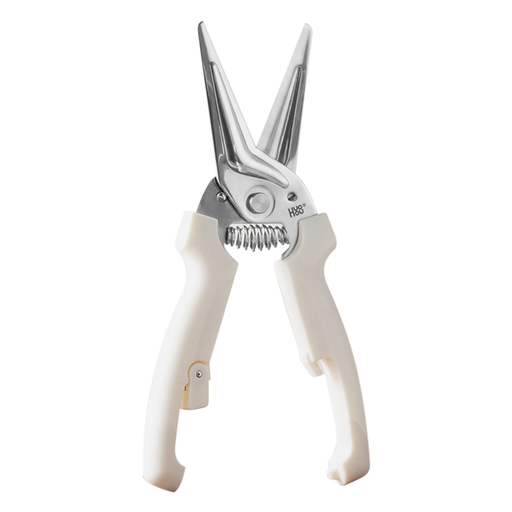
Why we love it: Essential for regularly breaking down poultry or pork ribs. Using dedicated `kitchen shears` prevents you from ruining the edge of your chef's knife. It's safer, cleaner, and far more effective for tackling bones and cartilage.
This highly specialized tool helps you avoid the classic mistake: using the wrong knife for the wrong job (and damaging it). It's built for power, with a robust 3Cr13 steel and a spring-loaded mechanism that reduces effort.
The return spring reduces hand fatigue, while the safety latch ensures risk-free storage. It's a tool designed for efficiency and peace of mind.
From cheese knives to steak knives, explore our complete selection to perfect your culinary toolkit.
Maintenance is simple, but it makes all the difference. The golden rule: wash your knife by hand with warm, soapy water immediately after use. Dry it thoroughly with a soft cloth before storing. The dishwasher is your knives' public enemy number one: the detergents are corrosive, impacts can damage the blade's edge, and the intense heat weakens the handle, especially if it's made of wood.
It depends on how often you use them and the quality of the steel. For home use, a few passes on a honing steel before each major cutting session (or once a week) is enough to maintain the edge. A more thorough sharpening, on a whetstone or with a sharpener, is needed every 2 to 6 months, as soon as you feel the blade isn't "biting" into food as it should.
It's not mandatory, but it's very smart. A knife block protects the blades from impacts and preserves their sharpness. It also keeps your knives neatly organized, safe, and within easy reach. No space on the countertop? A magnetic wall strip is an excellent alternative. The worst solution? Tossing them loose in a drawer, where they knock against each other and get damaged.