
Livraison le jour même ou le lendemain

Qualité garantie

Débloquez vos offres de bienvenue: Livraison GRATUITE | Jusqu'à -80 % | 30 jours d'essai gratuits à JoyPlus
Téléchargez l'application
A good kitchen knife can transform your daily cooking experience. However, with the overwhelming variety of models available, it's easy to fall into common traps and make a purchase you'll immediately regret. An unsuitable knife isn't just inefficient: it can also be dangerous. Before you buy, it's best to know the most common mistakes to ensure you avoid them.
The 3 pitfalls to avoid when buying a kitchen knife:
To avoid buying blind, focus on a few objective technical characteristics. These are what determine the performance and durability of your future kitchen utensils.
The blade is the heart of the knife. Most models are made of stainless steel, but not all stainless steels are created equal—far from it. The steel's composition directly affects its edge retention, corrosion resistance, and ease of sharpening.
In the all-purpose knife category, two main blade shapes compete:
The way the blade extends into the handle (the "tang") is an excellent indicator of sturdiness. A full tang construction (where the blade extends through the full length and width of the handle) is a guarantee of balance and rock-solid durability. Also, remember to check the shape and material of the handle to ensure a secure and comfortable grip, even with wet hands.
To help you see more clearly, here are a few models that tick all the boxes, each suited to a different type of user.
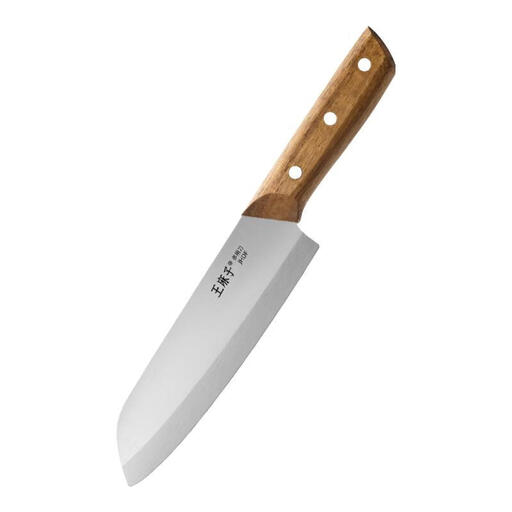
Why we chose it: Perfect for those who want a single, good, all-purpose knife for daily tasks. Its santoku knife shape makes it surprisingly easy to mince vegetables, slice meat, and prepare fish.
Instead of cluttering your kitchen with a superfluous set, this knife focuses on the essentials: a functional 400-series stainless steel blade and a comfortable wooden handle. It prioritises performance over appearance.
Its versatility for chopping, slicing, and mincing. The acacia wood handle provides a natural and very pleasant grip.
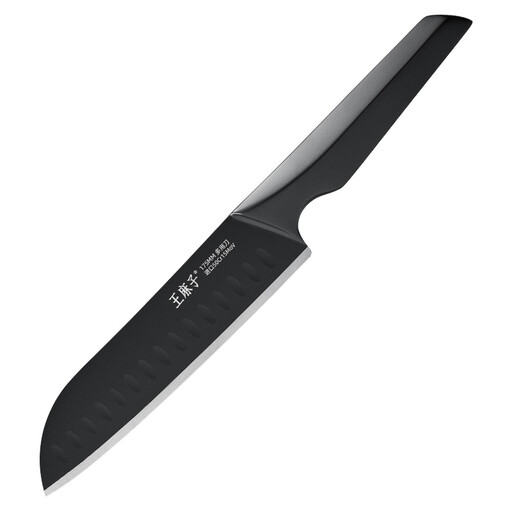
Why we chose it: For home cooks who spend a lot of time in the kitchen and want to take their skills to the next level with a more effective and durable edge. Its superior quality steel allows for incredibly precise cuts.
Its value lies in the quality of its 50Cr15MoV steel blade, rather than a flashy design. It bets everything on cutting performance and edge retention.
A lasting, razor-sharp edge, thanks to the high-carbon steel. The 430 stainless steel handle is a guarantee of impeccable hygiene and longevity.
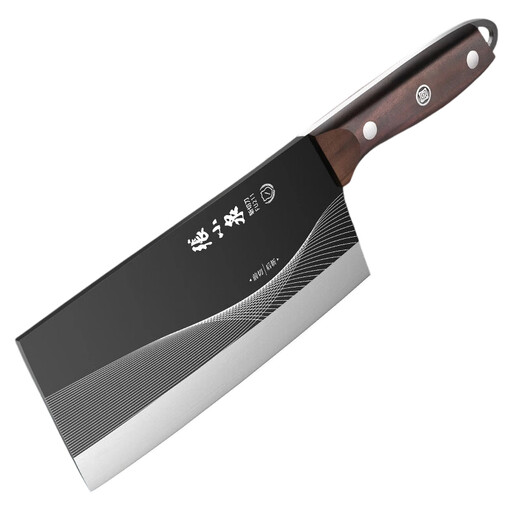
Why we chose it: For those who need to tackle the toughest jobs, like cutting through bones or poultry carcasses. This is where a classic chef's knife would give up.
It doesn't pretend to be a do-it-all knife. It's a specialised tool with a thick, heavy blade built for brute force and impact, where an all-purpose knife would fail.
Thick, sturdy blade for maximum chopping power on bones and tough meats. Its heavy-duty construction ensures safe use.
Discover our full selection of knives that meet our quality charter and current safety standards.
To preserve your knife's edge and appearance, a few simple steps are all it takes. Wash it by hand with a soft sponge and dish soap right after use. Avoid the dishwasher: its harsh detergents and the potential for impact can damage the blade and handle. Dry it immediately with a soft cloth to prevent rust spots. Finally, store it in a knife block, on a magnetic strip, or in a sheath to protect its edge.
Rarely. A set can be worthwhile if it consists of a few essential, well-made pieces (a chef's knife, a paring knife, a bread knife). However, blocks containing a dozen specialised knives are often a bad idea for the average user, as steel quality is sacrificed for quantity. Our advice: build your own collection over time by purchasing quality knives individually.
The main difference lies in their blade shape and, consequently, the cutting technique. The chef's knife has a long, curved blade, ideal for a rocking motion on the cutting board. The Santoku knife has a shorter, wider, and straighter blade, which promotes a direct, top-to-bottom chopping motion. Ultimately, the choice between the two is primarily a matter of personal feel and habit.