
Livraison le jour même ou le lendemain

Qualité garantie

Débloquez vos offres de bienvenue: Livraison GRATUITE | Jusqu'à -80 % | 30 jours d'essai gratuits à JoyPlus
Téléchargez l'application
The centrepiece of our kitchens, the central island is no longer just a work surface?: it's where everything happens, from culinary prep to drinks with friends. Choosing the right kitchen island pendant light is therefore crucial, as it must marry aesthetics with practicality. Far more than a simple light source, the right fixture sculpts the atmosphere, defines the room's style, and establishes itself as a true decorative statement piece.
But with a nearly endless array of options, how do you make the right choice?? This guide is here to shed some light on the subject (pun intended!) and help you find that perfect fixture that will integrate seamlessly into your kitchen by breaking down the essential criteria?: materials, dimensions, and features.
Before you jump into our selection, let's review a few key points to ensure a successful purchase.
The size of your pendant light should be proportional to your island. A good rule of thumb?: the fixture should not exceed two-thirds of your island's length for a balanced look.
Also, consider the height?: aim for a distance of 75 to 90?cm (30 to 36 inches) between the bottom of the fixture and the countertop. This is ideal for avoiding glare, preventing head bumps, and providing effective light for cooking.
The choice of materials and design will give your kitchen its soul.
Island lighting needs to be versatile. You need a light that is bright enough for cooking, but also a softer ambient light for moments of relaxation.
The integrated LED pendant is the ultimate modern and energy-efficient solution. Many models include practical features like a dimmer, which allows you to adjust the brightness with a simple gesture to suit your activities. If you prefer traditional bulbs, check the fixture's compatibility with dimmable LED bulbs and a suitable wall switch.
We've spotted three models that stand out from the crowd, each with its own unique style, materials, and features.
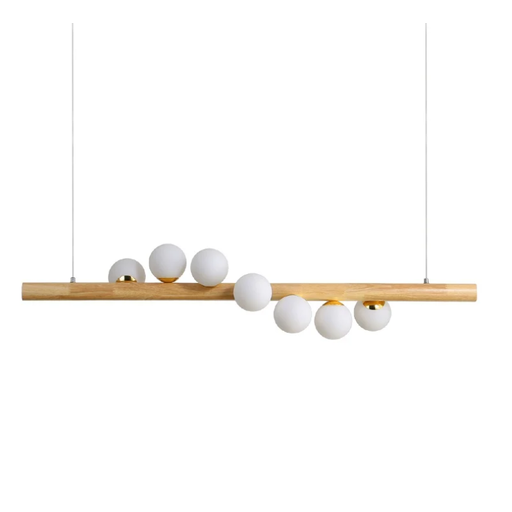
Why It Stands Out This is a true statement piece. Its structure combines a natural wood beam with seven white glass globes arranged in a spiral. The result?? A sculptural and airy design that catches the eye without ever overwhelming the space.
Key Features
Who Is It For?? For those who want a bold modern chandelier destined to be the star of a large kitchen or dining room. Its linear format is perfectly suited for long islands.
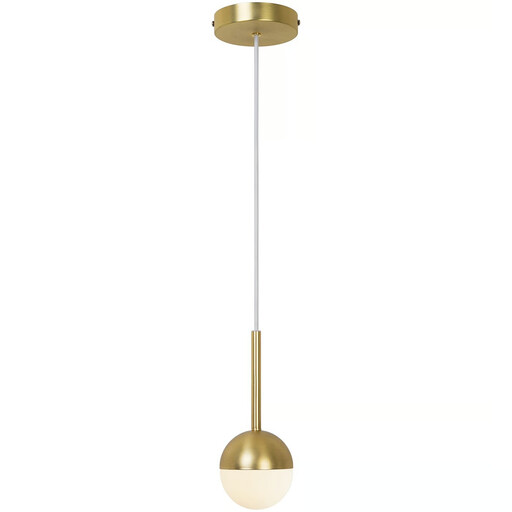
Why It Stands Out The CONTINA pendant embodies understated, Art Deco-inspired elegance. The combination of brushed brass and a mouth-blown opal glass globe gives it a precious and timeless character.
Key Features
Who Is It For?? For lovers of designer pendant lighting who appreciate refined details and noble materials. It fits beautifully in interiors looking to add a touch of elegance without being ostentatious.
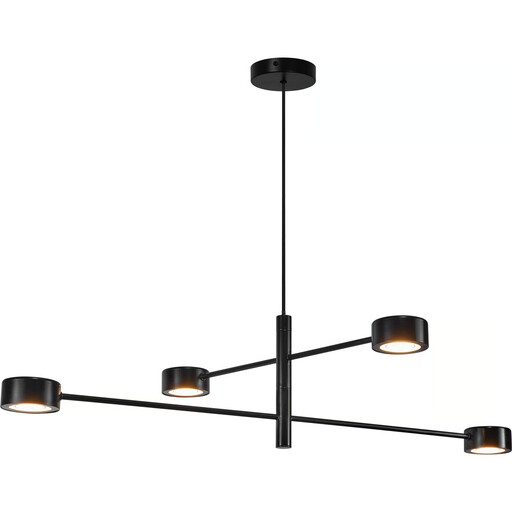
Why It Stands Out The CLYDE pendant perfectly blends Scandinavian minimalism with technology. Its secret weapon?? The integrated Moodmaker function, which allows you to vary the light intensity across three levels, directly from your standard wall switch.
Key Features
Who Is It For?? For those who prioritise functionality, technology, and understated design. It's the perfect solution for illuminating a worktop or island while maintaining a sense of space and lightness.
Our selection gives you a glimpse of three very different approaches. Of course, the possibilities are endless, as every kitchen and every design project is unique.
To explore a wider range of styles, materials, and budgets, feel free to browse our complete collection of pendant lights.
As a rule of thumb, leave a space of 75 to 90 centimetres (30 to 36 inches) between the bottom of the fixture and the island's surface. This height is ideal for properly illuminating the worktop without blocking the view, whether you are sitting or standing.
Although the two are often confused, the distinction is quite simple. A pendant light is a fixture suspended by a single cord or rod, with one or more grouped bulbs. A modern chandelier, on the other hand, is often more elaborate, with multiple arms extending from a central point to hold different bulbs.
Absolutely. For any fixture that connects directly to your electrical system (known as a hardwired installation), the services of a qualified electrician are essential. This guarantees a safe installation that is compliant with local electrical codes and poses no risk of accidents.