
Livraison le jour même ou le lendemain

Qualité garantie

Débloquez vos offres de bienvenue: Livraison GRATUITE | Jusqu'à -80 % | 30 jours d'essai gratuits à JoyPlus
Téléchargez l'application
Buying kitchen and homeware seems straightforward… until the flaws start to show: a coating that sticks, crockery that’s too fragile, mugs that won’t stack, or a space heater that sends your bills through the roof. Product listings often highlight a colour, a wattage or a promise of durability, without always spelling out the limitations of use.
Before you place an order, three pitfalls are worth watching out for:
For ceramic kitchen utensils, start by checking the base material and the coating. A frying pan made from aluminium with a ceramic coating is not a fully ceramic utensil – the heating, weight and care requirements are all different.
Claims of PFAS, PTFE or PFOA-free tell you about the stated composition of the coating, but they don’t let you off the hook when it comes to proper use. Use suitable utensils, avoid thermal shock, and stick to the temperatures recommended by the manufacturer. For non-stick frying pans and saucepans, heating them up gradually and washing them gently will help preserve the surface.
For ceramic tableware, look into the glaze, its resistance to chipping, and any stated absence of lead or cadmium. This information is especially useful when the crockery is used daily by the whole family.
A 27 cm diameter plate offers a generous surface for a main course, but it will also take up more room in the dishwasher and your cupboards. For plates and bowls, compare the stated dimensions with your storage space and your usual portion sizes.
Capacity is just as important for teacups and mugs:
Ramekins with lids are handy for preparing, storing and reheating portions. Bear in mind, though, that the porcelain dish and its plastic lid aren’t interchangeable – the lids may need hand washing and special care in the microwave.
Before choosing a baking dish, check its compatibility with the oven, freezer, dishwasher and microwave. This indication does not mean it can be used on a hob – a ceramic dish is generally not designed to go directly on a flame.
For an electric space heater, the wattage alone isn’t enough to estimate running costs. As a guide, a 1,500 W appliance can use up to 1.5 kWh per hour when running at full power. A thermostat, an eco mode and a timer help limit how long it runs, without guaranteeing a precise saving.
Having overheat protection and a tip-over switch is a real plus in everyday use. Always place a ceramic fan heater on a stable, clear surface, away from curtains, water and fabrics.
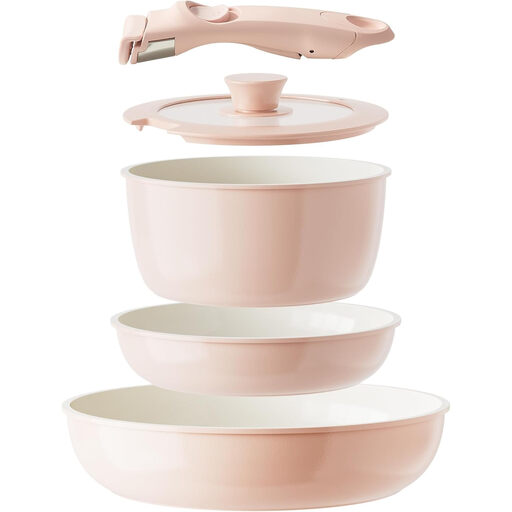
Why this suits this profile: This set includes a saucepan, two frying pans, a lid and a detachable handle – enough to kit out a first kitchen without piling up utensils. Its stackable design fits neatly into a studio flat or a small cupboard.
The detachable handle and stackable pieces reduce clutter. The listing states compatibility with gas, electric and induction hobs, as well as dishwasher washing.
Ceramic coating stated as PFAS, PTFE and PFOA-free; 5-piece set with lid and detachable handle.
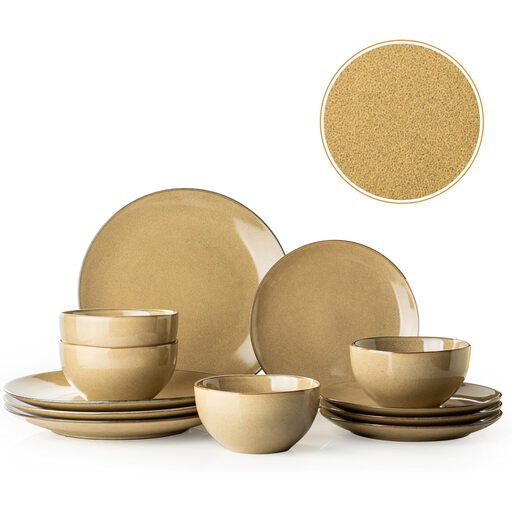
Why this suits this profile: This four-person dinner set works just as well for everyday meals as it does for more polished table settings. It includes four dinner plates, four salad plates and four bowls.
The dimensions and composition are clearly detailed. The listing also states that the crockery is dishwasher and microwave safe, making everyday care simple.
12-piece set; ceramic stated as lead and cadmium-free; vitrified glaze presented as scratch-resistant.
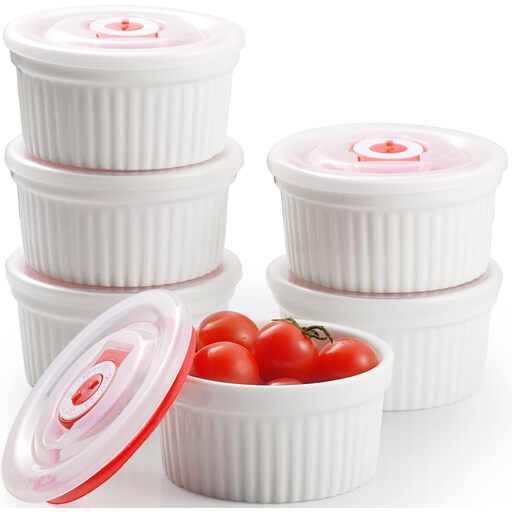
Why this suits this profile: For preparing desserts, sauces or portions in advance, this set offers six porcelain ramekins and six lids fitted with a date dial.
The listing clearly distinguishes the ramekin from the lid – the dishes are oven-safe, while the lids require appropriate use and care.
Six portions of approximately 237 ml each; stated compatibility with oven, microwave, freezer and dishwasher for the ramekins.

Why this suits this profile: Compact in size, this space heater can fit into an office, bedroom or living area when you need to warm up a specific spot quickly.
The adjustable thermostat from 5 to 35 °C, ECO mode and 24-hour timer give you better control over heating duration than a model without settings.
Stated power of 1,800 W; oscillation, remote control, overheat protection and tip-over shut-off.
We’ve put together a comprehensive, real-time updated selection of products that meet these exacting criteria, while also taking European safety regulations into account.
No. Check the product listing and the marking on each piece. Metallic decorations, certain lids and any cracked items may need special care. Even when compatibility is stated, avoid large temperature changes.
Use a moderate heat, wooden or silicone utensils, and a non-abrasive sponge. Let the pan cool down before washing it, and avoid stacking it directly with items that could scratch the coating. A heavily damaged non-stick surface should be replaced.
It depends on its wattage, how long it runs and the thermostat setting. A 1,800 W appliance running at full power for one hour uses up to 1.8 kWh. To keep consumption down, only heat the room you’re in, use the timer, and never leave the appliance running unattended.