
Livraison le jour même ou le lendemain

Qualité garantie

Débloquez vos offres de bienvenue: Livraison GRATUITE | Jusqu'à -80 % | 30 jours d'essai gratuits à JoyPlus
Téléchargez l'application
A kitchen grater can turn a piece of Parmesan into a fine powder, remove the zest from a lemon or prepare carrots in just a few strokes. However, not every model is suited to the same foods. A grater that is too fine for vegetables, a handle that slips or a slicer that is awkward to clean can quickly make the utensil impractical for everyday use.
Before buying, it is worth separating your actual needs from marketing claims. Here are the most common pitfalls and the key features to consider when choosing a cheese grater, Microplane grater or slicer for your kitchen.
A fine grater is ideal for citrus zest, nutmeg, garlic, ginger or Parmesan. However, it produces a texture that is not well suited to vegetable gratins or salads. Conversely, an extra-coarse grater is better for potatoes, carrots, beetroot and hard cheeses, but it will not replace a zester.
A surface marketed as ‘multifunctional’ is only useful if each side matches the tasks you regularly carry out. Otherwise, the utensil takes up space without offering much extra convenience.
Very sharp blades alone do not guarantee comfortable use. Without a non-slip base, the grater may move on a damp or uneven worktop. A handle that is too narrow or lacks a comfortable coating can also increase fatigue when preparing large quantities of food.
Check for an ergonomic handle, a stable support and, where possible, a protective cover for storage.
A dishwasher makes cleaning easier, but it does not solve everything. Food residue can remain trapped between the blades, while wooden components must be washed by hand and dried immediately. For a stainless-steel grater, also check whether the gaps are easy to access and whether the utensil can be dried completely after washing.
Stainless steel generally withstands moisture and acidic foods better than unprotected metal. It should nevertheless be rinsed and dried after every use. Photo-etched blades, found on some Microplane models, are designed to produce an even cut without completely turning the food into a purée. This is particularly useful for zest, spices and hard cheeses.
The shape of the blade matters just as much as the material:
The blades of a grater or slicer are sharp. Choose a non-slip base, a pusher for small pieces of food and a grip area positioned a safe distance from the cutting surface. Keep the utensil out of children’s reach and use the supplied guard where one is provided.
For an electric slicer, check in particular for a safety pusher, suction or non-slip feet, and a system that allows the thickness setting to be returned to zero after use.
A long grater provides a comfortable working surface, but it requires a sufficiently deep drawer. A compact grater is easier to store, which can make a real difference in a small French kitchen, although its working surface is often narrower.
For an electric slicer, also consider its footprint, weight, removable carriage and operating instructions. The KitchenCook SLICE I model, for example, specifies a thickness range of 0 to 15 mm, a 190 mm serrated blade and 150 W of power. Its maximum continuous operating time is stated as 10 minutes, followed by a cooling period.
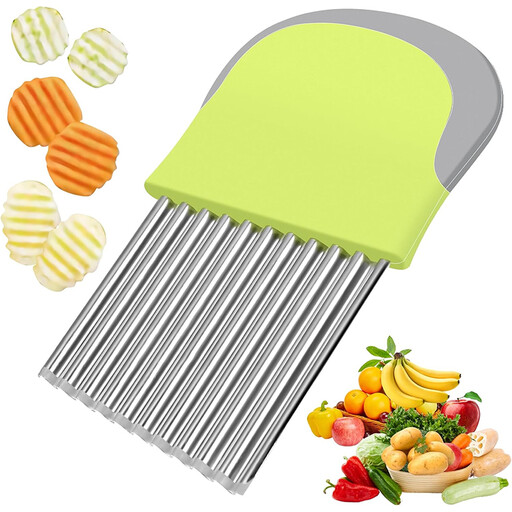
Why this choice suits this profile : This model is designed for cutting potatoes and chips. Its description mentions a green non-slip handle. It is suitable for anyone looking to get started with a simple, specialised manual tool.
It saves you paying for several surfaces if your main requirement is preparing potatoes. The product name presents the 430 material as stainless steel.
A specialised manual tool, a stated non-slip handle and a 430 stainless-steel surface.
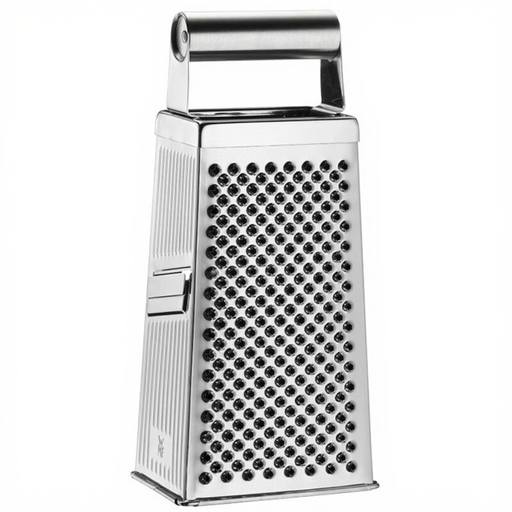
Why this choice suits this profile : This four-sided multifunctional grater is aimed at kitchens where cheese, vegetables, fruit, chocolate or nuts are prepared regularly.
The four surfaces are clearly intended for coarse grating, fine grating, slices and ribbons. You can therefore identify the function of each side before buying.
Stated Cromargan stainless-steel construction, four functions and stated dishwasher compatibility.
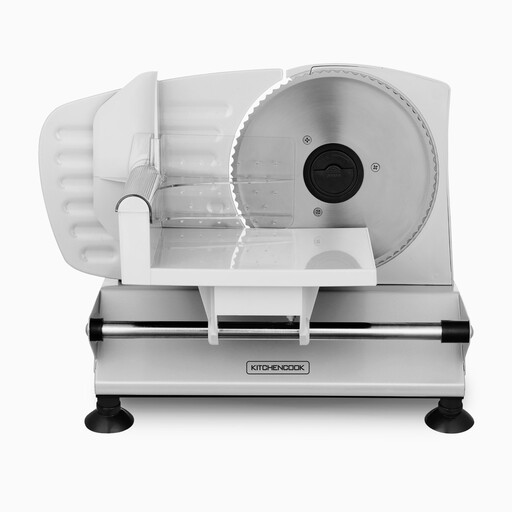
Why this choice suits this profile : This electric slicer is suitable for people who regularly prepare bread, charcuterie, cheese or vegetables and want adjustable thickness.
The 0 to 15 mm range and adjustment dial give you precise control over slice thickness. The safety pusher and non-slip feet address the main safety considerations.
A 190 mm serrated stainless-steel blade, a 150 W motor, a removable carriage and a multilingual manual, including French.
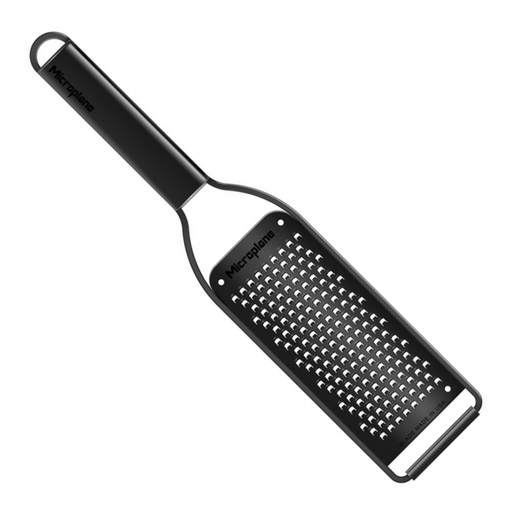
Why this choice suits this profile : Its slim design is ideal for people who regularly use a zester for citrus fruit, Parmesan, garlic, ginger or spices.
Its design is clearly focused on fine grating : it does not claim to replace a coarse grater or a mandoline for creating slices.
Fine stainless-steel blades, an ergonomic handle, a non-slip base and stated dishwasher-safe cleaning.
We have created a complete, real-time updated list of products that fully meet these strict selection criteria and European safety regulations.
A fine grater or a Microplane grater is generally suitable for these tasks. It produces light particles that are perfect for Parmesan, lemon, orange, nutmeg and ginger. To create thicker slices, it is better to choose a medium surface.
Not necessarily. It can combine several functions in a single format, but each side is designed for a specific texture. If you often prepare chips, even slices or large quantities of charcuterie, a dedicated slicer will probably be more suitable.
Its lifespan depends on how often it is used, how it is stored and how well it is maintained. Avoid frozen foods and bones, follow the operating limits of an electric slicer and replace the utensil if the blade, handle or base is damaged.