
Livraison le jour même ou le lendemain

Qualité garantie

Débloquez vos offres de bienvenue: Livraison GRATUITE | Jusqu'à -80 % | 30 jours d'essai gratuits à JoyPlus
Téléchargez l'application
There's a fine line between a great kitchen grater that elevates a recipe and a poor tool that turns prep into a nightmare. Who hasn't cursed at a grater that tears cheese, slips on the countertop, or has blades that dull after just three uses? Choosing the right model is about much more than just design.
As product experts at Joybuy, our mission is to help you see clearly. We've broken down the 3 most common pitfalls that lead to a disappointing purchase.
To avoid these traps, let's focus on the few technical details that make all the difference.
This is the heart of the tool. The durability and efficiency of your grater depend directly on it.
There's no one-size-fits-all blade. The choice of grit size (the size of the holes) should match your most frequent uses.
An effective grater must also be safe and comfortable. Look for an ergonomic handle, often coated with a "soft-touch" material for a secure and pleasant grip. A non-slip base made of rubber or silicone is just as crucial to prevent the grater from slipping during use.
To illustrate how these criteria translate in practice, here are a few models that suit distinct user profiles.
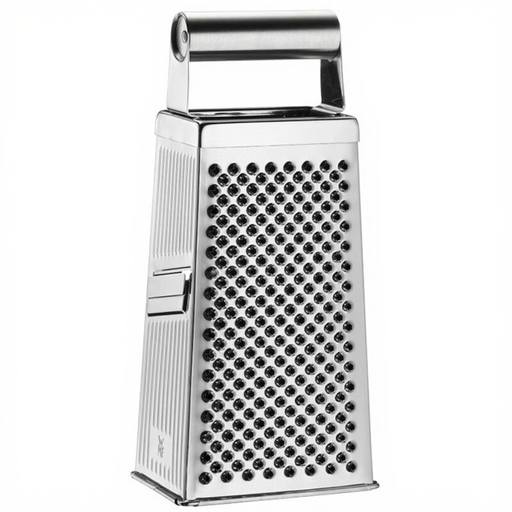
Why this model: For those who want a single, reliable tool for everyday tasks without cluttering drawers. This 4-sided grater brilliantly handles cheese, vegetables, and even fine slicing.
Unlike entry-level 4-sided graters, this model is forged from Cromargan stainless steel, a robust alloy that ensures long-lasting sharp blades and a stable structure. Say goodbye to the "mediocre versatility" trap!
Robust and stable construction; 4 genuinely effective sides (fine, medium, coarse, and slicer) in a single block.
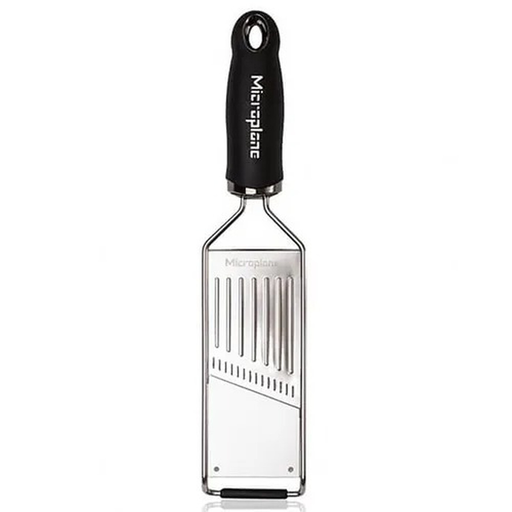
Why this model: The go-to tool for baking and mixology enthusiasts who demand absolutely fine zest without the bitterness of the white pith, or airy shavings of spices.
It bypasses the flaw of classic graters, which are often too coarse and damage zest. Its photo-etched blade is designed for this high-precision mission: it cuts cleanly without ever crushing.
Fine photo-etched blades for perfect, bitterness-free zest; ergonomic handle and stable end for total control.
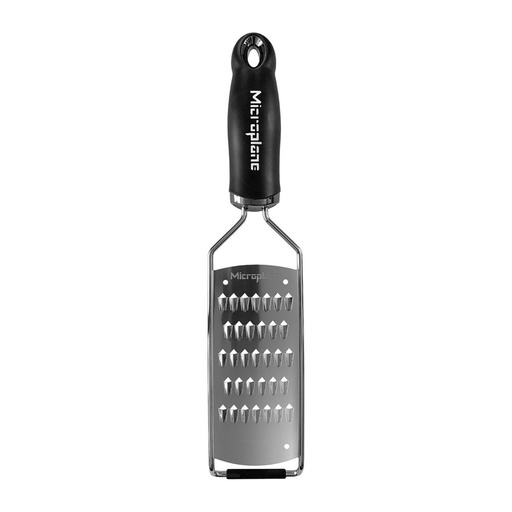
Why this model: Perfect for those who regularly prepare large salads, family-sized gratins, or need to grate a block of cheese in record time and without effort.
It ends the frustration of using a small grater for large volumes—a slow and exhausting task. Its extra-wide, ultra-sharp blade tackles food in seconds, while its non-slip base secures every movement.
Extra-coarse blade for impressive output on hard vegetables and cheeses; ergonomic and stable design built for heavy use.
We have compiled a complete selection of products that meet our demanding selection criteria and current safety standards.
Cleaning can quickly become a headache. Fortunately, most quality models are dishwasher-safe: it's the easiest and safest solution. For hand washing, use a dish brush and always scrub in the direction of the blades, never across them. For stubborn residue (like melted cheese), let the grater soak for a few minutes in hot, soapy water before brushing.
The fundamental difference lies in the blades. Classic graters have stamped blades (formed by pressing metal). Microplane-style graters use a chemical photo-etching process to create incredibly fine and sharp blades, worthy of a scalpel. The result? A perfectly clean cut that doesn't tear the food's fibers—a noticeable difference on citrus zest or Parmesan.
Yes, provided you invest in a quality model. A well-designed 4-sided grater, made of robust stainless steel with a stable base, is a great Swiss Army knife in the kitchen that saves space. On the other hand, entry-level models are often a source of frustration, with blades that dull quickly and a wobbly structure. For very specific needs (like zesting citrus), a dedicated tool will always perform better.