
Same-day & Next-day Delivery

Quality Guaranteed

Unlock Your Welcome Offers: FREE Delivery | Up to 80% OFF | Free 30-day JoyPlus trial
Download the APP
A kitchen food slicer can make preparing cured meats, cheese, bread, meat and vegetables much easier. However, not all machines are created equal. Between a bulky electric appliance, a manual slicer that lacks stability and a multi-function vegetable cutter with accessories that are awkward to clean, it is worth checking a few key points before you buy.
Before making a purchase, keep an eye out for three common pitfalls:
The best choice will mainly depend on the foods you prepare most often, how frequently you use the appliance and how much space you have in your kitchen.
For a cured meat slicer or meat slicer, the blade needs to suit the texture of the food. A stainless steel blade is a popular choice and generally makes maintenance easier, provided you follow the manufacturer’s washing and drying instructions.
An adjustable cutting thickness lets you switch from thin slices for ham to thicker cuts for bread or roast meat. Compare the actual range stated on the product page: some models stop at 15 mm, while others go up to around 20 or 23 mm.
A serrated blade is generally suitable for many foods, particularly bread and soft-textured products. A smooth blade is usually preferred for clean cuts when slicing cured meats or cheese. If two blades are supplied, check how they are replaced and follow the necessary handling precautions.
A slicer that slips on the worktop increases the risk of accidents. Look for non-slip feet, suction cups or a sufficiently heavy base. A pusher or guide also protects your fingers when the piece being sliced becomes too small.
On an electric appliance, check for a safety switch, a momentary-operation button and a removable carriage. These features do not replace the usual precautions: always unplug the appliance before cleaning it or removing the blade.
Manual models must also be used on a stable surface. A manual slicer can be perfectly suitable for occasional use, but its blade remains exposed during slicing and must be handled with care.
Food residue can easily collect around the blade and carriage. An appliance that can be dismantled or has removable parts will be easier to clean. Wood, which is used on some countertop slicers, should generally not be soaked or placed in the dishwasher.
For a motorised model, check the maximum continuous operating time. The KitchenCook SLICE I, for example, states a maximum continuous operating time of 10 minutes, followed by a cooling period. This is important information if you prepare large quantities or run a small catering business.
If you mainly need a multi-function vegetable cutter, chip cutter, kitchen grater, pineapple corer or watermelon slicer, a manual utensil may be more suitable than an electric slicer. It takes up less space and does not use electricity, but it requires more effort.
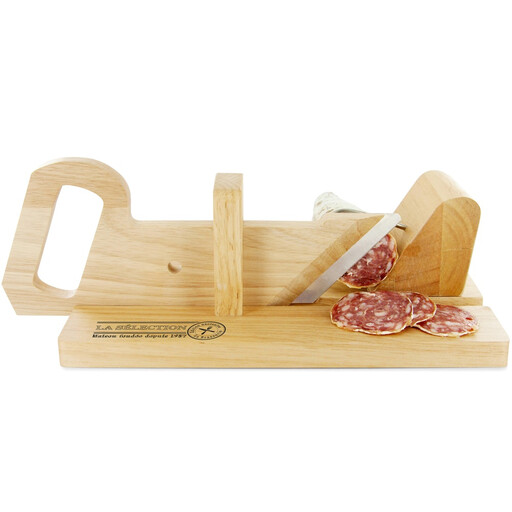
Why this choice suits this profile : This manual slicer is suitable for appetisers, small quantities and kitchens where you would rather avoid using an electric appliance.
Its manual operation removes the constraints associated with motor power and cooling. However, use it on a stable surface and wash the blade by hand.
Wooden body, 16.8 cm stainless steel blade, no-electricity operation and stated weight of approximately 0.8 kg.

Why this choice suits this profile : Its metal construction and electronic adjustment are designed for users looking for a durable machine capable of handling a variety of preparations.
The product details mention an all-metal construction, a removable carriage and two blades. This helps address the stability and maintenance issues often found with simpler models.
Stated cutting width of 24 cm, electronic speed adjustment and thickness of up to 23 mm according to the product details.
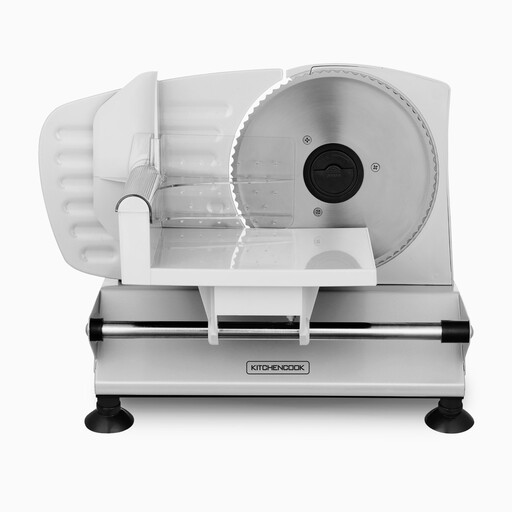
Why this choice suits this profile : This electric model could suit a family or small business that regularly prepares bread, cheese, cured meats or meat.
The maximum continuous operating time — 10 minutes — is clearly stated. This helps you organise sessions and reduce the risk of the motor overheating.
150 W motor, 190 mm stainless steel serrated blade, 0 to 15 mm adjustment, safety pusher and suction-cup feet.
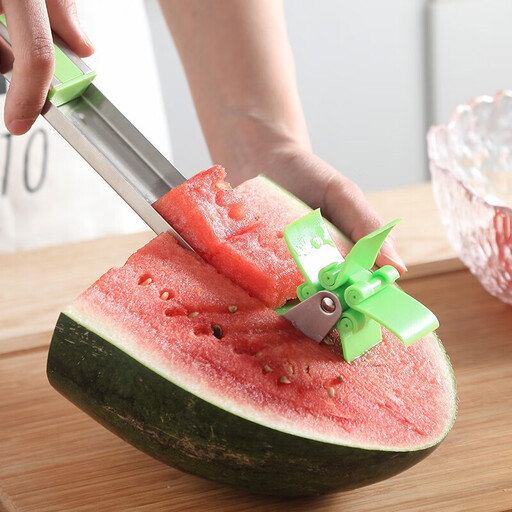
Why this choice suits this profile : This manual utensil has one specific purpose: serving more evenly sized watermelon slices at family meals or gatherings.
Its targeted use means you do not pay for a motor or unnecessary accessories when your main need is simply slicing watermelon.
Manual operation and a design dedicated to slicing watermelon, with no electrical connection required.
We have compiled a complete, real-time selection of products that meet these exacting selection criteria, as well as European safety standards.
An electric slicer provides a more consistent output and reduces effort when you need to make several cuts in succession. However, it requires a nearby socket, sufficient storage space and thorough cleaning around the blade.
A manual slicer remains a sensible choice for appetisers, occasional meals and small kitchens. It works without electricity and is easy to carry, but slice consistency depends more on your technique and the pressure applied.
For versatile use, also consider the size of the carriage, the available opening and whether it is compatible with the foods you want to slice. A machine marketed as professional may be excessive for a few slices at the weekend, while a small model may struggle in a catering environment.
For ham, salami or cheese, a thin to medium cut is generally preferred. A graduated dial makes it easier to reproduce the same thickness from one slice to the next. Check the model’s actual adjustment range rather than relying on a vague claim of precision.
Consumption depends on the motor’s power and how long the appliance is used. A 150 W appliance used occasionally will have a limited impact during a typical domestic session. To help maintain its performance, observe the recommended breaks and unplug it after each use.
Clean the blade after every session, dry metal parts immediately and do not force the appliance through very hard or frozen foods if the product details prohibit this. With an electric model, never immerse the motor unit in water. Store the appliance out of children’s reach and always use the supplied pusher or guide.