Homes with frequently soiled tiles
If light splashes mean you need to wash your floor regularly, consider a floor cleaner that’s compatible with your tiles. Don’t assume one pass will be enough to remove a stubborn stain.


A floor cleaner can be a good choice for regularly washing kitchen tiles, provided you’re happy to empty its tanks and maintain its components after use. However, don’t expect it to replace your vacuum cleaner every time: UFC-Que Choisir highlights the limitations of this category when it comes to dry crumbs and dust. Choose a corded or cordless model based on whether a cable would get in the way in your kitchen and how long you usually clean for. If dry debris is your main concern, keep a dedicated vacuum cleaner and wash the floor separately.
If light splashes mean you need to wash your floor regularly, consider a floor cleaner that’s compatible with your tiles. Don’t assume one pass will be enough to remove a stubborn stain.
First, check how the appliance handles dry crumbs and dust. UFC-Que Choisir says a floor cleaner won’t automatically replace a dedicated vacuum cleaner, even when it’s marketed as a vacuum-mop.
Before choosing, consider how you’ll empty the tanks and maintain the roller or pads, as well as any filters included with the model. Also check which consumables are compatible with its exact model number.
Worth considering: for regular cleaning near a plug socket, without interruptions to recharge.
The trade-off: the cable restricts your movement, and the appliance still needs to be maintained after washing.
Worth considering: if you often move from the kitchen to other rooms with hard floors and want to clean without a cable getting in the way.
The trade-off: usage time, recharging and the possibility of replacing the battery are all factors to consider.
Worth considering: if dry crumbs and dust are common and you want to keep a dedicated vacuum cleaner.
The trade-off: this approach takes two steps and requires separate appliances.
| Factor | What to check | What I need |
|---|---|---|
| Flooring | Check the model’s instructions to see whether it’s suitable for your specific tiles and which surfaces are excluded. UFC-Que Choisir’s guide advises against using a floor cleaner on wooden flooring. | I want to wash my kitchen tiles without using the appliance on flooring that isn’t approved. |
| Dry debris | Check the vacuuming test results for the exact model, and don’t confuse picking up crumbs with wet cleaning. UFC-Que Choisir notes that this category has limitations when it comes to vacuuming. | Crumbs build up before I wash the floor, so keeping a dedicated vacuum cleaner may matter more to me than combining both tasks. |
| Maintenance | Check the instructions for emptying, rinsing and drying. Find out the part numbers for the rollers, filters and other replaceable components for that model. | If I wash the floor often, I want to know what I’ll need to do after each clean. |
| Power supply | For a corded model, check the cable length and access to plug sockets. For a cordless one, compare the battery life in the mode you’ll use, charging time and how the battery can be replaced. | I’d rather choose between managing a cable and planning for recharging based on the area I usually clean. |
| Stubborn stains | Look for tests of the model on similar types of dirt. UFC-Que Choisir assesses how well hard-floor cleaners remove stains: an advertised feature or power figure alone won’t predict the result. | For a stubborn stain, I’m happy to use a targeted treatment rather than rely on a single pass. |
UFC-Que Choisir distinguishes between wet cleaning hard floors and picking up dry debris and dust. If crumbs are the main problem in your kitchen, you may still need a vacuum cleaner before washing the floor.
Think about the types of dirt you see most often, then look for vacuuming test results for the exact model if you’d like one appliance to do both jobs.
UFC-Que Choisir’s tests highlight limitations when it comes to washing; you can’t predict the results from an advertised feature alone.
Use the floor cleaner for everyday maintenance unless tests of the specific model cover your needs, and have a targeted method ready for stubborn stains.
Tanks, rollers or pads and filters may need attention after cleaning. An automatic self-cleaning cycle doesn’t mean you can skip the instructions for your model.
Check what you’ll need to do, then make sure the right consumables and replacement parts are available for your chosen appliance.
Also allow time for rinsing, drying and replacing components as instructed by the manufacturer.
How long it runs for depends on how you use it, and recharging may interrupt your cleaning routine. Replacing a non-removable battery may also require you to contact the after-sales service.
Compare the battery life in the mode you plan to use, charging time and battery replacement options with the time you usually spend cleaning.
These brand references can help you identify product ranges and features to check; specifications vary by model.
The cordless X-Clean range includes the X-Clean 10.
The cordless F25 series includes the F25 ALT and F25 GT Gen 2 variants.
The brand offers several cordless vacuum-mop ranges, including the H and T series.
The brand is included in UFC-Que Choisir’s French guide. The CrossWave HydroSteam PET Select 3528N is a corded example featured in the Joybuy selection below.
These corded and cordless models are designed for wet cleaning hard floors. First, choose based on the type of debris you have, your flooring and your routine; a vacuuming function alone doesn’t prove that you won’t need a separate vacuum cleaner.
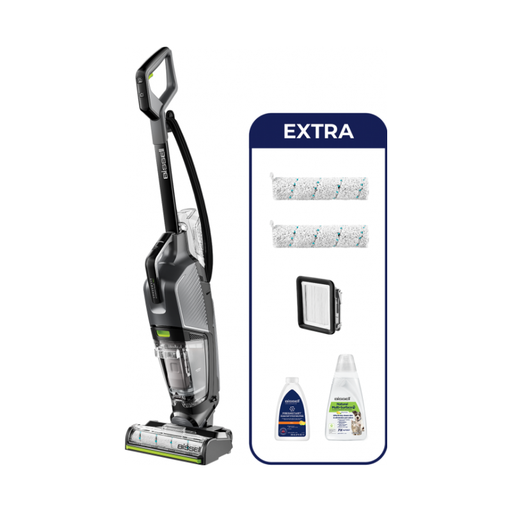 Image unavailable
Worth considering for regular cleaning near a plug socket if the cable suits your kitchen. The Joybuy product page lists a 7,5 m cable, two tanks and a self-cleaning cycle; check the instructions to confirm which surfaces are approved and what maintenance is required.
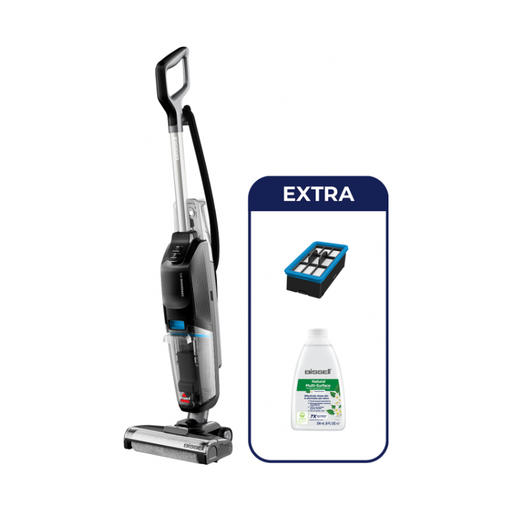 Image unavailable
This corded model is designed for cleaning near a plug socket. Check the instructions to see whether it’s suitable for your tiles and what maintenance is needed after use; its name alone doesn’t tell you how well it picks up crumbs.
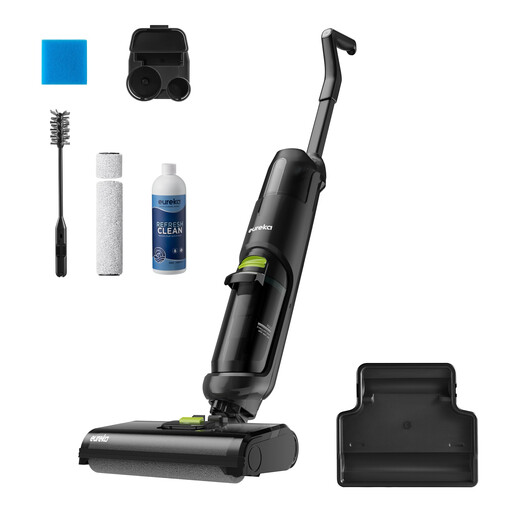 Image unavailable
With no cable to get in the way, it may be easier to clean several rooms with hard floors. The NEW400’s name mentions a self-cleaning system; check that it’s suitable for your flooring, that the battery life fits your routine and what you’ll still need to do after use.
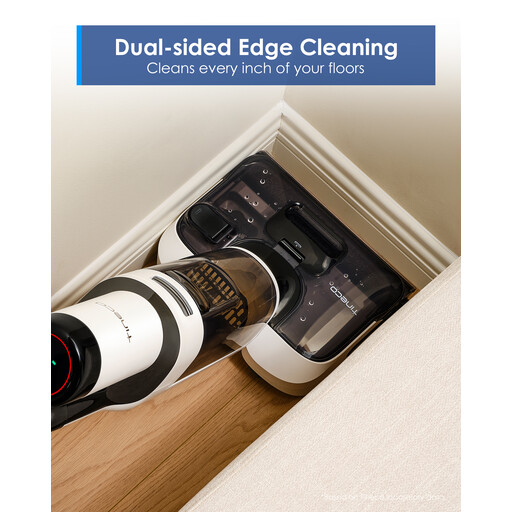 Image unavailable
Its 180° lie-flat design and stated height of 13 cm may be useful if you clean under low furniture. The product name lists up to 40 minutes of use and a FlashDry cycle at 70 °C; check that it’s suitable for your tiles and the conditions behind the stated battery life.
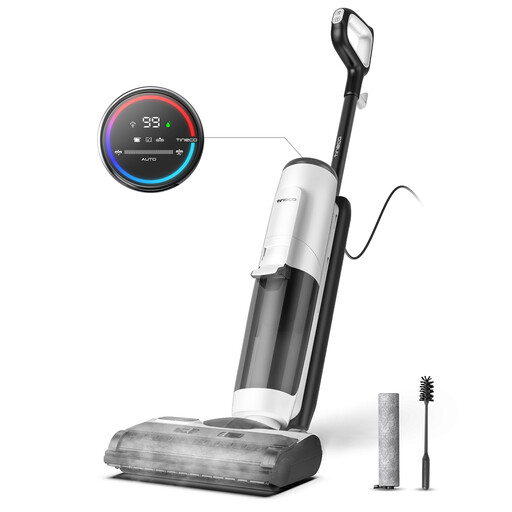 Image unavailable
The corded version means you won’t need to recharge mid-clean; its name lists an 8 m cable and a steam function. Before using steam, check the instructions for approved flooring, including your tiles, and for the required after-use maintenance.
Not automatically. UFC-Que Choisir says the main purpose of this category is to wash hard floors, and highlights its limitations when it comes to dry debris and dust. If crumbs are common, keep a dedicated vacuum cleaner or check the test results for the exact model.
UFC-Que Choisir’s French guide advises against this. For your kitchen, check the appliance instructions to make sure your specific tiles are approved, and follow the guidance for your flooring too.
Follow the instructions to empty the tanks and clean or dry the roller, pads and filters included with your model. An automatic cycle doesn’t necessarily mean you can skip these steps. For the X-Clean 10, Rowenta recommends replacing the roller and filter every 100 cycles or every six months if the appliance is used at least three times a week.
Note down the exact part numbers for replaceable components, then check their availability for the model you’ve chosen. The DGCCRF states that sellers must tell you how long spare parts will be available if they’ve been given that information.
According to the French Ministry of the Economy, the legal guarantee of conformity applies to new, second-hand and refurbished goods sold by a business to a consumer. The seller is responsible for any lack of conformity present when the goods are delivered. This legal guarantee is separate from any optional commercial warranty.