
Livraison le jour même ou le lendemain

Qualité garantie

Débloquez vos offres de bienvenue: Livraison GRATUITE | Jusqu'à -80 % | 30 jours d'essai gratuits à JoyPlus
Téléchargez l'application
A kitchen extractor hood can make a real difference to your daily comfort, especially in an open-plan kitchen or a small flat. But a stylish front and a high airflow figure aren't enough to guarantee a smart purchase. Compatibility with your existing setup, the actual noise level and filter maintenance matter just as much.
Before you compare a 60 cm extractor hood, a wall-mounted hood or a sloping hood, here are the main pitfalls to avoid.
A figure like 580 or 650 m³/h is usually a value measured under specific conditions, often at the highest power setting. Real-world performance also depends on the duct diameter, its length, the number of bends and the external outlet.
A hood with several speeds lets you adjust the extraction to your cooking, but the most powerful setting often comes with noticeably more noise. For everyday use, compare the airflow at each speed when that data is available, rather than just looking at the maximum.
A hood in extraction or recirculation mode doesn't work the same way depending on your kitchen layout.
A hood described as convertible isn't necessarily ready to work in both configurations out of the box. Check which accessories are included and which are sold separately.
A hood marketed as quiet should be judged by its noise level in decibels, not just a marketing promise. A difference of just a few decibels can really be heard in an open-plan kitchen.
Maintenance deserves the same attention. Washable metal filters reduce consumables, but they need regular cleaning. When a filter becomes saturated, it gradually slows down the airflow and can lead to lingering odours.
The hood should be at least as wide as your hob, and ideally wider if your layout allows. 60 cm models suit most standard installations, while a 90 cm hood can better cover a large hob or a heavily used cooking area.
Also check the depth, the adjustable chimney height and the minimum distance between the hood and the hob. For installation, the manual for each model is your best guide. For example, the COMFEE' KWH-SLIF17B-60 model specifies an installation height between 650 and 750 mm.
In a small kitchen, a moderate airflow can be enough for gentle cooking. However, frying, grilling and long cooking sessions may justify a more powerful appliance, especially in an open-plan room.
Compare the following:
A low-energy hood can reduce the amount of electricity used over time. However, energy classes and annual consumption figures should be compared on the same basis, then checked on the label or product sheet.
A washable aluminium grease filter makes routine maintenance easier. In recirculation mode, check the compatible charcoal filter reference, how many filters you need and whether they're included in the box.
A hood with LED lighting improves visibility over the hob, but also consider the position and brightness of the lights. Mechanical push-button controls are simple and intuitive, while touch controls or an app connection may appeal if you want to manage the different functions from a digital interface.
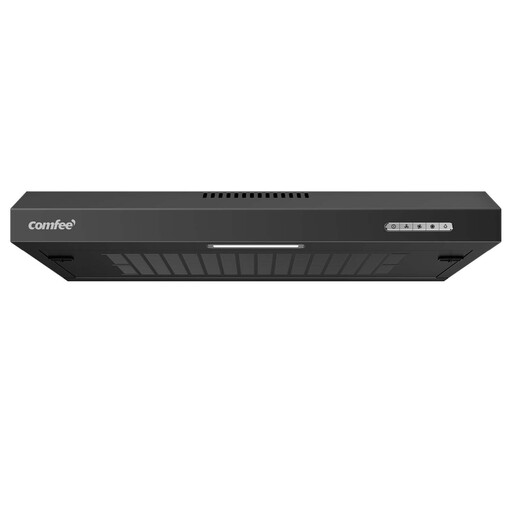
Why this suits this profile: This 60 cm hood has a compact design, ideal for a standard kitchen or a smaller space. It offers three speeds, LED lighting and two ventilation modes.
The product sheet specifies the stated airflow of 200 m³/h, the three speed levels and the recommended installation height. The aluminium filter is removable, making cleaning easier.
600 mm width, stainless steel body, energy class B and integrated LED lighting.
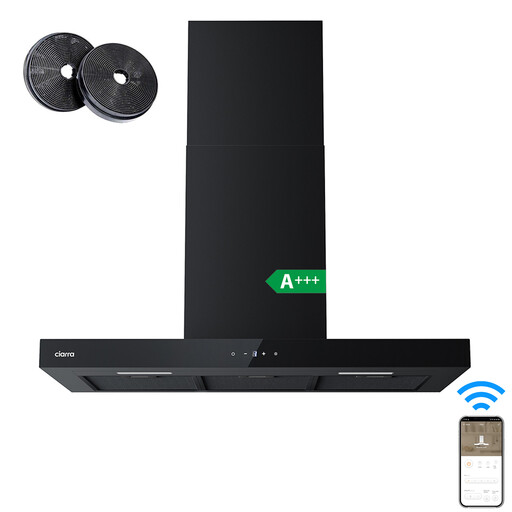
Why this suits this profile: Its 90 cm size, touch control with Wi-Fi and stated airflow of 650 m³/h are aimed at spacious kitchens and users looking for more features.
The product sheet details the stated maximum noise level of 59 dB, the annual energy consumption of 12 kWh and the presence of washable aluminium filters.
Energy class A+++, booster function, four stated speed levels and CBCF003 charcoal filters included for recirculation.
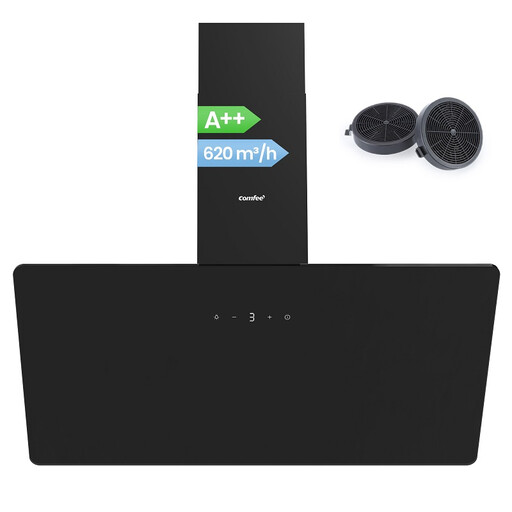
Why this suits this profile: Its sloping design frees up space in front of the cooking area. With a stated airflow of 620 m³/h and four speeds, it's suited to frequent cooking and particularly strong-smelling dishes.
Extraction and recirculation modes are stated, with a maximum noise level of 59 dB. However, you still need to check the duct and filters suitable for your installation.
Energy class A++, four speeds and sloping design suited to heavy cooking.
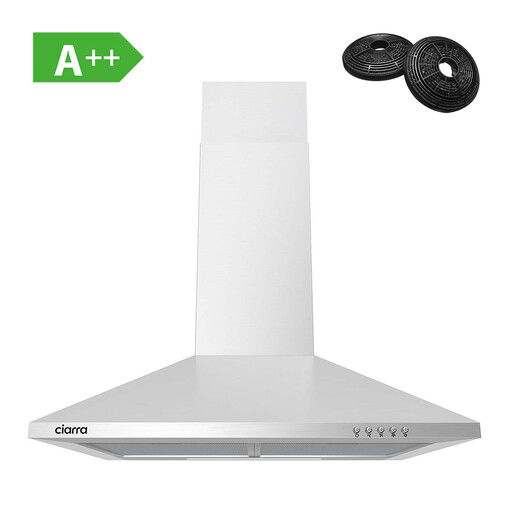
Why this suits this profile: This wall-mounted stainless steel hood is designed for a 60 cm hob and uses simple push-button controls that are easy to understand day to day.
The three speed levels show separate airflow figures of 221, 291 and 367 m³/h, with stated noise levels from 51 to 63 dB. The metal filters are washable.
Energy class A++, integrated lighting, two washable aluminium filters and compatibility with extraction and recirculation modes.
We've put together a comprehensive, real-time updated list of products that fully meet these strict selection criteria and European safety regulations.
Before you start drilling, measure the available width, the height under your cabinets and the distance from the hob. For a wall-mounted or sloping hood, also check the depth and the space needed for the telescopic chimney.
Once the hood is installed:
The electrical installation and duct connection must follow the manufacturer's instructions and the regulations that apply to your home. If you're unsure, it's best to call in a qualified professional.
A 60 cm extractor hood is usually a good match for a hob of the same width. A wider model can be useful if you often cook on multiple burners or if the hob is in a large open-plan room. Always measure the available space before you buy.
External extraction pushes steam and odour-laden air outside, provided you have a suitable duct. Recirculation works when no external outlet is available, but it needs a compatible charcoal filter and regular maintenance. The choice really depends on your kitchen layout.
The cost depends on the power rating, how long you use it and the energy class. To compare two models, look at their annual energy consumption in kWh, then add the potential cost of charcoal filters. A hood with washable metal filters can reduce ongoing costs, but it still needs regular cleaning.