
Livraison le jour même ou le lendemain

Qualité garantie

Débloquez vos offres de bienvenue: Livraison GRATUITE | Jusqu'à -80 % | 30 jours d'essai gratuits à JoyPlus
Téléchargez l'application
A kitchen extractor hood needs to suit the layout of your room, the width of your hob and the way you cook. Yet some purchases prove disappointing after just a few weeks: insufficient extraction, annoying noise, filters that are hard to clean or an installation that's incompatible with your home.
Before comparing models, here are the most common pitfalls to avoid.
A high figure in m³/h catches the eye, but it isn't enough to judge everyday comfort. The maximum airflow can correspond to the noisiest setting. Also check the values available at each speed, the noise level in decibels and the type of installation planned.
In an open-plan kitchen, a quiet hood at an intermediate power level can be far more pleasant than a very powerful appliance used constantly at maximum.
An external extraction hood expels steam and odour-laden air through a duct. It requires a suitable outlet, a compatible diameter and, where applicable, permission from your landlord or building management.
A recirculation hood returns air to the room after passing it through a charcoal filter. This solution is particularly suitable for tenants or kitchens without a duct. However, the charcoal filter must be maintained and replaced according to the instructions in the manual. Also check whether it is supplied or sold separately.
A black, stainless steel or glass hood can transform the look of your kitchen, but compatibility with your hob and cabinet should come first. A 60 cm extractor hood generally suits a standard installation of the same width. For a large hob or an open-plan kitchen, a 90 cm model will cover a wider area.
Also measure the depth, the available height and the space between the hood and the hob. The installation distances stated in the manual must be followed, especially above a gas hob.
Don't rely solely on the stated width: compare the full dimensions of the product with those of your cabinet, wall and duct.
Airflow is expressed in m³/h. To compare two appliances, look at the values for each speed rather than just the maximum airflow. As a guide, the models shown below offer an airflow of between approximately 184 and 650 m³/h depending on their configuration.
The noise level is expressed in dB. In an open room, a difference of a few decibels can be noticeable. It's therefore better to choose a hood that is powerful enough but can remain discreet, rather than an appliance that relies solely on a 'high extraction' function.
A washable metal filter reduces consumables and simplifies maintenance. Some aluminium filters can go in the dishwasher, provided you follow the manufacturer's recommendations. In recirculation mode, check the reference of the compatible charcoal filter.
An extractor hood with LED lighting improves visibility over the cooking area. Also think about checking access to the filter and controls. Push buttons keep things simple, while touch controls and Wi-Fi connectivity add features — and a few extra settings to get used to.
For the electrical installation and duct connection, follow the manual. If in any doubt, call in a qualified professional. Also check for the presence of regulatory information, the CE marking where required and the contact details of the responsible person established in the European Union.
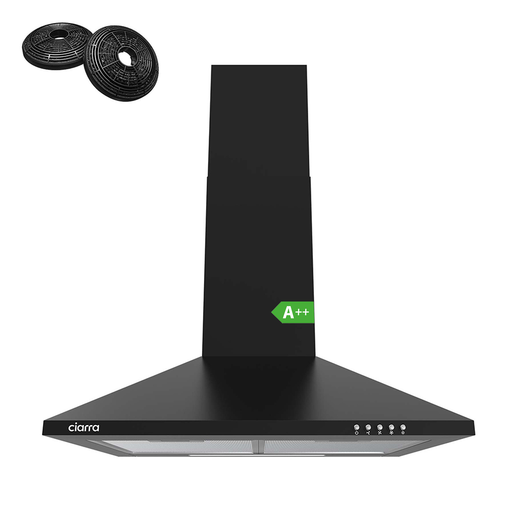
Why this choice suits this profile: Its 60 cm size and mechanical controls are ideal for a standard installation and everyday use without complicated settings.
It supports both recirculation and external extraction, reducing the risk of buying an appliance that's incompatible with your kitchen.
Stated airflow up to 367 m³/h, two washable aluminium filters, integrated lighting and a stated maximum noise level of 63 dB.
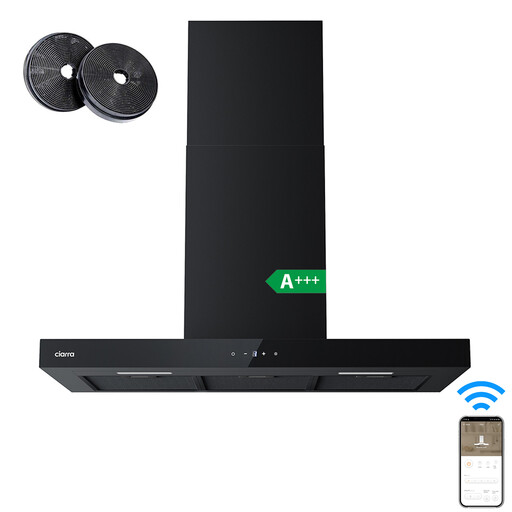
Why this choice suits this profile: This 90 cm model is designed for open-plan kitchens and users who want to control their hood from an app.
The product sheet specifies both ventilation modes, the inclusion of charcoal filters and a stated maximum noise level of 59 dB.
Stated airflow of 650 m³/h, boost function, four control levels, washable metal filters and an A+++ energy rating as stated on the product sheet.
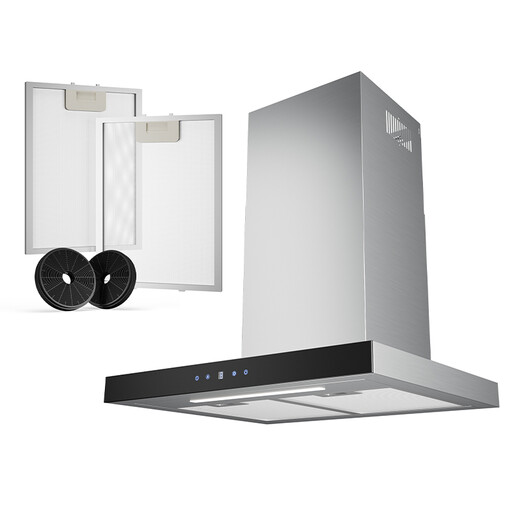
Why this choice suits this profile: Its 60 cm width, digital display and stated airflow of 611 m³/h suit cooks who regularly prepare dishes that produce steam and smoke.
The product sheet indicates use in extraction or recirculation mode, plus a five-layer metal filter that is dishwasher-safe.
Touch control, digital display, LED lighting, stated A++ energy rating and chimney kit with charcoal filter included.
We've put together a comprehensive, real-time updated list of products that meet these demanding selection criteria and European safety regulations.
Clean the grease filter every two to four weeks, depending on how often you cook. A build-up of grease can reduce airflow and increase the noise level. In recirculation mode, keep an eye on the condition of the charcoal filter and note its reference before ordering a replacement part.
To keep energy consumption down, use the speed that matches the dish you're preparing and switch off the appliance once the recommended running time has elapsed. The energy rating and annual consumption stated on the product sheet allow you to compare models, but they aren't enough to estimate the real cost — that depends on how long you use it and your electricity tariff.
A 60 cm hood is generally suitable for a hob of a similar width, provided its dimensions and the installation instructions are compatible. A 90 cm model can be a good choice for a larger hob or an open-plan kitchen.
Yes, because it doesn't need a wall outlet to the outside. However, it works with a charcoal filter that must be maintained and replaced regularly. For more direct steam extraction, an external installation may be preferable where the layout and permissions allow.
The lifespan depends on the design of the appliance, how well it's maintained and how often it's used. To keep it working properly, clean the filters regularly, don't block the air outlets and unplug the hood before any maintenance work.