
Livraison le jour même ou le lendemain

Qualité garantie

Débloquez vos offres de bienvenue: Livraison GRATUITE | Jusqu'à -80 % | 30 jours d'essai gratuits à JoyPlus
Téléchargez l'application
A kitchen extractor hood needs to remove smoke, steam, cooking odours and grease deposits without turning the room into an echo chamber. Yet all too often, the choice comes down to an impressive airflow figure or a marketing promise that’s hard to verify.
Before you compare models, take a moment to identify three common pitfalls.
A 60 cm extractor hood is generally a good match for a hob of the same width. For a larger hob, a 90 cm extractor hood will cover the cooking zone more effectively, especially when several burners are in use at once.
Also remember to measure:
A wall-mounted hood must be fixed to a sufficiently sturdy support. If you’re renting, a compact recirculation model or a portable unit can avoid irreversible alterations. That said, this type of solution is best suited to occasional use and smaller kitchens.
The airflow figure quoted in m³/h represents the volume of air handled under specific conditions. To compare models, also look at the noise level in dB(A) and the number of fan speeds available.
As a guide, the product sheets for the models we looked at show the following values:
These figures are specific to each product and can’t be compared without taking the type of installation into account. In everyday use, a relatively quiet hood on a medium setting can be far more pleasant than a more powerful model that’s constantly run at maximum speed.
In recirculation mode, air passes through a grease filter, then a charcoal filter, before being returned to the room. The charcoal helps reduce odours, but the filter must be checked and replaced according to the manufacturer’s recommendations. The metal filter, if it’s washable, also needs regular cleaning to prevent grease build-up.
In external extraction mode, air is directed into a duct. Check the compatibility of the outlet, the length of the ducting and any accessories you might need. Some models offer both modes, making it easier to adapt them to the constraints of your home.
LED lighting is handy for keeping an eye on your cooking, but it doesn’t replace the general kitchen lighting. Finally, check the energy class and the stated annual energy consumption rather than relying solely on a marketing claim.
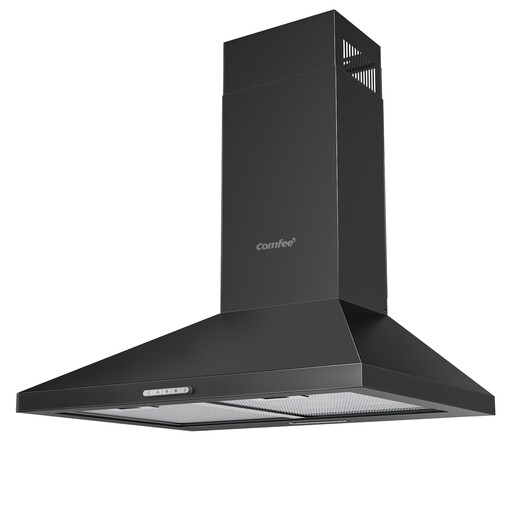
Why this choice suits this profile: this hood is ideal for a standard 60 cm kitchen, with simple physical controls and LED lighting. It can work in recirculation or external extraction mode, depending on your home’s setup.
The two ventilation modes mean you won’t end up with an appliance that’s incompatible with a kitchen that has no duct. The product page states that the charcoal filter is included.
Stated airflow of 400 m³/h, three speeds, energy class B and a 60 cm format.
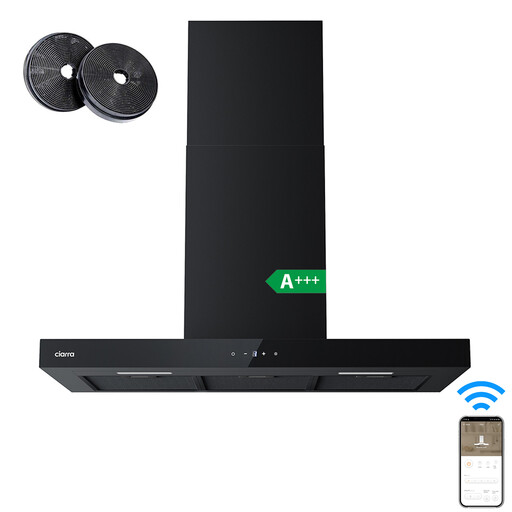
Why this choice suits this profile: its 90 cm width and touch controls with Wi-Fi make it a great fit for large open-plan kitchens and users who want to centralise their settings.
The product page mentions both options: recirculation with charcoal filters included, or connection to a duct with an exhaust hose.
Maximum stated airflow of 650 m³/h, maximum noise level of 59 dB, class A+++ and a stated annual energy consumption of 12 kWh.
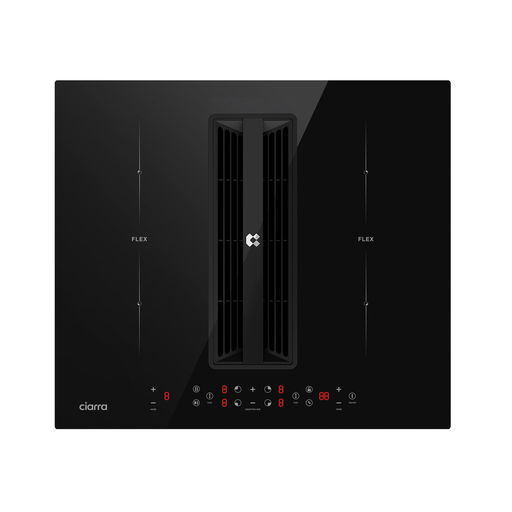
Why this choice suits this profile: this induction hob with built-in extraction is designed for open-plan kitchens and projects where a wall-mounted hood might block the view.
The product combines cooking and extraction, but the product page states that the CBEHKIT installation accessories are sold separately. You’ll need to factor them into your budget.
Four zones, two flexible zones, nine power levels and a stated extraction rate of 147 to 484 m³/h.
We’ve put together a comprehensive, real-time list of products that meet these demanding selection criteria and European safety regulations.
Compare the maximum airflow, the number of speeds and the noise level. An open-plan kitchen or frequent cooking may justify a higher extraction capacity. In a small kitchen, a compact, quieter model will often be a better choice. The ducting and the quality of its installation also play a crucial role.
Yes, that’s actually one of its main uses. However, it does require a compatible charcoal filter and regular maintenance. It shouldn’t be confused with an external extraction hood, which needs a connection to the outside and, if building work is required, the relevant permissions.
The running cost depends on the electrical power, how long you use it and the energy class. To compare models, check their stated annual energy consumption in kWh. Add the cost of charcoal filters when they’re needed, and check whether the metal filters are washable.