
Livraison le jour même ou le lendemain

Qualité garantie

Débloquez vos offres de bienvenue: Livraison GRATUITE | Jusqu'à -80 % | 30 jours d'essai gratuits à JoyPlus
Téléchargez l'application
A kitchen extractor hood should be chosen based on the layout of your room, your cooking habits and any installation constraints. In a small kitchen, a studio flat or a rental property, the most suitable model isn’t necessarily the most powerful one. Width, noise level, filtration type and ease of maintenance often have a greater impact on everyday comfort.
A high airflow rate alone doesn’t guarantee effective extraction. The distance between the hood and the hob, the shape of the casing, the duct diameter and the number of bends all affect performance. A 90 cm extractor hood can cover a large hob, but it needs enough wall space and appropriate fixings.
In recirculation mode, a hood with a charcoal filter traps some odours before returning the air to the room. Charcoal filters are generally consumables: before ordering, check their reference number, price and availability. The grease filter, often made of aluminium, should be easy to remove and washable.
A hood with multiple speeds can quickly become annoying when running at full power. Compare the noise level in decibels, bearing in mind that the maximum value usually corresponds to the highest setting. In an open-plan kitchen, a quiet extractor hood rated between 59 and 63 dB can be far more pleasant to live with than a noisier model.
Measure the available width, the depth of the cabinet and the distance between the hob and the hood. Always follow the manufacturer’s instructions and the minimum distances required for your electrical installation and cooking type.
A hood with external extraction expels steam and odour-laden air outside through a duct. This option requires a compatible outlet and a relatively short duct run. If building work is needed, you may also need permission from your landlord or management company.
A recirculation hood, also known as a ductless hood, is better suited to rental properties, flats without a duct, or renovations where you don’t want to alter the wall. However, it requires regular filter maintenance and cannot remove humidity to the outside.
Compare the airflow rates available at each speed rather than relying solely on the maximum figure. As a guide, the product sheets consulted show airflow rates ranging from 184 m³/h for a compact model to 650 m³/h for a wider hood with a boost function. The stated noise level here ranges from 59 to 67 dB.
Also consider the energy class, power rating and annual energy consumption listed on the product sheet. For simple use, push-button controls are perfectly adequate. On the other hand, a model with touch controls and Wi-Fi connectivity will suit users who want to control the lighting and fan speeds from an app.
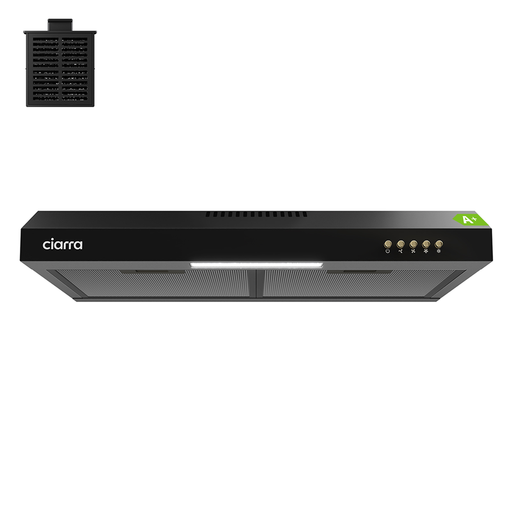
Why this choice suits this profile: At 596 mm wide, it fits small kitchens. Its installation allows you to choose between recirculation and connection to an external duct.
Its dual ventilation mode means you don’t have to choose an appliance that’s incompatible with a lack of wall outlet. Both aluminium grease filters are washable.
Three speeds, integrated lighting, A+ energy class and a maximum stated noise level of 61 dB.
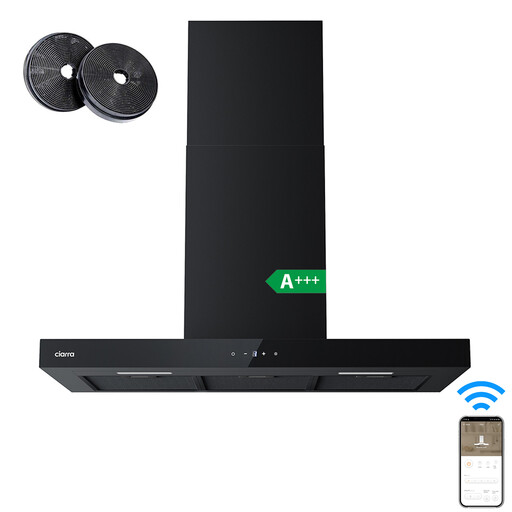
Why this choice suits this profile: This black wall-mounted model combines a generous width, app control and a boost function ideal for open-plan kitchens.
The product sheet covers both ventilation modes, with CBCF003 charcoal filters or a supplied duct. You will still need to check the dimensions and installation conditions.
Maximum stated airflow of 650 m³/h, maximum noise level of 59 dB, four speeds with boost function and washable grease filters.
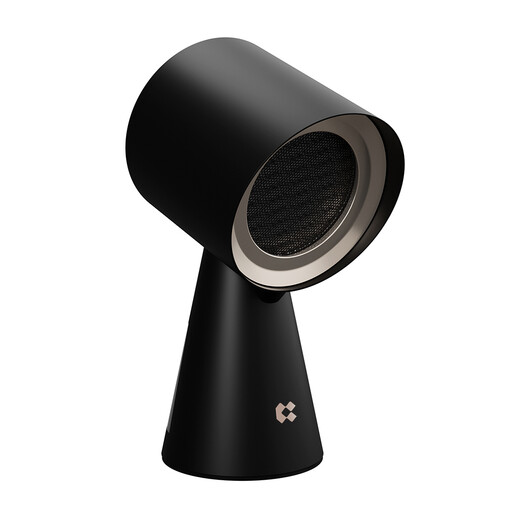
Why this choice suits this profile: This portable hood is ideal for studio flats, campervans, balconies and temporary cooking spaces where you can’t carry out any building work.
It requires no wall duct or structural modification. However, it works in recirculation mode and must be cleaned after each use.
Two speeds, 24 W power, stated airflow up to 108 m³/h and a multi-layer filtration system.
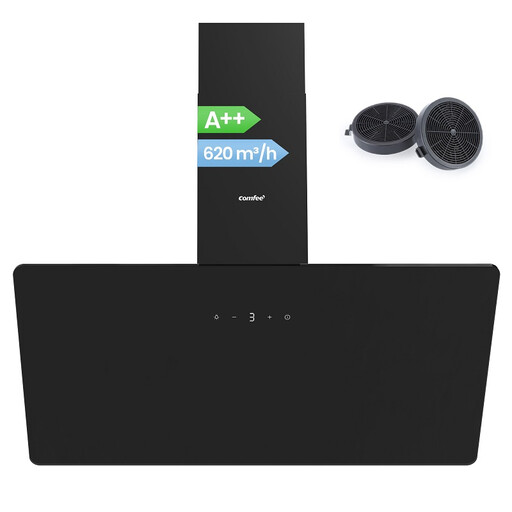
Why this choice suits this profile: Its 90 cm width and four speeds handle frequent meal preparation and large hobs with ease.
The choice between extraction and recirculation offers more flexibility depending on your home. The stated noise level is 59 dB, which should be considered alongside your actual installation conditions.
Stated airflow up to 620 m³/h, five-layer aluminium filter, touch control and A++ energy class as listed on the product sheet.
We’ve put together a comprehensive, regularly updated selection of products that meet these demanding criteria, in line with European safety regulations.
Clean the washable grease filter every two to four weeks, depending on how often you cook. Built-up grease can reduce airflow and put extra strain on the motor. In recirculation mode, also keep an eye on the condition of the charcoal filter and replace it according to the instructions in the manual.
Before drilling into a wall or connecting a duct, check its structure, the outlet diameter, the presence of a suitable electrical socket and the rules set out in your tenancy agreement or management company regulations. The hood must be securely fixed and must not be operated without the filters specified by the manufacturer.
Yes. A recirculation hood can work perfectly well when no duct is available. It generally doesn’t require a wall outlet, but you will need to clean the grease filter regularly and replace the charcoal filter periodically.
Choose a 60 cm extractor hood for a standard hob and compact cabinet. The 90 cm size is better suited to large hobs or kitchens where the extraction area needs to cover a larger cooking surface. Always check the wall width and available depth.
The running cost depends on the power rating, how long you use it, the lighting and the energy class. Check the annual energy consumption shown on the energy label or product sheet. In recirculation mode, remember to factor in the cost of replacement charcoal filters, especially if the hood is used frequently.