Start by looking at the appliance that accounts for the most of your usage: your fridge runs continuously, while replacing a dishwasher or cooking appliance depends on how often you use it and the meals you prepare. To choose a suitable model, compare its energy use with appliances in the same category and of a similar usable capacity. According to ADEME and the European Commission, labels for refrigeration appliances, dishwashers and ovens use different units.
Which households is this for?
Households reviewing their refrigeration appliances
If your fridge, fridge-freezer or freezer runs all the time, check that its fridge and freezer capacities still meet your needs. ADEME reminds consumers that these appliances run continuously; the European Commission says their energy labels show details including annual energy use and capacity.
Regular dishwasher users
If you run your dishwasher frequently, the number of place settings matters just as much as the Eco programme figures when choosing a size. ADEME and the European Commission say the label also shows energy and water use, programme duration and noise levels.
Households choosing a cooking appliance
If you’re deciding between a hob, oven and microwave, start with the dishes you prepare and the cookware you own. The European Commission distinguishes between oven label information and the details that apply to hobs, so their figures aren’t directly comparable.
What should you look for?
First, work out what you need the replacement for, then compare models that meet that need. According to ADEME and the European Commission, kWh/year for refrigeration appliances, kWh/100 cycles for dishwashers and kWh/cycle for ovens describe different types of use.
| Criterion |
What to check |
Who this matters to |
| Continuous refrigeration |
Compare kWh/year, fridge and freezer capacities, and noise levels across appliances that meet the same storage needs. |
My fridge-freezer runs day and night, so I want to avoid choosing a capacity that doesn’t suit my needs. Around 36% of consumers would prioritise this choice of refrigeration appliance. |
| Dishwashing cycles |
Compare the Eco programme’s kWh/100 cycles and litres/cycle with the number of place settings and programme duration. |
When the dishes pile up between cycles, I need a capacity I can use regularly. Around 29% of consumers would prioritise this capacity. |
| Hob cooking |
Check the technology, cooking zones, installation requirements and cookware compatibility, particularly for induction. |
I often cook on the hob and don’t want to choose zones that aren’t suited to my pans. Around 21% of consumers would prioritise finding a hob that suits their cooking needs. |
| Oven or microwave |
For an oven, check its capacity and kWh/cycle for each cooking mode. For a microwave, make sure it has the functions you need for the dishes you plan to cook. |
Depending on the meals I prepare, I need to bake in the oven or reheat food, without assuming one appliance can replace the other. Around 14% of consumers would put their choice of cooking method first. |
Mistakes to avoid
-
Choosing based on the energy rating alone
An energy rating won’t tell you whether a fridge’s capacity or a dishwasher’s number of place settings meets your needs. These details are also shown on the labels described by the European Commission.
Work out the capacity you need, then compare the energy use and noise levels of suitably sized models.
-
Ranking all energy-use figures together
According to ADEME and the European Commission, refrigeration appliances are rated in kWh/year, dishwashers in kWh/100 cycles and ovens in kWh/cycle. These figures don’t describe the same period of use.
First choose the category that suits your needs, then compare models in that category on a like-for-like basis.
-
Looking for an A to G rating on a hob
The European Commission says hobs aren’t subject to the energy labelling requirements that apply to appliances such as fridges.
When choosing a hob, check the technology, cooking zones, installation requirements and whether your pans are compatible.
-
Overlooking whether an appliance can be repaired
If you’re replacing an appliance, it may be worth considering whether your current model can be repaired instead. For a new appliance, it’s also worth checking spare part availability and service terms.
Check the repairability index where applicable, then look into spare parts and after-sales service for the specific model.
Brands: what to know
There are no brands to feature in this section.
Appliances to compare on Joybuy
These models let you consider three different decisions: choosing the right size of fridge-freezer, opting for a compact dishwasher or checking whether an induction hob suits your kitchen. Compare each appliance with models designed for the same use, and don’t mistake electrical power for the energy used to cook a meal.
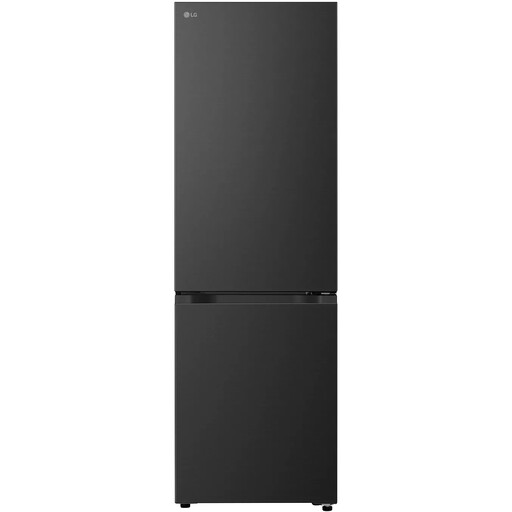 Image unavailable
LG GBBS312AEV, 333 L No Frost fridge-freezer
Consider this model if its total capacity of 333 L meets your refrigeration and freezing needs. The product listing states an A rating: check the label and kWh/year for the exact model, then check its dimensions before comparing it with other fridge-freezers.
View on Joybuy
 Image unavailable
Candy CFQQ5T817EPS, 4-door 467 L fridge-freezer
This 467 L model is designed for households needing plenty of storage, provided you have room for it in your kitchen. The model name mentions Total No Frost and an E rating. Check the annual energy use on the label for the exact model before comparing its efficiency with other appliances.
View on Joybuy
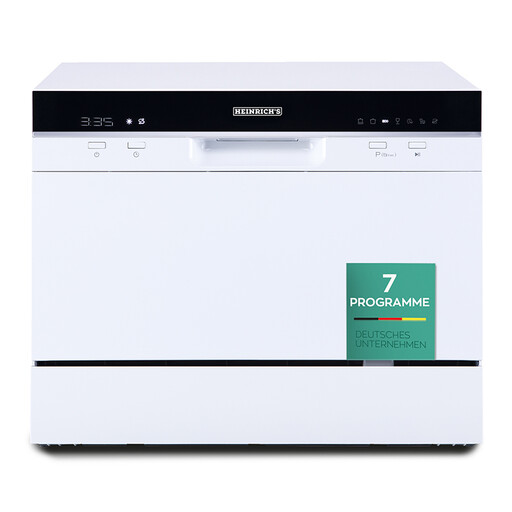 Image unavailable
Heinrich's HTG 8840 Weiss, 6-place-setting table-top dishwasher
This 6-place-setting model is worth considering if you don’t have much washing up between cycles and a table-top appliance suits your space. The model name lists 7 programmes, 47 dB and a D rating. Check the label for the exact model to compare kWh/100 cycles, water use per cycle and the Eco programme.
View on Joybuy
 Image unavailable
CHiQ JR227LSE, 227 L Low Frost fridge-freezer
If space is limited, consider this 54 cm-wide model. Its name lists 153 L of fridge capacity and 74 L of freezer capacity. It also mentions a reversible door and an E rating; check the label for the exact model to find its kWh/year. Low Frost doesn’t mean you’ll never need to defrost it manually.
View on Joybuy
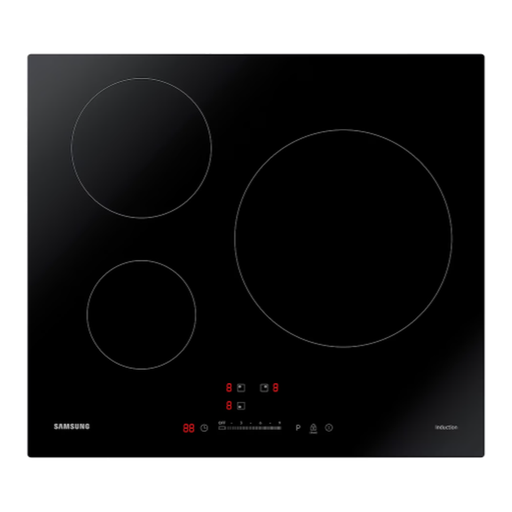 Image unavailable
Samsung NZ63M3707AK, 3-zone induction hob
Consider this model if three cooking zones suit the meals you prepare and your cookware is induction-compatible. The 7 200 W stated in the model name is a power rating, not the energy used per meal. Have the worktop cut-out and electrical connection checked for compatibility before installation.
View on Joybuy
Frequently asked questions
Can you compare the energy use of a fridge, dishwasher and oven directly?
No. Their labels cover different periods of use. According to ADEME and the European Commission, they show kWh/year, kWh/100 cycles and kWh/cycle respectively. Compare models in the same category, and take the capacity you need into account.
What should you look for on a dishwasher’s energy label?
Check the kWh/100 cycles, litres of water per cycle and number of place settings to see if the size suits you. ADEME and the European Commission also list the energy rating, Eco programme duration and noise level as details to check.
Do induction hobs have an A to G energy label?
No. The European Commission says hobs aren’t subject to this energy labelling requirement. When choosing an induction hob, check the cooking zones, dimensions, installation requirements and whether your cookware is compatible.
Where can you check the energy specifications for an exact model?
For an appliance covered by energy labelling, use the model reference or scan the QR code on the label to find its product information in the European EPREL database. ADEME says this database brings together the technical details of products covered by the scheme. Check that the reference matches the exact variant you’re considering.


