
Livraison le jour même ou le lendemain

Qualité garantie

Débloquez vos offres de bienvenue: Livraison GRATUITE | Jusqu'à -80 % | 30 jours d'essai gratuits à JoyPlus
Téléchargez l'application
Stubborn cooking grease on the extractor hood, splatters on the backsplash, tough residue at the bottom of the oven... Keeping a kitchen spotless can sometimes feel like an uphill battle. Yet, faced with aisles filled with promises, it's easy to feel lost and often leave with an unsuitable product. Some cleaners boast all-purpose action but damage delicate surfaces, while others promise a "no-scrub" efficiency that proves disappointing on set-in grease.
As the Head of Product Recommendations at Joybuy, my mission is to help you find some clarity. Let's break down the essential criteria for choosing a degreaser that truly delivers on its promises, without falling for the most common marketing traps.
The cleaning products aisle is a jungle of often misleading marketing claims. Here are two key pitfalls to watch out for before you check out:
To shop smart, you need to read between the lines. Here are the three key points to look for on the label.
A degreaser's composition determines its effectiveness and the necessary safety precautions.
The format directly impacts everyday ease of use.
Not all grease is created equal. A fresh oil splatter is not treated the same as a carbonised deposit at the bottom of a dish. Check if the product is designed for:
To put theory into practice, here are some products that meet specific needs, based on the criteria we've just discussed.
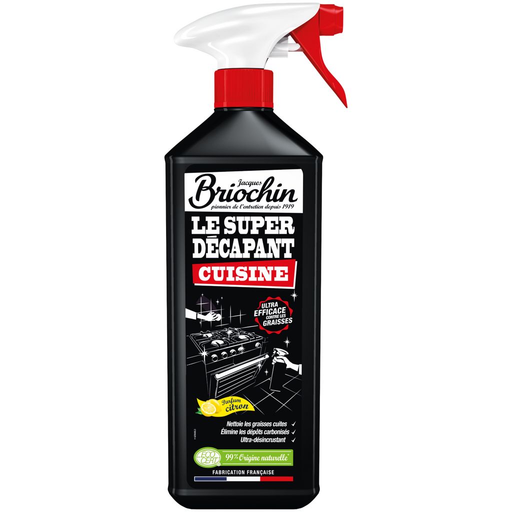
Why it's a great choice: Ideal for those looking for an Ecocert certified solution with 99.5% ingredients of natural origin, without sacrificing effectiveness on everyday grease, thanks to its baking soda-based formula.
This product isn't just "natural". Its foam texture is designed to cling to surfaces and act on grease, while clearly indicating which materials to avoid (aluminium, painted surfaces). It thus avoids the "catch-all multi-surface" trap.
Ecocert certification and French manufacturing. Its foaming action ensures better adhesion for an effective clean without intense scrubbing.
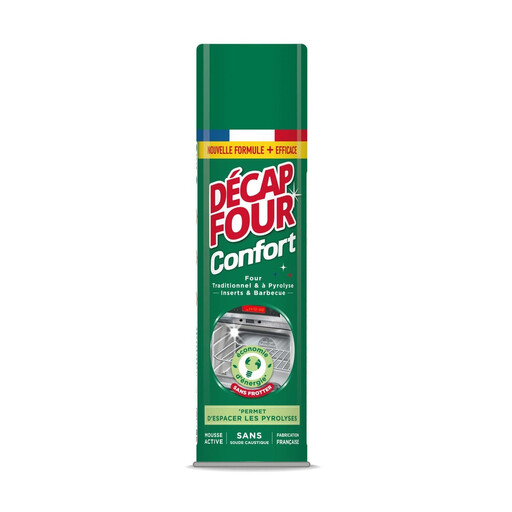
Why it's a great choice: This is the heavy-duty solution for the toughest jobs. It is specifically formulated to dissolve baked-on grease and carbonised residue in ovens, on grills, and on barbecues, where a standard cleaner gives up.
It doesn't promise "instant" action. On the contrary, it is transparent by indicating a specific contact time (from 30 minutes to 2 hours), because tackling burnt-on grease requires patience for a flawless result.
A formula designed for carbonised grease. Its aerosol format allows for even application, even on the most hard-to-reach oven walls and racks.
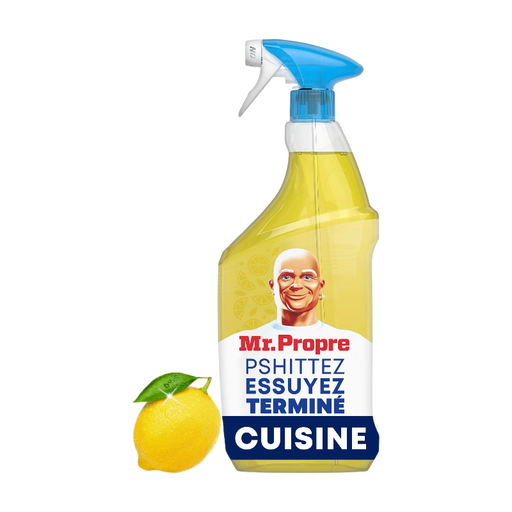
Why it's a great choice: Perfect for those in a hurry looking for a "spray, wipe, and you're done" solution for everyday grease and grime on worktops, hobs, and sinks.
It delivers on its promise of fast action because its mission is clear: daily maintenance. It doesn't claim to dissolve grease that's been set-in for weeks, making it a reliable ally for a clean, streak-free finish on fresh messes.
Simplicity and speed. It is safe for food-contact surfaces (after rinsing) and leaves no harmful residues, according to the manufacturer.
We have compiled a complete, up-to-date list of products that meet these strict selection criteria and current regulations.
Caution is advised. The term "multi-surface" indicates broad compatibility, but there are always exceptions. Aluminium, copper, marble, untreated wood, or certain painted finishes can be damaged by overly powerful formulas. Our advice: always read the label for contraindications and test on a small, inconspicuous area before the first use.
Not necessarily, it all depends on the job. For daily maintenance and fresh grease, a natural degreaser based on black soap or baking soda is often more than sufficient. However, when faced with old, carbonised grease, a targeted chemical formula or stronger natural agents like soda crystals (to be handled with care) will be more suitable. It's all about matching the right product to the right mess.
Absolutely, it's a non-negotiable step on certain surfaces. For anything that will come into contact with food (worktops, cutting boards, the inside of the fridge, etc.), a thorough rinse with clean water is essential to remove any product residue. For other surfaces, refer to the manufacturer's instructions. Some "no-rinse" products may leave a protective film or a scent, but a wipe with a damp sponge remains a guarantee of cleanliness and safety.