
Livraison le jour même ou le lendemain

Qualité garantie

Débloquez vos offres de bienvenue: Livraison GRATUITE | Jusqu'à -80 % | 30 jours d'essai gratuits à JoyPlus
Téléchargez l'application
Since the mandate to sort food waste came into effect, many households have been searching for the perfect solution to manage their organic waste daily. The challenge is significant: how do you store peels, leftovers, and coffee grounds without turning your kitchen into a haven for fruit flies and unpleasant odors?
A well-chosen kitchen composter is the answer. Far from being just another bin, it's an essential tool designed to make your life easier. This guide is here to cut through the confusion and help you find the perfect model for your needs, whether you live in an apartment or a house.
By the Joybuy Team.
Before you jump on the first model you see, let's review the three criteria that will make all the difference in your daily routine.
The size of your compost caddy should be suited to the amount of waste you generate.
The choice of material directly impacts maintenance, durability, and style. Meanwhile, odor management is a crucial factor.
A good compost pail should be a pleasure to use. Consider the carrying handle: it needs to be sturdy to make trips to the outdoor composter easy. The type of lid is another detail that matters: a flip-top model is great for quick use, while an airtight lid is unbeatable for containing odors.
To help you find the perfect match, we've selected three models that cater to very different needs.
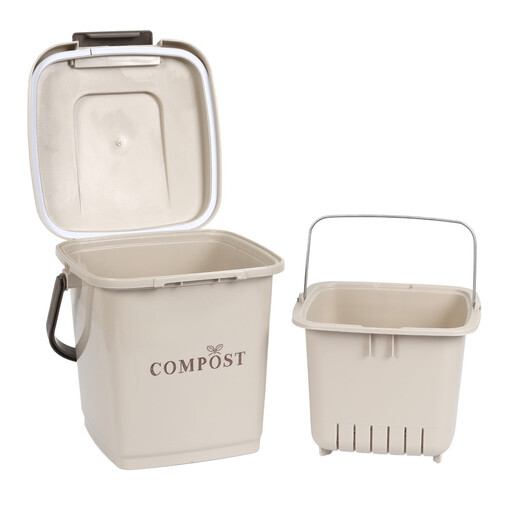
Key Features This model stands out for its perforated inner bucket. It's an ingenious feature that allows liquids to drain to the bottom of the caddy, keeping the solid waste drier. The result: decomposition slows down, and odors are significantly reduced. Its 8-litre capacity is an ideal size for family use.
Benefits
Who is it for? Ideal for families of 2 to 4 people looking for a functional and hygienic kitchen compost bin. Its drainage system is a major plus for anyone concerned about bad smells.
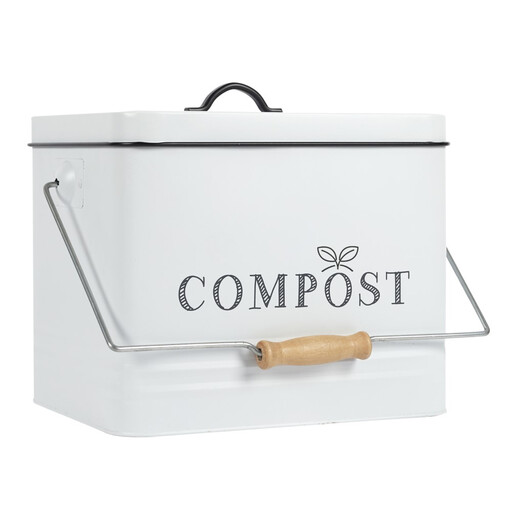
Key Features With its vintage painted metal look and generous 10-litre capacity, this composter ticks all the boxes for both style and volume. No need to hide this one under the sink! Its lid includes a built-in filter designed to absorb odors before they can escape.
Benefits
Who is it for? Perfect for large families, avid cooks, or anyone who wants a beautiful and practical object. It's the recommended option for those who refuse to compromise on design or capacity.
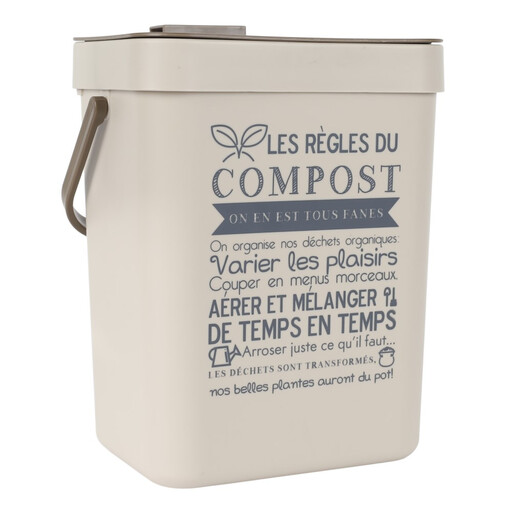
Key Features This 5-litre model is all about the essentials. Compact, lightweight, and equipped with a well-fitting lid, it gets the job done and does it well. Its small footprint makes it an excellent apartment composter or a great choice for kitchens where every square inch counts.
Benefits
Who is it for? For people living alone, couples, or those with limited space. It's the smart choice for starting to sort food waste without any hassle or breaking the bank.
Waste management is part of a broader approach to kitchen organization. Didn't find what you were looking for in our selection? Or are you simply looking to rethink your space's layout?
? Explore all our kitchen storage solutions.
A few simple tricks are all you need to keep odors at bay. Empty your kitchen composter every 2 to 3 days. You can also line the bottom with a piece of newspaper or cardboard to absorb excess moisture. Finally, choosing a model with an airtight lid, a charcoal filter, or a ventilation system is, of course, your best guarantee.
The ideal frequency depends on the size of your pail, the ambient temperature, and the type of waste you put in it. As a general rule, emptying it every 2 to 4 days is recommended to prevent bad odors and fruit fly infestations, especially in the summer.
You can add most plant-based organic waste: fruit and vegetable peels, coffee grounds and paper filters, tea bags, crushed eggshells, and vegetarian leftovers. However, you should avoid meat, fish, dairy products, and oily foods in an indoor composter, as they can produce strong odors and attract pests.