
Livraison le jour même ou le lendemain

Qualité garantie

Débloquez vos offres de bienvenue: Livraison GRATUITE | Jusqu'à -80 % | 30 jours d'essai gratuits à JoyPlus
Téléchargez l'application
A kitchen cleaning brush can make washing up, scrubbing pans and cleaning bottles much easier. Yet a poorly chosen model often ends up at the back of a drawer after just a few uses. Handle too short, bristles too abrasive or insufficient drying – some flaws only become apparent after you’ve bought it.
Here are the criteria to consider when choosing a dish brush, a pan-scrubbing brush or a multi-purpose cleaning brush that suits your home, your habits and the surfaces you need to clean.
Very stiff bristles can tackle baked-on residue, but they also risk scratching certain coatings. A non-stick pan, a painted surface or delicate glass shouldn’t be cleaned in the same way as a steel oven rack.
The choice therefore depends on the intended use:
A brush that stays constantly damp can develop unpleasant odours and wear out more quickly. A hanging loop, a removable head or a design that aids drainage are all practical details to look for in household cleaning accessories.
After each use, rinse the head, remove any food debris and leave it to dry in a well-ventilated spot. Also avoid leaving a wooden handle sitting in stagnant water.
A multi-purpose cleaning brush can be used for several tasks, but it won’t always replace a bottle brush or a brush fitted with a squeegee. Before putting it to new uses, check its length, the shape of its head and the surfaces it’s designed for.
For cleaning a deep pan or a large sink, a long handle keeps your hands away from hot water and cleaning products. For narrow bottles, the overall length of the brush and the diameter of its head are crucial.
For example, a long bottle brush measuring 36 cm with a 21 mm head can reach the bottom of tall containers while still fitting through a relatively narrow neck. However, the diameter must match your bottle: a head that’s too wide won’t reach the corners properly.
Before scrubbing, check the recommendations from the manufacturer of your pan or equipment. Even a brush described as gentle should be tested on a small area when used on a delicate surface.
To minimise the risk of scratches:
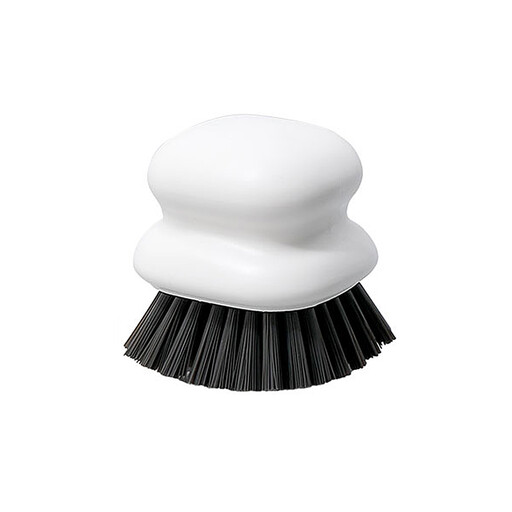
Why this choice suits this profile: Its short format offers good control for everyday washing up, frying pans and small areas of the sink.
The direct grip helps you better control the pressure and avoids scrubbing your utensils too aggressively.
Compact design suited to pans, washing up and everyday residue.
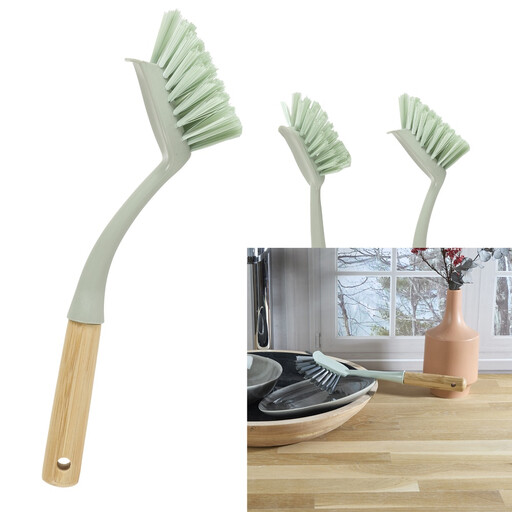
Why this choice suits this profile: Its bamboo handle and upright silhouette fit easily into a kitchen where aesthetics and storage matter.
The long handle and hanging loop encourage more hygienic use and air drying.
Bamboo handle, dense synthetic bristles and a reach suited to deep pans and tall containers.
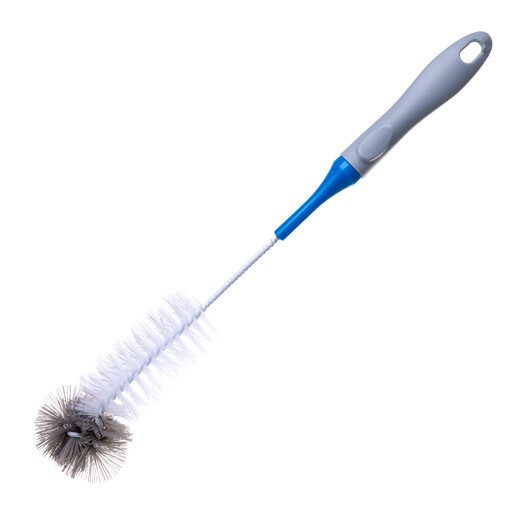
Why this choice suits this profile: Its 36 cm length is ideal for tall bottles, flasks, containers and receptacles that are hard to reach by hand.
The stated length and head diameter reduce the risk of buying a brush that can’t reach the bottom of the container.
36 cm length, 21 mm head and rust-resistant polypropylene construction.
Depending on your kitchen and bathroom, a few specialised tools can complement a kitchen cleaning brush:
Choose a soft, non-abrasive head and avoid metal bristles. Start by soaking any residue, then scrub without applying excessive pressure. Always check the recommendations from your pan’s manufacturer.
Rinse it after each use, shake off the excess water, then place it in a ventilated space, head down or hanging. Don’t leave it in a cup filled with water. With a bamboo handle, be especially careful and avoid prolonged contact with moisture.
There’s no universal lifespan. Replace it when the bristles are flattened, start to come loose, retain an odour despite washing, or no longer remove grime effectively. Regular maintenance extends its useful life, but shouldn’t delay replacement when it’s worn out.