
Livraison le jour même ou le lendemain

Qualité garantie

Débloquez vos offres de bienvenue: Livraison GRATUITE | Jusqu'à -80 % | 30 jours d'essai gratuits à JoyPlus
Téléchargez l'application
A kitchen chopper can save valuable time when chopping onions, herbs, vegetables, dried fruit or meat. However, it is important to choose an appliance suited to your needs: a bowl that is too small for family meals, a motor that overheats after just a few seconds, accessories that are awkward to clean… Before comparing prices, it is therefore worth considering the chopper’s design and what you intend to use it for.
A high power rating does not guarantee that a chopper will handle every preparation with ease. Some manufacturers quote maximum power or so-called ‘locked-rotor’ power, which does not necessarily correspond to the power used during normal operation. A compact electric chopper is perfectly suitable for herbs and tender vegetables, but may struggle with a large quantity of meat.
Operating time is just as important. The KitchenCook MATT POD, for example, works in 15 to 20-second pulses, with a recommended one-minute break between cycles. This is not a problem if it suits your usual routine. However, it can quickly become inconvenient if you are preparing several batches one after another.
Lightweight and easy to handle, a plastic bowl is often practical for everyday use. A chopper with a glass bowl, on the other hand, offers better visibility of the contents and a heavier, more stable base. However, bear in mind that glass is not necessarily designed to withstand heat or thermal shock. The Bear model, supplied with 0.6- and 2-litre bowls, must not be used with boiling-hot food or exposed to temperature changes of more than 50 °C.
Also check which parts are dishwasher-safe. The bowl, lid and blades do not always have the same care recommendations.
Stainless-steel blades remain extremely sharp, even on a mini chopper. A locking lid, non-slip base and suitable pusher help prevent incorrect handling. As for the motor unit, it must of course never be immersed in water.
An appliance that is easy to take apart will naturally be used more often. Conversely, hard-to-reach corners can trap residue and make cleaning more difficult, especially after chopping meat.
For a sauce, a few cloves of garlic or a handful of herbs, a 0.5 to 0.9-litre bowl is generally sufficient. Compact and easy to store, a mini chopper is ideal even for a small kitchen.
For a family or larger preparations, a capacity of 1.5 to 2 litres means fewer cycles are needed. However, avoid filling the bowl to the brim: the food needs to circulate around the blades to be chopped evenly.
Stainless-steel blades are suitable for most everyday uses, provided you follow the manufacturer’s guidance on permitted ingredients. Two speeds allow you to adapt the operation to the ingredients: a gentle speed for an onion or fruit, and a faster setting for nuts or certain firm vegetables.
Pulse mode gives you better control over the texture. Several short presses often produce a more even result than continuous operation. A multifunction chopper may also mix, purée or finely chop certain foods, but it does not necessarily replace an appliance specifically designed for meat.
A meat grinder uses a feed screw and perforated plates to turn meat into mince. The Kitchencook MG1300 is supplied with two 5 and 7 mm stainless-steel plates, a reverse function and a kit for making sausages and kibbeh. The reverse function can help clear a blockage, but the appliance must always be switched off before any intervention.
A conventional chopper cuts food using rotating blades. It is particularly suitable for vegetables, herbs, nuts and small quantities of meat. However, the result depends more heavily on the size of the pieces cut beforehand and the number of pulses used.
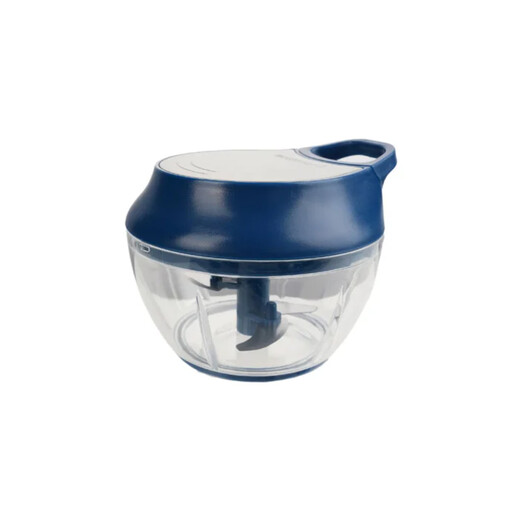
Why this choice suits this profile : Its pull-cord mechanism works without a power socket and is ideal for small everyday preparations.
With no motor, there is no risk of overheating and no electricity consumption. The non-slip base also improves stability during use.
Three stainless-steel blades, manual texture control and a 500 ml bowl.

Why this choice suits this profile : Its two glass bowls, with capacities of 0.6 and 2 litres, let you match the volume to the preparation and keep ingredients separate with ease.
The two sizes help prevent overfilling a small bowl or running the large bowl for a small portion. The locking mechanism also helps prevent the appliance from starting when the parts are not assembled correctly.
Advertised power of 300 W, two speeds, glass bowls and stainless-steel blades.
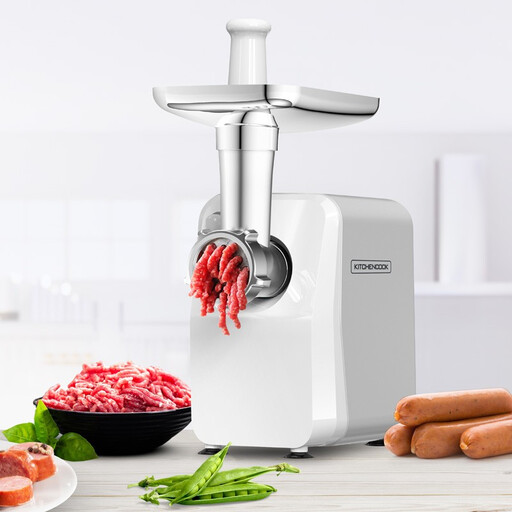
Why this choice suits this profile : This meat grinder is designed for regularly preparing mince, sausages or kibbeh at home.
The 5 and 7 mm plates let you choose the fineness of the mince instead of relying on a single mini-chopper blade.
Advertised locked-rotor power of up to 1,300 W, reverse function, sausage-making kit and suction feet.
A cordless chopper can be particularly useful when your worktop is far from a power socket. The Cuisinart RMC100E has a 900 ml bowl, two speeds and a lithium-ion battery that, according to the manufacturer, provides around 15 minutes of continuous use after approximately 115 minutes of charging. However, keep an eye on the battery level and use only the cable and adapter supplied.
We have selected a comprehensive, real-time updated list of products that meet these demanding criteria and European safety requirements.
A 0.5 to 0.9-litre mini chopper is sufficient for garlic, onions, herbs and small portions of vegetables. A manual model is ideal if you would rather avoid using electricity ; an electric model delivers more consistent results with less effort.
Some appliances can chop or purée cooked and cooled food. Check the instructions, respect the bowl’s capacity and never place boiling-hot ingredients in a bowl that is not designed to withstand heat.
A meat grinder uses a feed screw and perforated plates to achieve the desired texture. A multifunction chopper generally uses rotating blades for vegetables, herbs, nuts, fruit and mixed preparations. The right choice therefore depends on both the ingredients and the quantities you need to prepare.