
Livraison le jour même ou le lendemain

Qualité garantie

Débloquez vos offres de bienvenue: Livraison GRATUITE | Jusqu'à -80 % | 30 jours d'essai gratuits à JoyPlus
Téléchargez l'application
A kitchen blender can be used to prepare everything from a smoothie to soup, compote or a sauce. However, not all models are designed for the same purposes. Advertised power, a wealth of accessories and portable formats can sometimes create an incomplete picture of what an appliance can do.
Before placing your order, three potential pitfalls deserve particular attention:
For blending soft fruit, already-cooked soups or simple sauces, a 600 W hand blender is generally sufficient for regular household use. This type of motor often allows the appliance to remain compact while keeping energy consumption down with each preparation.
A 1200 W blender is more suitable for those who want to blend thick mixtures, ice or fibrous ingredients, provided the appliance is designed for these uses. The maximum advertised power does not necessarily represent the power available continuously. Also check the recommended operating time and cooling periods.
For a smoothie blender, using enough liquid helps the ingredients circulate around the jug. Frozen fruit, ice cubes and nuts may nevertheless require an appliance specifically designed to blend them.
An immersion blender lets you blend directly in a saucepan, tall container or bowl. Easy to store, it is particularly well suited to soups, purées, compotes and sauces. A splash-proof foot helps to limit splashes, although it is still best to keep the blade completely submerged.
A jug blender is better suited to family-sized preparations. In particular, check:
A personal blender generally comes with a 475 to 700 ml cup. It is suitable for individual portions and small kitchens. A portable blender rechargeable via USB-C can be slipped into a bag when travelling, but its power and battery life remain more limited than those of a mains-powered model.
A blender equipped with several accessories can combine an immersion blender shaft, whisk, chopper and beaker. This can be a useful option if you regularly prepare sauces, beaten eggs, herbs or small quantities of chopped ingredients.
Before choosing, check the details that will make a difference in everyday use:
Blades must always be handled with care. Unplug the appliance before changing an accessory or cleaning it. For hot preparations, allow the food to cool and follow the maximum temperature stated in the instructions. The models presented below specify continuous operating limits of around one to two minutes, depending on their design.
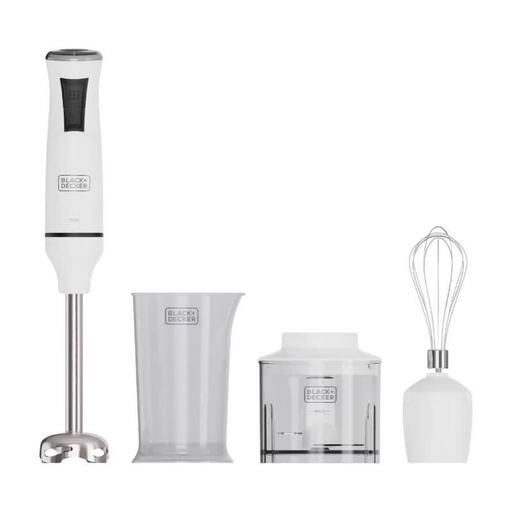
Why this choice suits this profile : This 600 W mains-powered immersion blender is ideal for everyday preparations without cluttering your worktop. Its 20 speeds, turbo mode and three accessories make it easy to start with simple recipes and gradually explore more uses.
The power, speeds and usage limits are clearly stated. The splash-proof foot helps to minimise splashes while blending.
600 W, 20 speeds, turbo function, removable accessories and dishwasher-compatible parts.
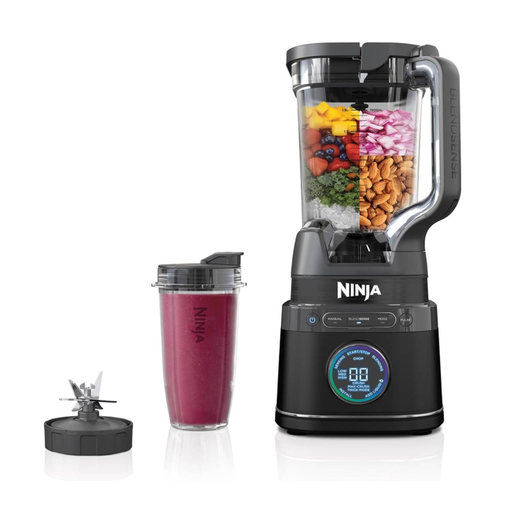
Why this choice suits this profile : This multifunction blender combines a 2 L jug with two individual 680 ml cups. It can therefore suit a family just as well as someone who prepares a smoothie or sauce separately.
The maximum capacities are stated separately for the jug and the cups. Manual modes also let you stay in control rather than relying solely on an automatic programme.
1 200 W motor, 10 speeds, 15 advertised functions, 2 L jug and two 680 ml cups.
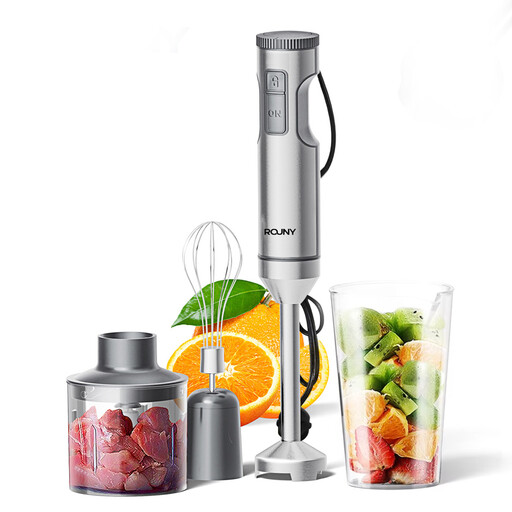
Why this choice suits this profile : Its equipment — immersion blender shaft, whisk, 500 ml chopper and 700 ml beaker — is ideal for people who switch between soups, sauces, smoothies, beaten eggs and small chopped preparations.
The maximum power of 1 200 W is accompanied by a rated power of 1 000 W and a one-minute operating limit. These specifications help you plan cycles without overheating the motor.
Variable speed control, overheating protection, a wide range of accessories and dishwasher-safe parts at temperatures below 60 °C.
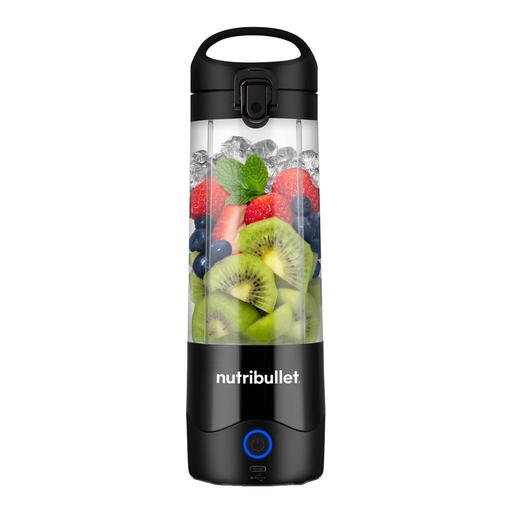
Why this choice suits this profile : Its 475 ml cup and USB-C charging meet the needs of a student, sports enthusiast or anyone who wants to prepare a drink at the office or while travelling.
Its format is clearly designed for individual portions. With 100 W and 20-second cycles, it does not claim to replace a family-sized blender.
475 ml BPA-free Tritan cup, USB-C charging advertised at 90 minutes and a weight of 0.86 kg.
We have put together a complete, real-time selection of products that meet these demanding criteria while complying with European safety regulations.
For soups, purées, compotes and sauces, yes, provided the quantity remains reasonable and the container is tall enough. However, for regularly crushing ice, preparing several portions or achieving a very smooth texture, a jug blender will generally be more capable.
A 600 W to 900 W appliance can be suitable for smoothies made with soft fruit and liquid. If you often use frozen ingredients or prepare drinks for the whole family, focus instead on the jug capacity, blade design, whether it has a pulse mode and the manufacturer’s recommendations. Power alone is not enough to make the right choice.
It depends on the model and the recipe. Some immersion blenders specify a maximum one-minute cycle, while certain blenders allow up to two minutes. Respecting these limits, avoiding overfilling the container and allowing the motor to cool down will help extend the appliance’s lifespan. For each use, the instructions remain the definitive reference.