
Livraison le jour même ou le lendemain

Qualité garantie

Débloquez vos offres de bienvenue: Livraison GRATUITE | Jusqu'à -80 % | 30 jours d'essai gratuits à JoyPlus
Téléchargez l'application
Managing kitchen waste can be a real challenge. Between lack of space, sorting for recycling, and unpleasant odours, choosing the right kitchen bin is more strategic than it seems. Faced with a jungle of available models, it's easy to feel lost. This guide is here to break down the options and help you find that perfect fit—one that seamlessly adapts to your habits and your kitchen's layout.
Before you dive in, let's review the key points to check to ensure you make the right choice.
The volume of the bin, measured in litres, primarily depends on the size of your household. A single person or a couple will be fine with a 20 to 30-litre model, while a family of four should aim for a capacity of 40 to 50 litres.
The available floor space is just as crucial. A classic pedal bin can be tucked into a corner, whereas a built-in kitchen bin slides into a base cabinet to free up floor area. This is a popular solution in modern kitchens and small spaces for its perfect integration and space-saving benefits.
Today, good kitchen waste management inevitably involves sorting. To simplify the task, many recycling bins feature multiple compartments to easily separate packaging, glass, and general waste.
For biowaste, a small kitchen compost caddy is a simple and eco-friendly solution. Another alternative is gaining popularity: the food waste disposer. Installed under the sink, it pulverises food scraps, which are then flushed away with wastewater. The result: a reduced volume of waste and far fewer odours.
Stainless steel remains the material of choice for its durability and ease of maintenance. Fingerprint-proof finishes are a real plus for maintaining a pristine look effortlessly. For hygiene, pedal bins allow for hands-free opening. Also, consider user comfort: a soft-close lid prevents slamming, and a removable inner bucket makes cleaning and changing the bag much easier.
Here is a selection of diverse solutions, each meeting specific needs for organisation and hygiene.
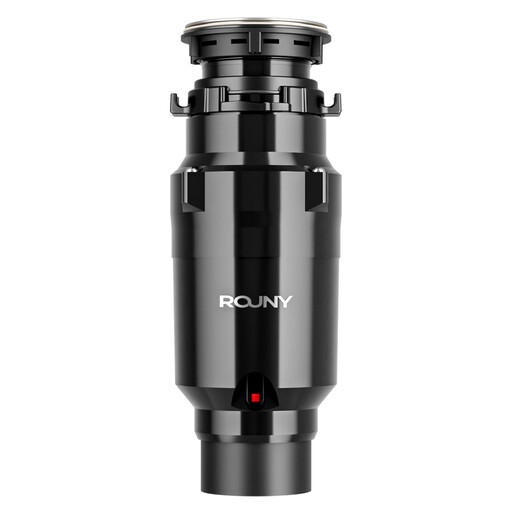
Why It Stands Out
This disposer is a modern solution for handling organic waste right at the source. Equipped with a permanent magnet motor and a stainless steel grinding system, it efficiently transforms food scraps into fine particles. It is designed for quiet operation, with a stated noise level of ≤50?dB.
Pros
Who Is It For? For households looking to optimise their waste management, limit odours, and reduce the frequency of taking out the bins. It's a relevant option for those who have neither the space nor the desire to maintain a composter.
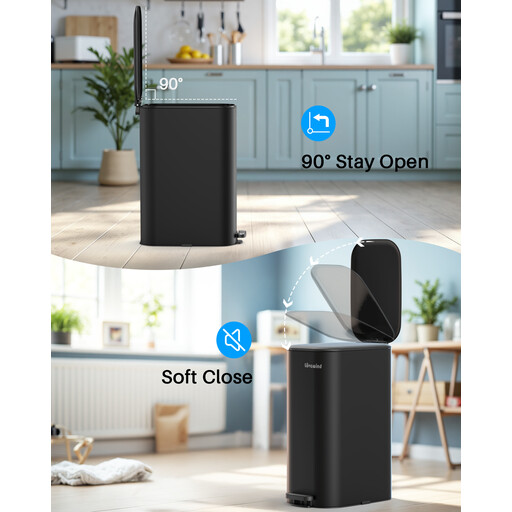
Why It Stands Out
A classic that combines design and practicality. Its stainless steel body with a fingerprint-proof finish ensures an understated look and minimal maintenance. Its slim design fits easily into narrow spaces, and its 30L capacity is perfect for a couple or a small family.
Pros
Who Is It For? For those seeking a freestanding bin that is practical, hygienic, and stylish. Its compact size makes it a smart choice for kitchens where floor space is at a premium.
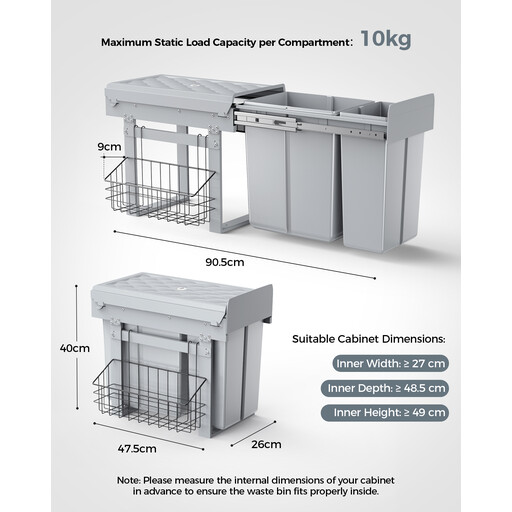
Why It Stands Out
Designed to fit inside a base cabinet (from 30 cm wide), this system is a discreet solution for recycling. It includes two bins (10L + 20L) mounted on a full-extension runner, ensuring simple and complete access to both buckets.
Pros
Who Is It For? Ideal for those planning a new kitchen or looking to reorganise an existing cabinet. Perfect for fans of minimalist kitchens who want an integrated and completely invisible sorting solution.
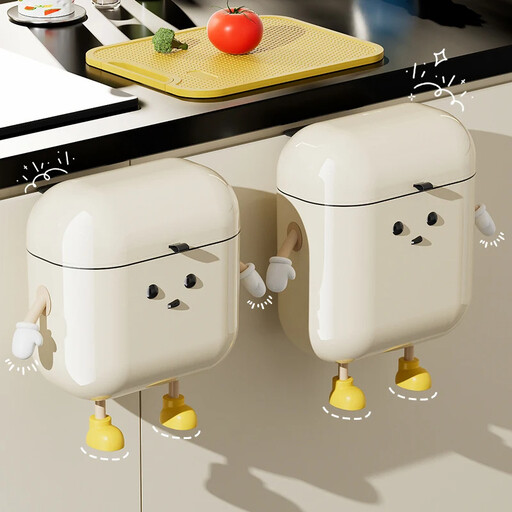
Why It Stands Out
This small 9L bin is a powerhouse of practicality. It can be hung on a cabinet door or mounted on a wall, keeping it always within reach during meal prep. Its lid contains odours from food scraps.
Pros
Who Is It For? For those in small apartments or anyone looking for a companion bin for their biowaste. It's the ideal accessory to keep your worktop clear during meal preparation.
If your kitchen requires a custom integrated solution, such as a larger pull-out model or a different bin configuration, other options are available. A system tailored to your cabinets can truly simplify your daily waste management.
Discover our full range of pull-out cabinet bins to find the system that will perfectly integrate with your furniture.
The ideal capacity depends on the size of your household and how often you take out your rubbish. As a guide:
In a small space, optimisation is key. Opt for a built-in kitchen bin under the sink to free up floor space. Vertical models with several stacked compartments are also an excellent alternative. Finally, a small hanging bin for biowaste can effectively complement your sorting system without adding clutter.
A food waste disposer is a very effective solution for eliminating organic waste (peelings, leftovers, etc.). It grinds them into fine particles that are flushed down the drains, which significantly reduces the volume of your general waste bin and prevents bad odours. However, keep in mind that it only processes organic waste and its installation must comply with local plumbing regulations.