People who often cook in a small space
If you regularly make meals from scratch, consider which preparation and cooking steps a single appliance could genuinely handle. Don’t forget to allow room to store the bowl and accessories.


Start by thinking about the tasks you do each week: a cooking food processor can combine food preparation and cooking, while a food processor is mainly suited to chopping, mixing or kneading. A compact cooking appliance is only worthwhile if it fills a genuine gap; if your current appliances already meet your needs, keeping them avoids adding to the clutter. In every case, check how much space you’ll need to use, clean and store the appliance and its accessories.
If you regularly make meals from scratch, consider which preparation and cooking steps a single appliance could genuinely handle. Don’t forget to allow room to store the bowl and accessories.
If you’re already happy with your cooking equipment, a food processor could help with regular chopping, grating, slicing or kneading without the need for a cooking food processor.
If your current appliances are working well, ask yourself which one a new purchase would replace and where you would store it. The French Ministry for Ecological Transition recommends considering how an appliance will be used before buying one that may see little use.
First, identify the task your current equipment can’t handle. Then compare how much space each appliance takes up in use, not just its dimensions when closed.
| What matters to you | What to check | Who this applies to |
|---|---|---|
| Combining food preparation and cooking | Compare the tasks involved in your usual meals with the model’s functions, and check which accessories are included. | If I regularly chop, mix and then cook, I want to avoid getting out several appliances for the same meal. Around 36% of consumers would prioritise combining these tasks. |
| Keeping overall clutter to a minimum | Measure the width, depth and height, then allow for opening the lid or door and storing the accessories. | When my worktop and cupboards are already full, I need to be able to use the appliance without moving everything else in the kitchen. The space actually required would be a priority for around 29% of consumers. |
| Filling a gap in your cooking equipment | Check that the cooking modes suit the dishes you make regularly and that the capacity is right for the portions you prepare. | If I’m mainly missing a cooking mode I’d use often, I’d rather choose an appliance designed for that purpose than pay for preparation functions I don’t need. Around 21% of consumers would prioritise a specific cooking function. |
| Avoiding a redundant purchase | Identify which appliance the new one would replace, and look into cleaning and repair options for the model you’re considering. | If my current equipment already does everything I need, I don’t want to add an appliance to clean and store for occasional use. Around 14% of consumers would prioritise keeping what they already have. |
A food processor can handle several preparation tasks without cooking. A multicooker, on the other hand, can offer several cooking modes without chopping or grating. So the number of functions doesn’t tell you how many of your appliances it could replace.
Make a note of the tasks you do each week and which appliances you already use for them before comparing new models.
The depth, bowl height and space needed to open a door or lid can all make an appliance awkward to use on a small surface. Accessories also take up extra space in your cupboards.
Compare the width, depth and height, and check the model’s instructions for clearance and ventilation requirements.
More bowls, blades or containers also mean more parts to clean. ADEME highlights the importance of maintenance in helping to prevent breakdowns.
Check which parts are dishwasher-safe, how the accessories can be stored and what repairability information is available for the specific model.
Replacing an appliance only frees up space if you know what will happen to the one you already have.
Before ordering, decide whether you’ll keep, repair or give away your old appliance. If you’re replacing it, also ask the seller about taking back an appliance of the same type.
The Companion range brings food preparation and cooking functions together in cooking food processors.
Cook Expert is a range of cooking food processors that combine food preparation and cooking, with several variants available.
The MultiTalent food processors are designed for food preparation tasks, rather than as a replacement for cooking appliances.
The brand also offers appliances designed for specific types of cooking, rather than for every food preparation task.
These appliances suit two distinct needs: combining some food preparation and cooking tasks, or having several cooking modes in a dedicated appliance. Compare each one with what you already own and the space available when it’s in use.
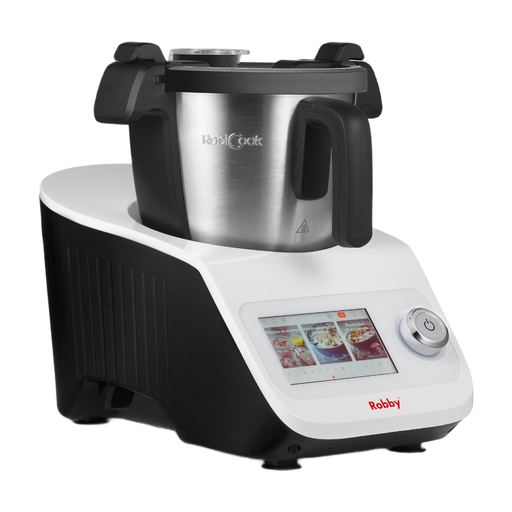 Image unavailable
Worth considering if you want to combine food preparation and cooking tasks rather than add an appliance dedicated to just one type of cooking.
Built-in scales and a touchscreen are mentioned in the product name. Check how much space you’ll need to position and use the food processor, as well as to store its accessories.
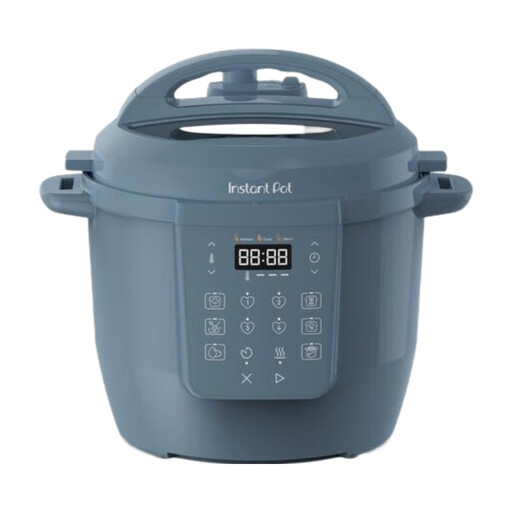 Image unavailable
Compare it with your current appliances if you need several cooking modes, rather than chopping or grating.
The product name specifies a 5.7 L capacity, seven functions and four custom presets. Allow space around the lid and follow the instructions for pressure cooking and using steam.
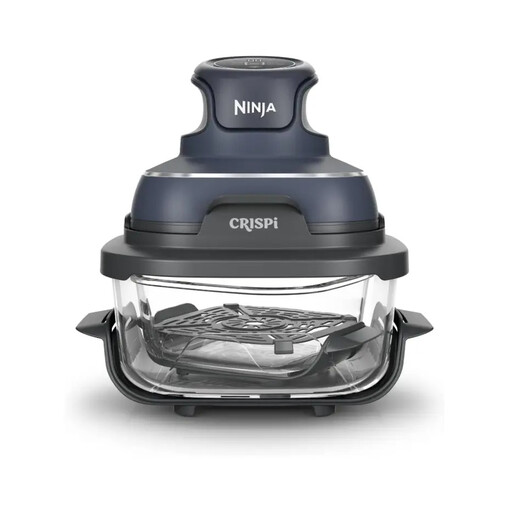 Image unavailable
A dedicated cooking option if it suits a regular need that your current appliances don’t meet.
Check how much space you’ll need for the appliance and its containers, as well as the clearances specified in the instructions. Hot containers need to be handled with care.
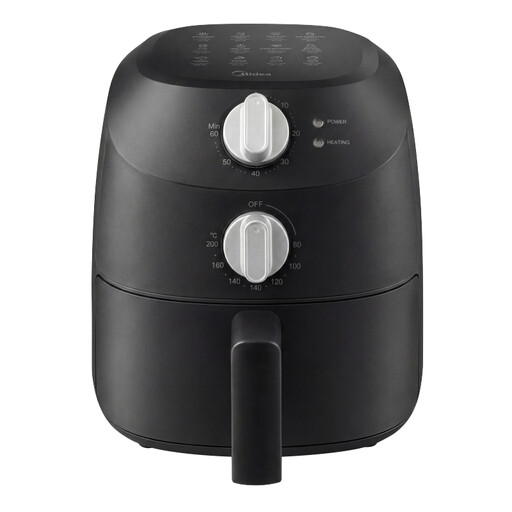 Image unavailable
Consider it for a specific type of cooking if the basket size suits your portions and it won’t duplicate the function of another appliance.
The product name specifies 2 L, 1 150 W, a 60-minute timer and a non-stick basket. Compare the external dimensions with your available space, and follow the instructions on ventilation and handling hot surfaces.
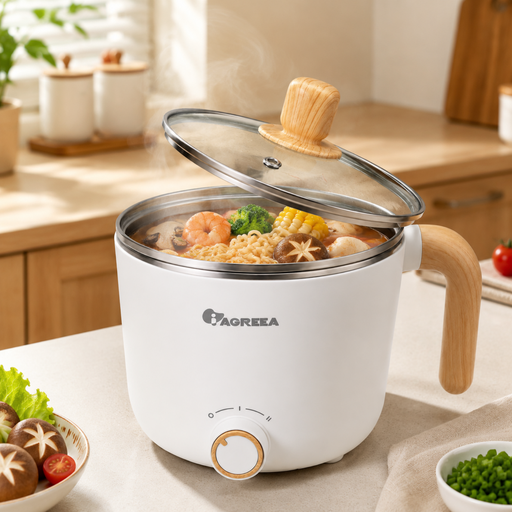 Image unavailable
Compare it with your existing equipment if you’re looking for an electric pot for simple cooking, rather than a food processor that chops or kneads.
The product name specifies a stainless steel inner pot and two power settings, 300 W and 600 W. Check the dimensions, required clearances and storage space before choosing this size.
Measure the available width, depth and height, then check how much room the bowl, lid, door or drawer will need during use. Consult the instructions for the model’s clearance and ventilation requirements: the external dimensions alone won’t tell you where it can be installed.
Only if the model can actually perform the cooking tasks you need. A food processor designed for chopping, grating or kneading can’t replace a cooking appliance for those functions alone; check the tasks listed for the specific model.
Keep them if a new appliance wouldn’t replace a regular task and you wouldn’t be able to store it without cluttering up the kitchen. The French Ministry for Ecological Transition recommends thinking about how an appliance will be used if it’s likely to see little use; for an occasional need, you could also consider borrowing or hiring one.
If it’s still working, you could keep it or give it away; if it’s broken, first look into whether it can be repaired. In France, the Ministry for Ecological Transition states that a ‘one-for-one’ take-back scheme applies when buying a product of the same type. Ask the seller how to arrange this.