What should you check before buying?
To manage energy use in the kitchen, start with the capacity you need and how you actually use the appliance, then compare the right indicators for each type. An appliance that stores food all the time shouldn’t be assessed in the same way as one used for washing or cooking cycles.
| Consideration |
What to check |
Consumers concerned |
| Refrigeration appliances used continuously |
Compare annual energy consumption and energy class across appliances of the same type, choosing a suitable capacity. ADEME also recommends considering extra features. |
If my fridge-freezer stays plugged in all year, I want to avoid replacing it with a model whose capacity or features I won’t use; around 29% of consumers would put this need first. |
| Dishwasher cycles |
Compare kWh per 100 Eco cycles, litres per cycle and capacity; check the Eco programme duration too. These are among the indicators listed by the European Commission. |
When I run the dishwasher regularly, I need a capacity I can fill and a programme that takes a suitable amount of time. This would be the priority for around 23% of consumers. |
| Freezer capacity |
Work out how much storage you really need before adding or upgrading an appliance that will run continuously; then compare its annual energy consumption. |
If I don’t store many frozen products, I’d rather check that a separate appliance would genuinely be useful; around 18% of consumers would prioritise this question. |
| Choosing a hob |
Check the technology, the cooking zones you’ll use and whether your pans are compatible with induction. According to the European Commission, hobs don’t carry an energy label. |
I often cook on the hob and want to avoid choosing technology that doesn’t suit my pans or habits; around 18% of consumers would put this need first. |
| Oven use |
Compare the capacity in litres and the kWh per cycle for the cooking modes shown on the label, as set out by the European Commission. |
If I only use the oven occasionally, I’m looking for a capacity that suits the dishes I make; around 12% of consumers would prioritise this choice. |
Dishwasher brands to consider
These brands offer useful points of comparison when looking at dishwashers. Choose based on the specifications of the model you’re considering, rather than the brand alone.
Bosch
Bosch Électroménager France lists built-in and freestanding dishwashers, with product information that includes energy class, water used on the Eco cycle, noise and dimensions, depending on the model.
- These product details let you check a model’s specifications before comparing its installation requirements and Eco programme.
- Specifications and brand claims for one model don’t necessarily apply to the whole range: compare the details of the models you’re interested in.
Miele
Miele France lists integrated and freestanding dishwashers; some product pages show energy class, noise and Eco programme consumption.
- Model specifications make it easier to compare capacity and energy use with your installation requirements.
- A drying option or another programme on its own doesn’t tell you how the model’s Eco cycle compares in terms of energy use.
Electrolux
Electrolux France lists built-in and freestanding dishwashers, including 45 cm and 60 cm models.
- Choosing the right size can help you match the appliance to your available space and usual loads.
- The features highlighted by Electrolux don’t replace comparing each model’s kWh per 100 cycles, water per cycle, capacity and Eco programme duration.
Whirlpool
Whirlpool France lists 45 cm and 60 cm dishwashers and offers a spare-parts search by model reference.
- The exact model reference can help you look for parts before deciding whether to repair or replace an appliance.
- Check whether parts are available for your exact model; a model-reference search doesn’t guarantee that a particular part is in stock.
Fridges, freezers and dishwashers on Joybuy
These models let you consider two separate decisions: choosing the right size for a fridge-freezer that runs continuously, or picking a dishwasher to suit your available space and usual loads. To compare energy use, check the label for the exact model, using the right measures for each category.
 Image unavailable
Candy CFQQ5T817EPS, 467 L fridge-freezer
Worth considering if you need plenty of refrigeration space all year round, after checking that this capacity suits your household.
- Four doors; energy class E.
- Total No Frost and Smart Inverter features are listed in the model name.
- Compare the annual energy consumption on the label with that of fridge-freezers in a suitable capacity range.
View on Joybuy
 Image unavailable
Haier HTW5618ENMG, 360 L fridge-freezer
Consider this if a 360 L fridge-freezer suits your everyday storage needs; check how much capacity you need before replacing an appliance that still works.
- Three doors; energy class E.
- Total No Frost, Wi-Fi and My Zone are listed in the model name.
- Compare the annual energy consumption on the label with that of similar appliances of a comparable type and capacity.
View on Joybuy
 Image unavailable
Sonlu CC-520WE, 444 L fridge-freezer
Worth considering if you need substantial storage, provided you check that the capacity and dimensions suit your kitchen.
- Advertised capacity of 444 L; energy class E.
- Frost-free design is stated in the product name.
- Check the installation dimensions and compare annual energy consumption with appliances of a suitable capacity.
View on Joybuy
 Image unavailable
Heinrich's HTG 8840 Schwarz, 6-place-setting table-top dishwasher
This table-top model is worth considering if your usual loads fit within 6 place settings and you have the space and connections it needs.
- Seven programmes; energy class D.
- Advertised noise level of 47 dB.
- To compare energy use, check the label for kWh per 100 Eco cycles and the programme duration.
View on Joybuy
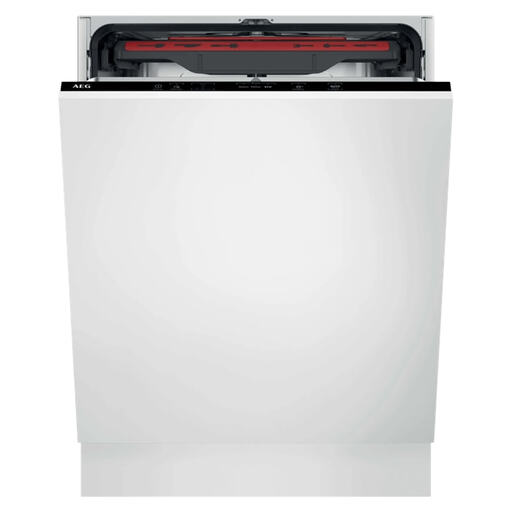 Image unavailable
AEG FSB34707Z, 60 cm fully integrated dishwasher, 14 place settings
Consider this if you regularly have enough washing to fill a 14-place-setting dishwasher and its integrated installation suits your kitchen.
- Advertised width of 60 cm; energy class C.
- Check the exact dimensions and make sure it fits the housing before buying.
- Check the label for kWh per 100 Eco cycles, water per cycle and programme duration.
View on Joybuy
Frequently asked questions
Should you replace an old kitchen appliance to use less energy?
Not necessarily. ADEME says a newer appliance may use less energy, but its size and how you use it matter too. Before replacing an appliance that still works, check the capacity you need, whether it can be maintained and whether it can be repaired.
How can you compare two dishwashers beyond their energy class?
Compare their kWh per 100 Eco cycles and litres of water per cycle on the same basis. The European Commission also lists capacity, Eco programme duration and noise on the label. Consider these figures in relation to your usual loads.
Why check the Eco programme duration?
Because the dishwasher’s reference figures are based on this programme, whose duration is shown on the label. Check that you can fit it into your washing routine rather than assuming its figures apply to other programmes.
Does an electric hob have an energy label?
No. The European Commission says hobs aren’t required to carry an energy label. When choosing a hob, check the technology, cooking zones and whether your cookware is compatible. Ovens, on the other hand, show energy use per cycle.
How can you check the details of an appliance with an energy label?
The QR code on the label can take you to the model’s entry in EPREL, the database described by the European Commission. Make sure the model reference and variant shown match the appliance you’re considering exactly.


