Start by looking at appliances that run continuously and those you use often, then compare their energy consumption with similar appliances of the same type, capacity and usage. If an appliance is still working properly, cutting out unnecessary use may be the first step. If it has broken down, ask for a diagnosis and a quote before deciding whether to replace it. A larger new appliance, or one you use more often, is no guarantee of lower energy consumption.
Who might face these choices?
Households with an appliance that runs continuously
A fridge, fridge-freezer or freezer runs day and night. If you’re thinking of replacing yours, first check whether its capacity and features still suit your needs. ADEME points out that these appliances run continuously.
Regular dishwasher users
If you run frequent cycles, compare models with a suitable capacity rather than focusing only on their energy rating. ADEME highlights the kWh per 100 standard cycles and water use per cycle as useful figures to check.
Households weighing up repair or replacement
If an appliance has broken down or is getting old, a diagnosis and quote can help you decide whether repair is still an option. For a new dishwasher, the repairability index is another factor to consider, according to the Ministry for Ecological Transition.
What should you look at first?
Start by working out whether the issue is avoidable use, a fault or an appliance that needs replacing. For a replacement, the capacity you need and the energy consumption figures matter more than comparing energy-rating letters alone.
Adjust how you use it
When to consider it: the appliance works properly, but some cycles or running times aren’t needed.
Limitation: changing your habits won’t fix a fault or change the appliance’s standard energy consumption figure.
Get the appliance checked
When to consider it: you’re thinking of replacing the appliance because of a fault, and a repairer can provide a quote.
Limitation: whether a repair or any available support applies depends on the appliance, the fault and the relevant conditions. A quote helps you assess your particular situation.
Replace only where needed
When to consider it: your current appliance doesn’t suit your needs, or replacing it still makes sense after considering how you use it and, if it has broken down, whether it can be repaired.
Limitation: label figures are for comparison, not a guarantee of how much energy the appliance will use in your home. The capacity you choose and how you use it still matter.
| Concern |
What to check |
Consumers concerned |
| Appliances that run continuously |
Compare annual energy consumption in kWh and usable capacity between appliances of the same type that suit your storage needs. |
If my fridge runs day and night, I want to avoid choosing more capacity than I need; around 31 % of consumers prioritise this issue. |
| Dishwasher cycles |
For a similar capacity, check the kWh per 100 standard cycles and litres of water per cycle, then look at the Eco programme duration. |
When cycles are frequent, I want to compare electricity and water use for a capacity that suits me; this is the main concern for around 25 % of consumers. |
| Frequent electric cooking |
Consider how you use your hob and oven separately, and compare the consumption figures for the type of appliance you’re considering. |
I often cook using electricity and want to consider this before changing my appliances; around 19 % of consumers have this as a priority. |
| Repair or replace |
Ask for a diagnosis and quote; check the conditions for the repair bonus and, for eligible new dishwashers, the repairability index. |
If an appliance breaks down, I want to know whether it can be repaired before buying another; around 25 % of consumers put this decision first. |
Mistakes to avoid
-
Choosing a larger fridge or freezer in the name of saving energy
ADEME points out that size and extra features can affect energy consumption. Simply choosing a newer model isn’t enough to justify replacing your appliance.
Work out the usable capacity and features you need before comparing the annual energy consumption of models of the same type.
-
Assuming the kWh per 100 cycles figure applies to every programme
The figure shown for a dishwasher is based on standard cycles; the programmes you use and how often you run them may differ.
Check which programme the figure relates to and how long the Eco cycle takes before comparing the label with your habits.
-
Ruling out a repair before getting a diagnosis
A fault alone doesn’t mean an appliance needs replacing. The repair bonus is intended to encourage repairs, according to the Ministry for Ecological Transition, but eligibility depends on conditions you’ll need to check.
Ask a certified repairer for a quote and check whether your appliance and its fault are eligible before making a decision.
Brands to consider
There are no brands to feature in this section.
Fridges, freezers and dishwashers on Joybuy
These models illustrate two possible purchases: a fridge-freezer for continuous refrigeration and two dishwashers with different capacities. Before replacing an appliance, compare each model with one of the same type and a capacity suited to how you use it.
 Image unavailable
Sonlu CC-520WE, 444 L fridge-freezer
Worth considering if you need a 444 L refrigeration appliance. Check that this capacity suits your storage needs before replacing a smaller model.
The product name states that it is frost-free and has an energy rating of E. Check the energy label for the exact model reference to compare its annual energy consumption with an appliance of the same type and a suitable capacity.
View on Joybuy
 Image unavailable
Samsung DW80H72YBB0U1, 60 cm integrated dishwasher, 13 place settings
Consider this for regular cycles if a 13-place-setting capacity and an integrated installation suit your household.
The product name states that it has an energy rating of B. Check the dimensions of the housing first, then consult the label for the exact model to compare kWh per 100 cycles, water use per cycle and the Eco programme duration.
View on Joybuy
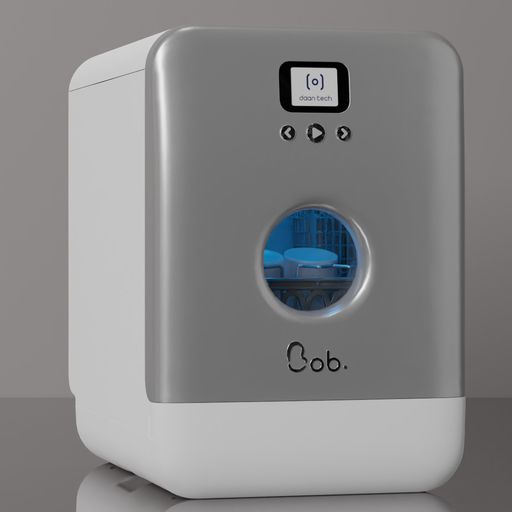 Image unavailable
Bob Mini Dishwasher, 34 cm, 3 place settings, metallic grey and white
This countertop dishwasher is designed for smaller loads. Check whether three place settings are enough without needing to run more cycles than you expected.
Make sure you have a stable surface and access to water and electricity. To compare it with another dishwasher, check which programme and standard consumption figures are used.
View on Joybuy
Frequently asked questions
Why isn’t an energy rating enough to compare two appliances?
The rating letter alone doesn’t tell you whether two appliances meet the same needs. For dishwashers, ADEME recommends checking figures such as energy use per 100 standard cycles and water use per cycle; compare capacity too. For refrigeration appliances, compare annual energy consumption between models of the same type and a suitable capacity.
Does the energy consumption shown for a dishwasher apply to every programme?
No. ADEME presents kWh per 100 cycles and litres of water per cycle as standard figures. Check which programme they relate to, then consider the programmes you use and how many cycles you actually run.
Should you replace a kitchen appliance as soon as it breaks down?
No. If a repair may be possible, ask for a diagnosis and quote first. The Ministry for Ecological Transition describes the repair bonus as an incentive to repair; check the conditions that apply to your appliance and its fault before deciding.
Is an energy label required for a new appliance sold online in France?
Yes, for categories covered by this requirement, including dishwashers, fridges, ovens and cooker hoods. The Ministry of the Economy explains that it also applies to online sales. The DGCCRF states that in France, the label and product information sheet must be in French. Check the label for the exact model you’re considering.


