What should you check before replacing an appliance?
Identify the appliance you want to replace, then compare its capacity and how often you use it with the figures for a model in the same category.
| Priority |
What to check |
Based on your needs |
| Capacity and refrigeration |
Compare refrigeration appliances of the same type and with a similar capacity. According to the European Commission, their labels show energy consumption in kWh/year, compartment volumes and noise levels. |
I want enough room for my food, without permanently increasing the amount of storage space my household needs. |
| Washing cycles |
For a dishwasher, ADEME and the European Commission list the kWh per 100 cycles for the Eco programme, water use per cycle, capacity, programme duration and noise. Relate these figures to how many cycles you run. |
If I use the dishwasher frequently, its capacity should suit my usual loads, and the Eco programme should fit in with my routine. |
| Oven or hob |
The European Commission states that energy labels apply to ovens, but not hobs. For a hob, check the technology, installation requirements and whether your cookware is compatible. |
I’m replacing the appliance I actually cook with; I can’t apply the consumption shown for a different type of appliance to my own habits. |
| Practical considerations |
Check the dimensions, delivery and installation requirements, and arrangements for taking away your old appliance. For a dishwasher, also check the repairability information that applies to the model, as ADEME recommends. |
I need to be able to fit the new appliance in my kitchen and decide what will happen to the old one before placing my order. |
A guide to the brands
There are no brand guides to display in this section.
Appliances to compare on Joybuy
These models are for replacing a fridge-freezer or dishwasher. Compare each one with your current appliance and the capacity you need before deciding that replacing it would reduce your energy consumption.
 Image unavailable
Samsung RB33B612EBN, 344 L fridge-freezer, energy class E
If you’re replacing a refrigeration appliance that runs continuously, check that its 344 L capacity suits your usual storage needs. The product name gives its energy class as E; compare the annual energy consumption on the label for the exact model with that of the appliance you’re replacing.
View on Joybuy
 Image unavailable
Candy CFQQ5T817EPS, 467 L four-door fridge-freezer, energy class E
Its 467 L capacity is worth considering if you need plenty of storage space. Check that the capacity, compartment layout and dimensions suit your household; the energy class alone isn’t enough to tell you whether replacing your appliance is worthwhile. The product name indicates a Total No Frost system.
View on Joybuy
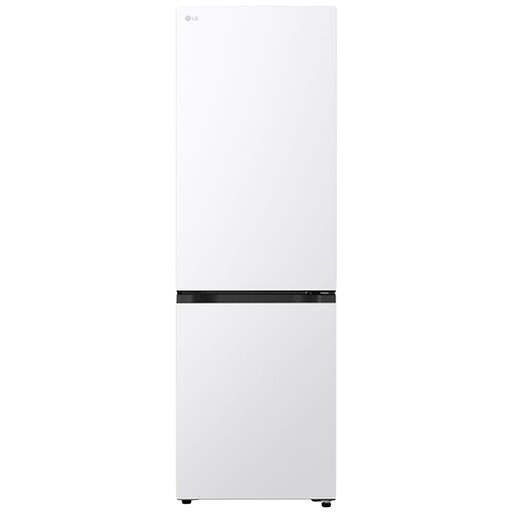 Image unavailable
LG GBBSJ1CCSW, 333 L fridge-freezer, energy class C
To compare this model with your current fridge-freezer, first check whether its 333 L capacity and compartment layout suit your needs. Then check the annual energy consumption on the label for the exact model; an energy class of C alone doesn’t prove that it would use less energy in your home.
View on Joybuy
 Image unavailable
Heinrich's HTG 8840, 6-place-setting countertop dishwasher, energy class D
Check that the countertop design and 6-place-setting capacity suit your available space and usual loads. The product name lists 7 programmes and a noise level of 47 dB. To compare its energy consumption with another dishwasher, use the kWh per 100 cycles for the Eco programme shown on the label for the exact model.
View on Joybuy
 Image unavailable
Sonlu CC-520WE, 444 L fridge-freezer, energy class E
Before considering this model as a replacement for your refrigeration appliance, check that its 444 L capacity meets your storage needs and that its dimensions suit your kitchen. The product name indicates that it’s frost-free, has a noise level of 40 dB and is energy class E. Also compare the kWh/year on its label with that of your current appliance.
View on Joybuy
Frequently asked questions
Is the energy class enough to compare two appliances?
No. Compare appliances in the same category and with a similar capacity, then check their consumption using the same unit. According to ADEME and the European Commission, refrigeration appliances show figures such as kWh/year and compartment volumes, while dishwashers show kWh per 100 cycles for the Eco programme, as well as water use per cycle and capacity.
How can I relate a dishwasher’s label to my annual usage?
Multiply the kWh per 100 cycles shown on the label by your estimated number of cycles per year, then divide by 100. This estimate is based on the Eco programme data described by ADEME and the European Commission. Your consumption may differ if you use other programmes or load the appliance differently.
Does a hob have the same energy label as an oven?
No. The European Commission states that energy labelling applies to ovens, but not hobs. If you’re replacing a hob, consider its technology, your cooking habits and installation requirements. For an induction hob, also check whether your cookware is compatible.
What is the QR code on the energy label for?
It lets you access EPREL, the European Commission’s database of models covered by energy labelling. Check that the model and variant listed there match the appliance on offer, then review the details relevant to its category.


