Households replacing a fridge or freezer
A fridge or freezer runs continuously, as ADEME points out. If you’re replacing one, compare its annual energy consumption with the storage capacity your household actually needs.


To keep electricity use in the kitchen down, start with how you use each appliance: fridges and freezers run continuously, while dishwashers and cooking appliances depend more on how often you use them. Compare the stated consumption of appliances in the same category and with a suitable capacity. As the criteria set out by ADEME and the European Commission show, an energy class alone cannot help you compare appliances in different sizes or with different uses.
A fridge or freezer runs continuously, as ADEME points out. If you’re replacing one, compare its annual energy consumption with the storage capacity your household actually needs.
If you run plenty of cycles, it’s useful to compare kWh per 100 cycles. Capacity, water use per cycle and the length of the Eco programme also matter when choosing an appliance that suits your routine.
The criteria vary by appliance: the European Commission gives consumption per cycle for ovens, but states that hobs are not subject to an energy labelling requirement.
First, decide which appliance and use are driving your purchase, then compare models with similar capacities. ADEME and the European Commission use different units for fridges and freezers, dishwashers and ovens.
| What matters to you | What to check | Who this applies to |
|---|---|---|
| Continuous energy use by a fridge or freezer | Compare kWh/year and usable fridge and freezer capacities across similar appliance types. | When my fridge runs day and night, I want enough room for my shopping without choosing more capacity than I need; around 33% of consumers rank fridge and freezer energy use as their main concern. |
| Frequent dishwasher use | Check the Eco programme’s kWh/100 cycles and place settings, taking into account how often you run a cycle. | If I run cycles regularly, I want the stated consumption to reflect how often I use the appliance. Around 27% of consumers prioritise dishwasher use. |
| Frequent cooking | For an oven, check the kWh/cycle and usable capacity; for a hob, look at its dimensions and whether they suit your pans. | I cook often and don’t want to judge an oven and a hob using the same energy rating; around 20% of consumers prioritise their cooking needs. |
| Suitable capacity and features | Check the usable capacity, the features you’ll actually use and the space available for installation. | If my space or storage needs are limited, I’d rather avoid an appliance that’s too large or has features I won’t use. Around 20% of consumers make this a priority. |
A small fridge, a large fridge freezer and a freezer don’t offer the same storage capacity. The European Commission says their energy labels also show annual consumption and capacity.
Compare kWh/year across types that suit your needs, and check the capacity of each compartment before considering a separate freezer.
According to the European Commission, this dishwasher figure is based on 100 Eco programme cycles. Your annual consumption will depend, among other things, on how many cycles you run.
Use the figure alongside how often you use the dishwasher, and compare models with a capacity suited to the amount of washing-up in your household.
The European Commission says hobs are not subject to an energy labelling requirement, unlike ovens. An oven’s energy class therefore won’t help you assess a hob.
For a hob, check the technology, cooking zone sizes and whether your pans are compatible. For an oven, look at the kWh/cycle and usable capacity.
A standardised figure doesn’t tell you how often you use an appliance or how much energy the one you already own consumes.
If you can measure the old appliance’s consumption, compare it with the model you’re considering and take your usage into account before deciding to replace it.
Bosch offers fridges and freezers whose energy labels you can check for annual consumption, capacity and noise levels.
Beko’s French catalogue includes built-in fridge freezers, which may be worth considering if fitting seamlessly into your kitchen is important.
Electrolux offers built-in and freestanding fridge freezers. Decide which type suits your kitchen before comparing their energy consumption.
Whirlpool’s information can help you check the labels on fridges, freezers and dishwashers, as well as the parts available for certain categories.
These models are for anyone replacing a fridge or freezer that runs continuously. First, choose a capacity and format that suit your household, then compare the stated energy consumption of similar models on their energy labels.
 Image unavailable
Worth considering if you’re looking for a three-door fridge freezer with 360 L of capacity to meet your storage needs.
The product listing states Total No Frost and an E energy class. Check the energy label for the exact model to confirm its kWh/year and how the capacity is split between the fridge and freezer compartments.
 Image unavailable
Consider this model if you need a four-door fridge freezer with a stated capacity of 467 L.
The product listing mentions Total No Frost and an E energy class. Check the kWh/year on the energy label for the exact model and make sure the doors can open comfortably in your kitchen.
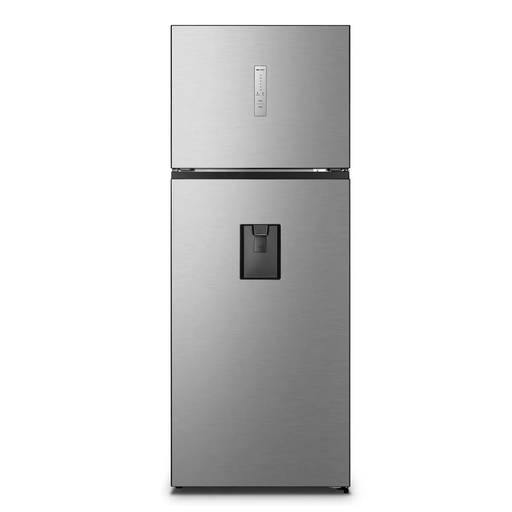 Image unavailable
This 467 L model is worth considering if its capacity suits the amount of fresh and frozen food you need to store.
The product listing mentions Total No Frost and an E energy class. Before comparing it with another type of appliance, check the kWh/year and compartment capacities on the energy label for the exact model.
 Image unavailable
Worth considering if the stated total capacity of 444 L suits your storage needs and the space available in your kitchen.
The product listing describes a frost-free appliance with an E energy class. Before comparing it with another fridge freezer, check the kWh/year, dimensions and compartment capacities in the information for the exact model.
No. First compare appliances in the same category and with a suitable capacity. The information provided by ADEME and the European Commission is expressed in kWh/year for fridges and freezers, kWh/100 cycles for dishwashers and kWh/cycle for ovens. These units are not interchangeable.
Divide the figure by 100, then multiply it by the number of cycles you run each year to get an estimate of your consumption in kWh. According to the European Commission, the energy label figure is based on the Eco programme; using other programmes may give a different result.
No. The European Commission says hobs are not subject to an energy labelling requirement, whereas an oven’s label includes its consumption per cycle. When choosing a hob, check its technology, the size of the cooking zones and whether your pans are compatible.
Yes. It can complement your comparison of energy consumption and capacity. In France, the order of 22 April 2022, published on Légifrance, sets out the criteria for calculating and displaying the repairability index for household dishwashers. Check the index for the model you’re considering, as well as information about its parts.