Households replacing a hob
If you often cook in saucepans or frying pans, compare your cookware’s compatibility, residual heat and energy use under similar conditions before switching to a different type of hob.


Start by choosing the appliance that suits the way you cook most often, then check that you have the space and the right power supply. If you’re choosing a hob, induction requires compatible cookware and can use less energy than a ceramic hob in the usage scenarios compared by ADEME; a ceramic hob doesn’t require pans with a magnetic base. An oven is designed for oven cooking, while a microwave is mainly useful as an extra appliance for reheating or defrosting.
If you often cook in saucepans or frying pans, compare your cookware’s compatibility, residual heat and energy use under similar conditions before switching to a different type of hob.
For a built-in appliance, check the unit dimensions and the clearance required in the manual. If you’re unsure about the existing circuit, ask a professional to check the power supply.
A freestanding appliance can be a good option if you don’t have a suitable space for a built-in model. A microwave can complement your hob or oven if you regularly reheat or defrost food.
Think about the dishes you prepare, then check that each appliance’s size and power supply suit your kitchen. Next, compare energy use under equivalent usage scenarios.
| What to consider | What to check | What matters to me |
|---|---|---|
| Type of cooking | Decide whether you mainly cook on a hob, use an oven, or mostly want to reheat and defrost food. Check the features of the model you’re considering. | I often cook dishes in the oven: a microwave won’t replace an oven for these meals. If I mainly reheat food, a microwave serves a different purpose from a hob. |
| Hob and cookware | For induction, check that your pans have a ferromagnetic base; UFC-Que Choisir highlights this requirement. Also compare the number and size of the cooking zones with the pans you use at the same time. | I’d like to keep my current frying pans: whether they work with induction could determine whether I choose induction or a ceramic hob. Residual heat from the glass surface is also worth considering after cooking on a ceramic hob. |
| Space and power supply | For a built-in appliance, check the cut-out or housing dimensions and the clearances specified in the manual. Promotelec describes dedicated circuits for hobs and ovens in fitted kitchens: have the existing installation checked if necessary. | Before replacing a hob or fitting an oven into a unit, I want to know whether the space, ventilation and connection are suitable for that specific model. |
| Energy use | Compare kWh figures for the same scenario, rather than looking at the stated power alone. For 409 hob cooking cycles a year, ADEME gives indicative figures of 115 kWh for induction and 200 kWh for ceramic hobs; these aren’t a prediction of a household’s energy use. | If I cook on a hob regularly, energy use matters to me, but I also need to consider my cookware and how often I actually cook. |
An induction zone won’t heat a pan if its base isn’t compatible, as UFC-Que Choisir points out.
Check for the induction symbol on your cookware or test the base with a magnet before choosing a hob.
You’ll need to replace any incompatible saucepans and frying pans to use them on this hob.
The power rating or size of a fixed hob alone won’t tell you whether it’s compatible with your circuit. Promotelec describes a dedicated power supply for the hob and oven in a fitted kitchen.
Check the model’s connection requirements and, if in doubt, ask a qualified professional to inspect the existing circuit. An extension lead or multi-socket adaptor won’t provide the required power supply.
The housing, door clearance and space needed for heat to escape may make it impossible to install an oven, even if the front appears to fit.
Compare your measurements with the installation diagram and the clearances specified in the model’s manual. Whirlpool recommends leaving space behind the oven, for example.
You may need to modify an unsuitable unit, or it may prevent you from fitting the oven as planned.
The figures published by ADEME are based on defined usage frequencies and, depending on the appliance, a specified capacity. They don’t reflect every model or every way of cooking.
Keep in mind the scenario behind each figure and check the data for the exact model before comparing running costs.
Bosch’s range in France includes induction hobs with integrated extraction.
Electrolux France’s range includes hobs, ovens, extractors and microwaves.
Whirlpool France offers advice on choosing and installing an oven to suit the space available.
This Joybuy selection includes ceramic and induction hobs for cooking on a hob, along with a freestanding microwave for extra convenience. Before choosing a fixed hob, check that it will fit and can be connected in your kitchen.
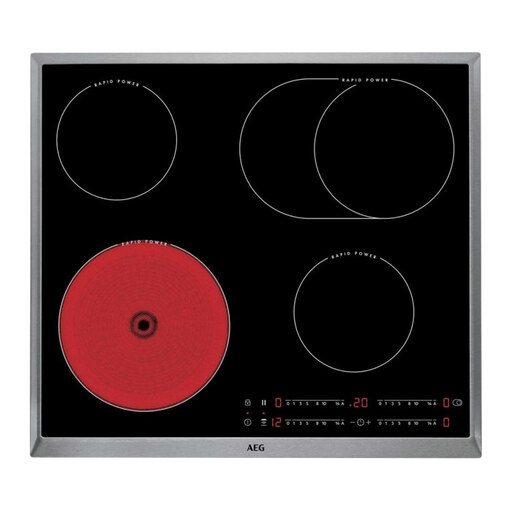 Image unavailable
Cook on a hob without needing pans with a magnetic base: this ceramic model measures 60 cm. Before replacing a built-in hob, check the cut-out dimensions, connection and residual heat information.
 Image unavailable
A portable induction cooking zone instead of a built-in hob. The model name indicates eight power levels, a temperature range of 60 to 270 °C and a 3 h timer. Check that your cookware is compatible and that the appliance’s power supply is suitable.
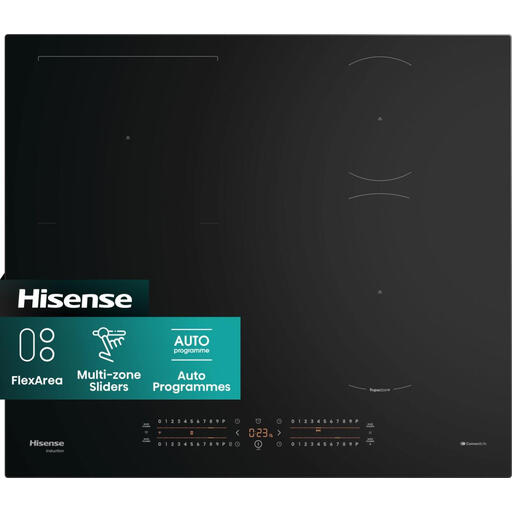 Image unavailable
A 60 cm induction hob to consider for a built-in kitchen. Measure the space, check the clearances and connection requirements in the manual, then make sure your saucepans are compatible before choosing this model.
 Image unavailable
The four zones may suit a household that uses several pans at once. The product name also mentions a timer and Boost function. Before buying, check the cut-out, compatible cookware and connection requirements.
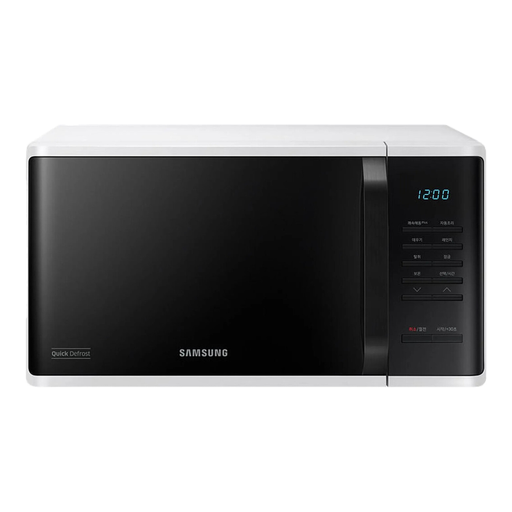 Image unavailable
A handy extra for reheating and defrosting alongside your hob or oven. This solo microwave is listed with a capacity of 23 L. Make sure you have a suitable space for it, with the ventilation clearances specified for the model.
No. Induction requires saucepans and frying pans with a ferromagnetic base, as UFC-Que Choisir points out. It may be a good option if you often cook on a hob and have compatible cookware: in ADEME’s figures based on 409 cooking cycles a year, induction uses less energy than a ceramic hob. If you want to keep cookware that isn’t suitable for induction, a ceramic hob remains an option, but bear in mind its residual heat.
Check the cut-out dimensions in the manual, then confirm the required connection and the circuit available. For the installation arrangements it describes in France, Promotelec specifies, among other things, a 32 A cable outlet with 6 mm² wiring and a 32 A circuit breaker for a cooking hob. These details aren’t a diagnosis of your own installation: if you’re unsure, ask a qualified professional to inspect it.
No. Measure the housing too, check that the door can open fully and follow the ventilation clearances specified in the manual for the oven you choose. Whirlpool recommends leaving space behind the appliance so heat can escape.
Not for every type of cooking. A microwave can be useful for reheating, defrosting and some quick-cook dishes. If you regularly prepare meals that need an oven, choose an appliance designed for that type of cooking too. Check the features of the specific microwave rather than assuming they’re the same across models.
For a built-in oven, follow the clearances in its manual to allow heat to escape. A hob with an integrated extractor, such as the PVS611B16E featured by Bosch, combines cooking and extraction. Check the installation requirements in its own manual rather than assuming they’re the same as for another appliance.