Which factors should you look at first?
Start with the energy use and frequency of use of your current appliances, then compare each possible replacement with a model offering the right function and capacity. Repairing an appliance or changing how you use it could also help you avoid replacing it too soon.
| Factor | What to check | Consumers concerned |
|---|
| Fridge or freezer running continuously |
Compare the prospective model’s energy use in kWh/year and usable capacity with your current appliance, and check that it will fit in the available space. |
If my fridge or freezer runs day and night, I want to know whether a better-sized model would use less energy. Around 36% of consumers would prioritise this need. |
| Repair or keep the appliance |
Check the appliance’s condition, get a quote and consider how you could use it; check whether any repair support may be available. |
Before replacing an appliance that’s still useful or repairable, I’d rather work out what difference buying a new one would actually make. This would be the top concern for around 29% of consumers. |
| Dishwasher cycles |
Check kWh/100 cycles and litres/cycle for the reference programme, then make sure the capacity suits the number of place settings you need. |
As I run the dishwasher often, I want to use fewer resources per cycle without choosing a capacity that doesn’t suit my needs. Around 21% of consumers would put this need first. |
| Frequent electric cooking |
For an oven, check the capacity and kWh/cycle for the cooking mode you use; for a hob, consider the technology and your usage habits. |
I cook very regularly and want to understand what a different appliance could change, compared with what I could change about the way I cook. This would be the priority for around 14% of consumers. |
Brands to consider
There are no brands to feature in this section.
Joybuy products to compare
These models are suitable if you’re looking to replace a dishwasher or a fridge or freezer. Before deciding to buy, check that their capacity meets your needs and compare their specifications with those of your current appliance.
 Image unavailable
Heinrich's HTG 8840 Schwarz tabletop dishwasher
Worth considering if you’re looking for a tabletop dishwasher and its capacity suits the amount of washing-up you usually have.
The product name lists 6 place settings, 7 programmes, 47 dB and energy rating D. Check the energy use on the model’s label before comparing it with your current cycles.
View on Joybuy
 Image unavailable
Haier HTW5618ENMG, 360 L fridge-freezer
Compare it with your current fridge or freezer if you need this much storage space.
The product name lists three doors, Total No Frost technology and energy rating E. Check the exact model’s kWh/year, the usable capacity you need and the installation dimensions.
View on Joybuy
 Image unavailable
Candy CFQQ5T817EPS, 467 L fridge-freezer
Only consider it if this capacity suits your storage needs and you have enough space for it.
The product name lists four doors, Total No Frost technology and energy rating E. Check the exact model’s energy use in kWh/year before comparing it with the capacity you need and your current appliance.
View on Joybuy
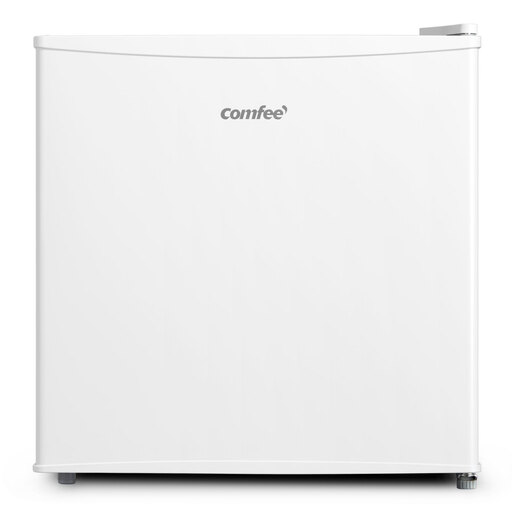 Image unavailable
COMFEE' RCU40WH2(E), 31 L freezer
Worth comparing if you only need a small amount of freezer space; check that 31 L is really enough to replace the capacity you use today.
The product name lists 147 kWh/year, energy rating E, a reversible door and adjustable feet. Consider the stated energy use in relation to the capacity and check the label for the exact model.
View on Joybuy
Frequently asked questions
Which figures should I compare before replacing a fridge?
Compare your current appliance’s actual or estimated energy use with the prospective model’s kWh/year, making sure the usable capacity and features suit your needs. ADEME explains that actual energy use varies depending on factors such as size and usage, so the figure on the label alone can’t guarantee savings in your home.
Is the energy rating enough to choose a dishwasher?
No. Also check the kWh/100 cycles and litres/cycle for the reference programme. ADEME says the label also provides information about capacity, eco programme duration and noise, which you should consider alongside how often you use the dishwasher.
Should I replace a kitchen appliance if it breaks down?
Not necessarily. First, get a diagnosis and a quote to see whether a repair would meet your needs. ADEME recommends considering this option before replacing an appliance; according to ecosystem, the Repair Bonus may apply to an eligible appliance that’s out of warranty.
Can I check the same energy label for an oven and a hob?
No. According to the European Commission, energy labels are compulsory for domestic ovens, but not for hobs. For an oven, compare factors such as capacity and kWh/cycle for the cooking mode you use. For a hob, check the technology and whether it suits the way you cook.


