Criteria for prioritising replacement
First compare appliances within their category, then relate their measurements to your storage needs, actual number of cycles and cooking frequency.
| Priority |
What to check |
Your needs |
| Real impact in daily use |
For refrigeration, compare kWh/year between appliances with similar capacities and functions. Consider continuous operation, capacity and added features. |
I want to replace the appliance that genuinely has the greatest impact on my household’s daily use, without treating a national average as a guaranteed saving. |
| Comparable units |
Refrigeration: kWh/year; dishwasher: kWh/100 cycles for the eco programme; oven: kWh/cycle by cooking mode. Compare a hob by its technology and technical specifications. |
I want to avoid directly comparing figures measured according to different reference uses. |
| Suitable capacity |
Check the usable refrigeration volume, dishwasher capacity and the features you will actually use. ADEME highlights that size and unnecessary features affect consumption. |
My appliance should suit the size of my household and my habits, without paying to power capacity I do not need. |
| Repair before buying |
Have the fault and maintenance condition checked. For a repair, confirm parts availability, the quotation and the conditions of the Bonus Réparation with a QualiRépar repairer. |
Before replacing an appliance, I want to know whether maintenance or a repair could get it working again. |
What to look for in brands
When comparing brands, look beyond the name alone. Check the appliance’s energy figures, capacity, noise level, available features, warranty and access to spare parts and servicing. A brand is a sensible choice when its model suits your household, its specifications are clear and support is available throughout the appliance’s expected life.
Joybuy products for this need
Joybuy options for replacing a refrigeration appliance, dishwasher or electric hob when energy consumption and everyday use form part of the decision.
 Image unavailable
CHiQ JR263LGE 262 L Low Frost fridge freezer
For a household of two to three people looking for a medium-sized refrigeration capacity.
Declared consumption of 215 kWh/year; 262 L net capacity, including 187 L of fridge space and 75 L of freezer space.
Energy class E. The Low Frost freezer requires manual defrosting approximately once or twice a year; the appliance is not designed for an ambient temperature below 16 °C.
View on Joybuy
 Image unavailable
Sonlu CC-520WE 444 L No Frost fridge freezer
For a large household that genuinely needs plenty of chilled and frozen storage space.
444 L net capacity and declared consumption of 289 kWh/year; Total No Frost system and stated noise level of 40 dB.
Energy class E. Check the dimensions, ventilation clearances and door-opening direction before installation.
View on Joybuy
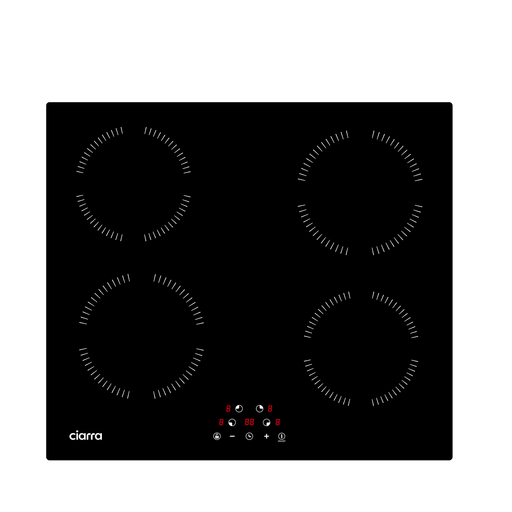 Image unavailable
CIARRA CABBIH4-A built-in 4-zone induction hob
For replacing the main hob in a kitchen with a compatible built-in space.
Four zones, nine power levels, individual timers and pan detection.
Declared cut-out size of 560 × 490 mm; 220–240 V supply and 32 A rated fuse. Use cookware with a magnetic base.
View on Joybuy
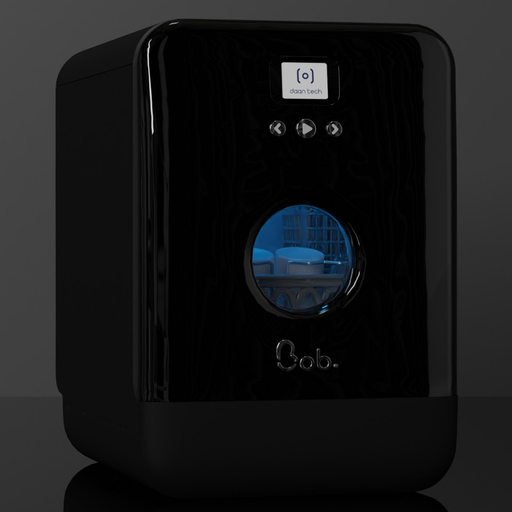 Image unavailable
Bob Eco-Compact Deep Black compact dishwasher
For a small household, flat or office with a limited amount of washing-up to handle.
Stated capacity of three place settings, dimensions of 49 × 34 × 49 cm and stated water consumption of 2.9 L per cycle.
Check the eco programme’s kWh/100 cycles, programme duration and noise level before comparing it with another dishwasher. A cold-water inlet and waste connection are required.
View on Joybuy
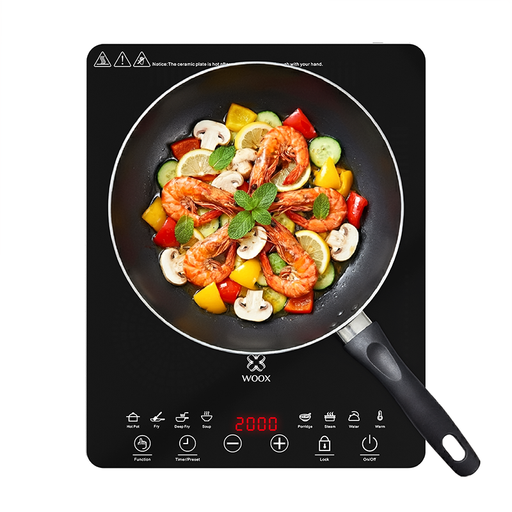 Image unavailable
WOOX MX0237 RapidTherm portable 2000 W induction hob
For a small kitchen or occasional cooking without built-in installation.
One cooking zone, eight temperature and power settings, a timer and automatic pan detection.
220–240 V supply, stated 1.5 m cord and 155 mm heating-zone diameter. This hob requires induction-compatible cookware.
View on Joybuy
Frequently asked questions
Can you directly compare the energy class of a fridge, dishwasher and oven?
No. For refrigeration, the label includes information such as kWh/year and volumes; for dishwashers, it shows kWh/100 cycles for the eco programme, water use per cycle, capacity and noise; for ovens, it shows kWh/cycle according to the cooking modes. ADEME and the European Commission therefore recommend comparing appliances in the same category and with a similar function first.
Does an electric hob have an energy label like an oven?
No. The European Commission states that there is no energy-labelling requirement for hobs. Instead, compare the technology, available technical information and installation requirements, without inferring consumption from an energy-class letter.
Should you always replace an appliance that appears to be faulty?
No. ADEME recommends diagnosing the cause of the problem first and states that in France, one in two appliances taken to an after-sales service is not actually faulty. A filter, limescale, a blocked hose or the need to defrost may be responsible. Then weigh up the repair against the appliance’s condition and energy consumption.
Is repair support available for kitchen appliances in France?
Yes, subject to conditions. The Bonus Réparation may apply when an appliance outside its warranty is taken to a QualiRépar repairer and the fault is eligible. ecosystem states that from 1 January 2026, the amounts may vary depending on the appliance. Check whether the fault and repairer are eligible before choosing a replacement.


