Households with an older fridge or freezer
If your refrigeration appliance runs non-stop, compare kWh/year, usable capacity and the space allocated to freezing before looking at the energy rating alone.


Start by looking at the appliances that run continuously or are used very frequently. According to ADEME benchmarks, always-on refrigeration is generally worth comparing before an oven used occasionally. However, replacing an appliance only makes sense if the new model retains the necessary capacity, installation requirements and functions, while offering suitable energy consumption.
If your refrigeration appliance runs non-stop, compare kWh/year, usable capacity and the space allocated to freezing before looking at the energy rating alone.
Compare the Eco programme, water consumption per cycle, capacity and noise level. Servicing or repairing the appliance may also be worthwhile before buying a new one.
Distinguish the energy used according to how often you cook from that of an appliance running continuously, then check the fitting, capacity and electrical compatibility.
| Priority | What to check | Your needs |
|---|---|---|
| Continuous or cyclical use | Compare kWh/year for refrigeration that runs continuously. For a dishwasher, hob or oven, relate consumption to the actual number of cycles or cooking sessions. | I want to start with the appliance whose daily or continuous use genuinely affects my annual consumption. |
| Comparable performance | Check fridge and freezer capacities, dishwasher capacity, oven capacity and Eco programme data where applicable. | The new appliance must meet the same storage, washing or cooking needs before I compare its energy consumption. |
| Repair before buying | Check the recommended maintenance, fault diagnosis, parts availability and the terms for professional repairs. | Before replacing an appliance that is not working as well as it should, I prefer to find out whether servicing or a repair could be enough. |
| Installation and documentation | Check the dimensions, installation type, connections, model number and energy label information. | I am looking for a verifiable improvement in everyday use, without discovering after purchase that the appliance is unsuitable for my kitchen. |
A fridge, freezer or fridge-freezer runs all year round, whereas the energy used by an oven, hob or dishwasher depends on how frequently its cycles are run.
Track dishwasher cycles and oven or hob use for a few weeks, then compare appliances using the appropriate unit: kWh/year or kWh/cycle.
A smaller capacity, reduced washing load or less spacious oven may explain lower consumption without meeting your household’s needs.
Limit your comparison to models offering the storage capacity, number of place settings or cooking capacity you actually need.
ADEME states that in France, one in two appliances taken to an after-sales service centre is not actually faulty. Poor maintenance or a blockage can sometimes be resolved without replacing the appliance.
Check the manual, carry out the recommended maintenance and have the fault diagnosed before choosing a new appliance. A QualiRépar repairer may apply the Repair Bonus if the relevant conditions are met.
According to ecosystem, the rates displayed on 1 January 2026 provide for a Repair Bonus of 25 € for several refrigeration and cooking appliances, and 50 € for a dishwasher, subject to eligibility requirements.
ADEME benchmarks are based on average usage and highly efficient new appliances. They may not reflect your current model, electricity tariff, load or cooking habits.
Use these differences to decide what to examine first, then compare the label of the model you are considering with your usage frequency and price per kWh.
In France, Bosch offers built-in and freestanding dishwashers, with product pages listing the energy rating, Eco programme data, water consumption and noise level.
Electrolux sells dishwashers in France and offers a catalogue of genuine parts covering refrigeration and cooking appliances too.
In France, Beko offers fridges, freezers, hobs, ovens and dishwashers, with buying guides tailored to usage and household size.
These Joybuy options mainly cover replacing a fridge-freezer, built-in dishwasher or electric hob where the installation and the household’s actual usage are suitable.
 Image unavailable
For replacing a fridge-freezer used continuously in a compact kitchen.
262 L, including 187 L of fridge space and 75 L of freezer space; stated consumption of 215 kWh/year, width of 54 cm, reversible door and stated noise level of 39 dB.
Compare its 215 kWh/year with a model of equivalent capacity. The stated ambient temperature range is 16 to 38 °C.
 Image unavailable
Worth considering for a household that genuinely needs a large amount of always-on refrigeration space.
Stated total capacity of 444 L, stated annual consumption of 289 kWh/year, Total No Frost, SN-T climate class and stated noise level of 40 dB.
Check the split between fridge and freezer space, as well as the room required, before comparing it with your current appliance.
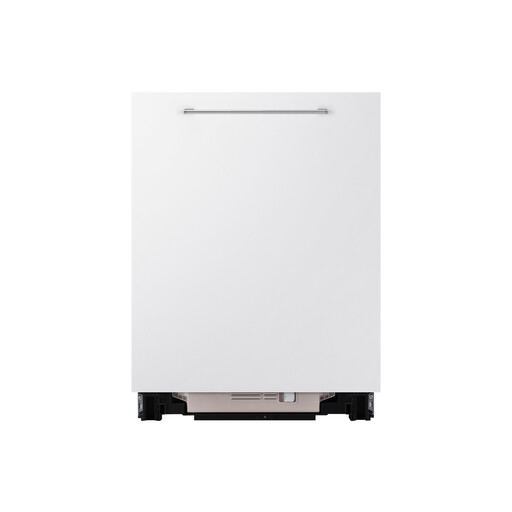 Image unavailable
For a household that frequently runs full loads in a compatible 60 cm space.
13 place settings, stated energy rating B, fully integrated installation and stated dimensions of 595 × 555 mm.
Before buying, check the energy label or EPREL product information sheet for kWh/100 Eco cycles, water consumption per cycle and the Eco programme duration.
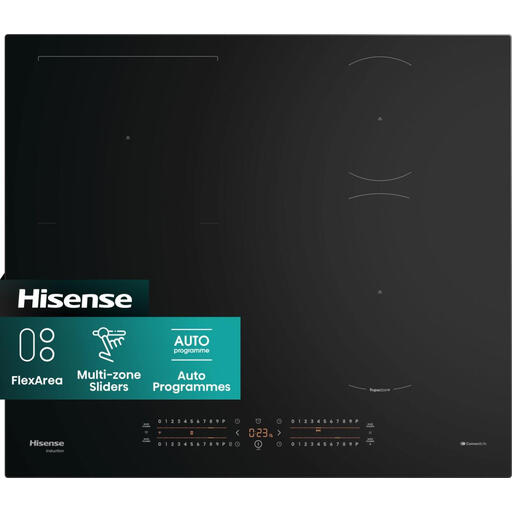 Image unavailable
For replacing a built-in hob with four cooking zones.
Four induction zones, Bridge zone, touch controls, timer, residual heat indicator and stated cut-out of 56 to 56.2 cm by 49 cm deep.
Check the 7.36 kW connection rating, cut-out and compatibility of your cookware before installation.
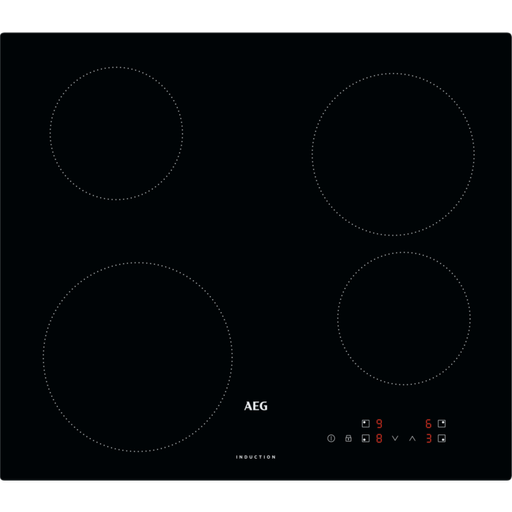 Image unavailable
For a kitchen with a compatible cut-out and cookware suitable for induction.
Four zones, Booster function, pan detection, touch controls, 59 cm width and stated cut-out of 56 × 49 cm.
Check the ventilation, 220–240 V or 400 V 2N power supply and installation requirements before buying.
Start with refrigeration appliances that run 24 hours a day, then look at appliances used frequently. In its usage benchmarks, ADEME gives figures of 315 kWh/year for a fridge-freezer and 300 kWh/year for a freezer, compared with 150 kWh/year for a dishwasher, 200 kWh/year for a ceramic hob and 130 kWh/year for a 63 L oven; adapt these benchmarks to your actual usage.
No. For a fridge, also compare kWh/year and the capacity of each compartment. For a dishwasher, check kWh/100 Eco cycles, water consumption per cycle, capacity, Eco programme duration and noise level. For an oven, compare its capacity and kWh per cycle according to the mode used.
No. The European Commission states that hobs are covered by ecodesign requirements, while the mandatory energy label applies to ovens and cooker hoods. So, focus on the technology, cookware compatible with induction, installation and power supply specified by the manufacturer.
Yes, when the fault has not been clearly established or poor maintenance may be the cause. ADEME recommends diagnosing the appliance before deciding to replace it. For a professional repair, the Repair Bonus may apply to certain appliances outside their warranty and certain faults when handled by a QualiRépar repairer.
According to the ecosystem rates applicable from 1 January 2026, the advertised Repair Bonus is 25 € for a fridge, fridge-freezer, freezer, hob, cooker or built-in oven, and 50 € for a dishwasher. It is deducted from the bill only when the eligibility requirements are met.