What should you check first?
According to ADEME, fridges and freezers run continuously, so start by checking their size and annual energy consumption. If you’re considering replacing another appliance, relate the figures on its energy label to how you actually use it rather than directly comparing kWh/year, kWh/100 cycles and kWh/cycle.
| Criteria |
What to check |
Who this applies to |
| Runs continuously |
Compare the kWh/year shown on the energy labels of appliances with a suitable type and capacity. |
My appliance stays on day and night, so I want to check its energy consumption before looking at appliances I only use occasionally. Around 31% of consumers would prioritise this need. |
| Usable capacity |
Check the fridge and freezer capacities separately, as well as the space available for installation. |
I don’t want to run out of room for my shopping or power a capacity and features I rarely use. For nearly 31% of consumers, this would be their top priority. |
| Dishwasher cycles |
Compare kWh/100 Eco cycles, litres per cycle and a capacity that suits your usual loads. |
I use my dishwasher often, so the electricity and water used for each set of washes matter when I’m choosing one. Around 23% of consumers would put this need first. |
| Regular cooking |
For an oven, check the kWh/cycle for the mode you use; for a hob, check the technology and whether your cookware is compatible. |
I cook frequently and want an appliance that suits the dishes I make, without confusing an oven’s figures with those for refrigeration. Nearly 15% of consumers would prioritise this need. |
Brands to consider by appliance type
These brands offer options to compare across refrigeration and dishwasher ranges. Your choice should come down to the energy label and exact model number, not the brand name alone.
Bosch
Bosch offers fridge freezers and dishwashers, with specifications that vary from model to model.
- Bosch product information and manuals can help you compare capacity and stated energy consumption for the exact model.
- Check the energy label for the model you’re considering rather than assuming efficiency claims on the brand’s sales pages apply across the entire range.
Liebherr
Liebherr offers fridges, freezers and built-in models, among other appliances.
- Some Liebherr model specifications include capacity, dimensions, noise level and annual energy consumption.
- For a built-in model, check that its dimensions fit your available space and its capacity meets your needs. The manufacturer’s descriptions of its technologies don’t replace these checks.
Miele
Miele offers integrated dishwashers, with Eco programme figures that vary by model.
- Depending on the model, Miele specifications include kWh/100 cycles, litres per cycle, capacity and Eco programme duration.
- Before choosing a model, check the installation dimensions and make sure the cycle duration suits how you use it.
Fridge freezers on Joybuy
These fridge freezers are options for replacing a refrigeration appliance that runs continuously. First choose a suitable capacity, then check the annual energy consumption and dimensions on the label and product information for the exact model.
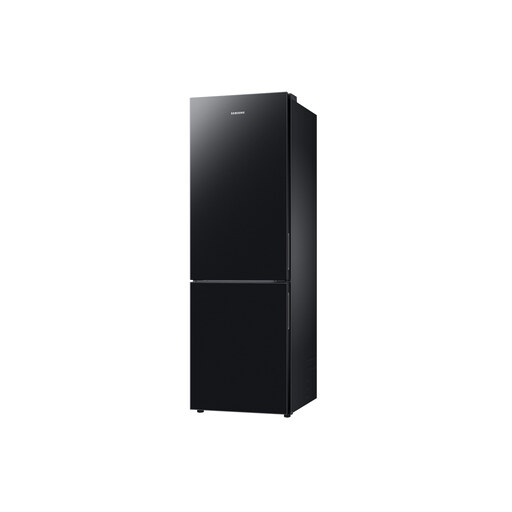 Image unavailable
Samsung RB33B612EBN, 344 L black fridge freezer
Worth considering if you’re looking for a 344 L fridge freezer to replace your current refrigeration appliance.
The product title lists an E energy rating. Check the kWh/year on the energy label for the exact model and make sure its capacity suits your household.
View on Joybuy
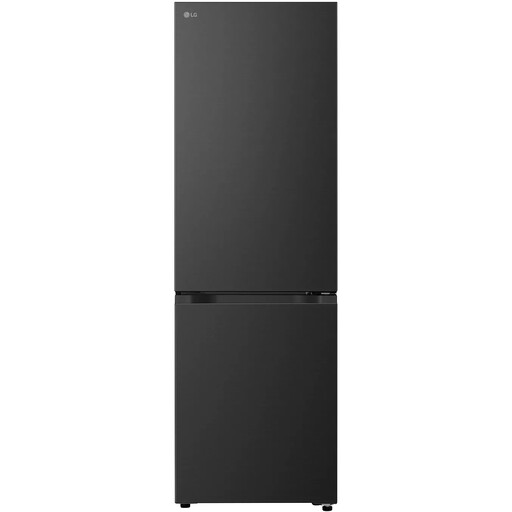 Image unavailable
LG GBBS312AEV, 333 L black No Frost fridge freezer
Consider it if a 333 L fridge freezer offers the storage space you need.
The product title mentions No Frost and an A energy rating. Check the annual energy consumption and dimensions in the exact model’s documentation before comparing it with other appliances.
View on Joybuy
 Image unavailable
Sonlu CC-520WE, 444 L light silver fridge freezer
Before choosing this larger model, consider whether its stated 444 L capacity matches your storage needs.
The product title lists an E rating, a frost-free system and 40 dB. Check the energy label, the capacity of each compartment and the dimensions for the exact model.
View on Joybuy
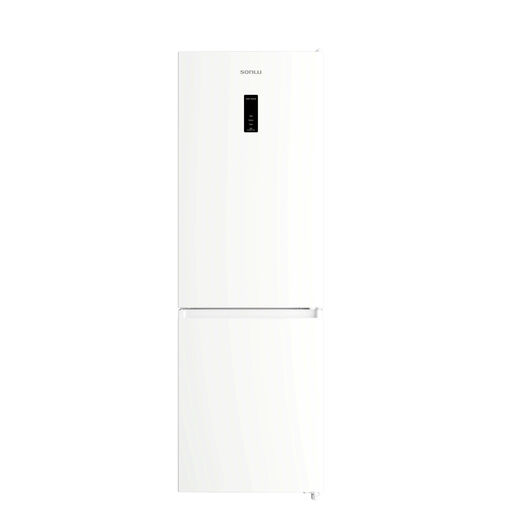 Image unavailable
Sonlu CD‑350RW, 310 L fridge freezer
Worth considering if the stated 211 L fridge capacity and 99 L freezer capacity meet your needs.
The product title lists a width of 60 cm, a reversible door and an E rating. Check the kWh/year on the energy label, as well as the height and depth, before planning the installation.
View on Joybuy
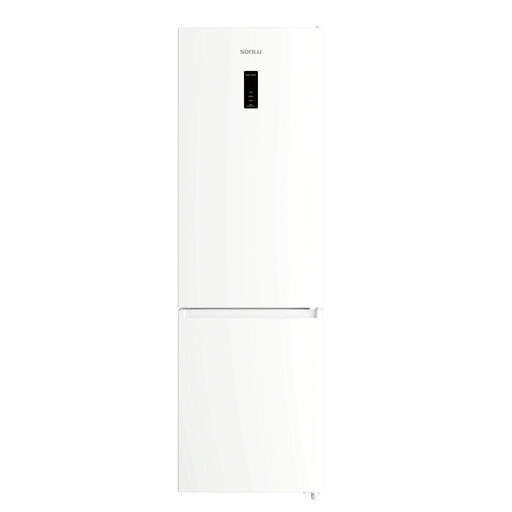 Image unavailable
Sonlu CD‑400RW, 355 L fridge freezer
Compare it if you’ll make use of the 252 L fridge capacity and 103 L freezer capacity listed in the product title.
The product title lists a width of 60 cm, a reversible door and an E rating. Check the kWh/year on the energy label, and measure the height and depth you’ll need.
View on Joybuy
Frequently asked questions
What should I compare on a fridge or freezer energy label?
Compare energy consumption in kWh/year, the energy rating and the capacity of each compartment. For the relevant refrigeration appliances sold in the European Union, the European Commission says the label also shows the noise level. Compare these figures across models with a type and capacity that suit your household.
How should I interpret a dishwasher’s figures?
The energy label lets you compare energy use per 100 Eco cycles and water use per Eco cycle, as well as cycle duration, capacity and noise level. According to the European Commission, these figures are based on the Eco programme, so check that it suits how you plan to use the dishwasher.
Does a hob have an energy label like an oven?
No. The European Commission says there is no requirement for energy labels on hobs in the European Union, unlike ovens. If you’re replacing a hob, check which technology you want, whether your cookware is compatible and any restrictions on your installation.
Can I compare an oven’s energy consumption directly with a fridge’s?
No. An oven’s energy label shows consumption per cycle and cooking mode, while a fridge’s shows kWh/year. Consider how often you cook and which mode you use before deciding which appliance to replace first.
Do ADEME’s energy consumption figures show how much my household will save?
No. ADEME’s figures can help you identify appliances to look at, but they can’t predict the savings you’ll make by replacing one in your home. Appliance size and your usage habits also matter, so compare each model’s specifications with your own situation.


