Households with an appliance that runs continuously
If your fridge, fridge-freezer or freezer runs day and night, start by checking whether its capacity still meets your needs. ADEME points out that these appliances run continuously.


Start by looking at appliances that run continuously, such as your fridge and freezer, followed by those you use very often. Before replacing one, compare its capacity and how you use it with those of the model you’re considering. The energy rating alone isn’t enough to tell you whether switching is worthwhile.
If your fridge, fridge-freezer or freezer runs day and night, start by checking whether its capacity still meets your needs. ADEME points out that these appliances run continuously.
If you run frequent cycles, the figures on the energy label become more important when choosing a model. ADEME recommends checking electricity use per 100 cycles, water consumption, capacity and the duration of the Eco programme.
If you use an electric hob or oven frequently, consider the cooking method and the capacity you need. If you’re looking at an induction hob, check that your cookware is compatible before deciding whether to replace it.
Start by matching each appliance’s capacity to the way you use it. An appliance that runs continuously is worth examining, but replacing it with an oversized model could work against your aim of reducing consumption. The criteria below can then help you compare appliances that do the same job.
| Priority | What to check | Who this applies to |
|---|---|---|
| Continuous cooling | For a fridge or freezer, compare the kWh per year for appliances with similar configurations and capacities. | If my appliance runs day and night, I want to know whether replacing it will meet my cooling needs without unnecessarily increasing the capacity. Around 39% of consumers would make this their priority. |
| Storage capacity | Work out how much space you need for chilled and frozen food separately, then check the usable capacity and features on offer. | I store very little frozen food and don’t want to choose a large fridge-freezer just for a compartment I’ll rarely use. Getting the right capacity would be the priority for around 23% of consumers. |
| Dishwasher cycles | For a similar capacity, check the kWh per 100 cycles and litres per cycle. Also check the duration of the Eco programme and the noise level. | If I wash dishes regularly, I want to limit electricity and water use without choosing a cycle or capacity that doesn’t suit my everyday needs. This would be the main concern for around 23% of consumers. |
| Electric cooking | For a hob, check the technology, your cookware and the number of cooking zones you need. For an oven, look at the capacity and the relevant energy label. | I often cook with electricity and would rather choose an option that suits my pans and cooking habits than pay for a feature I won’t use. Around 15% of consumers would make this their priority. |
The same energy rating doesn’t tell you, by itself, whether two appliances are equally suited to your needs. For a dishwasher, water use per cycle, capacity and the duration of the Eco programme also matter. For a fridge or freezer, capacity and features should be part of your decision too.
Compare the figures on the energy label for appliances with similar capacities and configurations, then rule out any features you won’t use.
According to ADEME, the size of a fridge or freezer and its extra features can affect its energy use. So even a newer model may not be right for you if you won’t use the extra space or features.
Check the space available in your kitchen and how much storage capacity you’ll actually use before comparing annual energy consumption.
A maintenance issue or a repairable fault may call for a different solution from an appliance whose capacity no longer meets your needs. ADEME highlights defrosting as one of the maintenance steps that can help prevent breakdowns.
First, identify the problem. If you suspect a fault, consider getting a diagnosis before deciding whether to repair or replace the appliance.
These models let you compare three options when replacing an appliance: fridge-freezers in different capacities, a compact dishwasher and an induction hob. For each one, check that the capacity, dimensions and relevant energy figures suit the way you’ll use it.
 Image unavailable
Worth considering if you need plenty of cooling space, once you’ve checked that 444 L is right for your usual storage needs.
The model name indicates frost-free technology and a stated noise level of 40 dB. Compare its annual energy consumption with that of appliances with similar capacities and configurations.
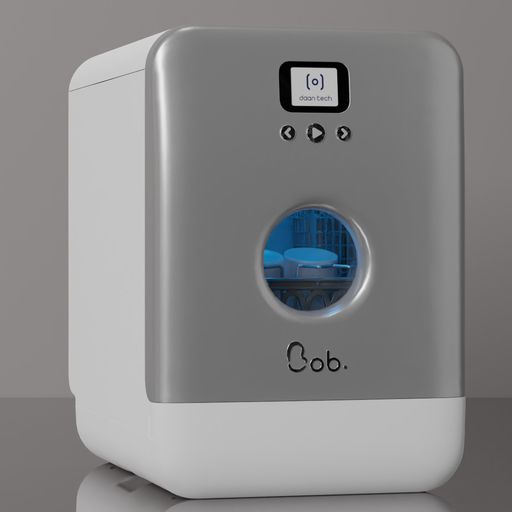 Image unavailable
This compact model is designed for smaller washing-up needs. Check that three place settings are enough for your usual loads.
Before comparing its energy use with another dishwasher, check the model’s relevant information for kWh per 100 cycles, water use per cycle and the duration of the Eco programme.
 Image unavailable
Consider this model if you’re looking for a fridge-freezer with a split between chilled and frozen storage that suits your needs.
The model offers 153 L of fridge space, 74 L of freezer space and a width of 54 cm. It is described as having Low Frost technology. Check its kWh per year to compare it with other fridge-freezers.
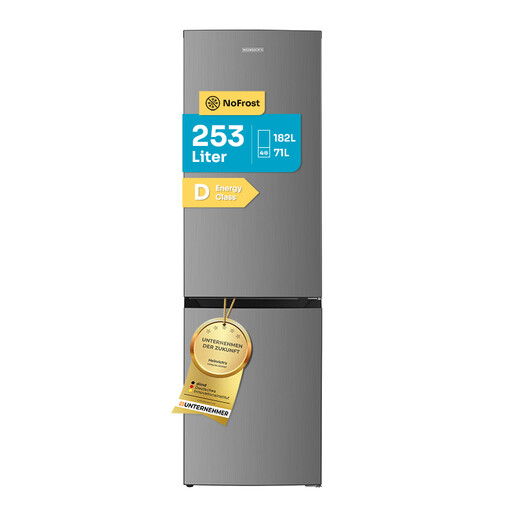 Image unavailable
This fridge-freezer is worth considering if you need two separate compartments and their capacities suit your food storage habits.
The product name indicates 182 L of fridge space, 71 L of freezer space, frost-free technology and a stated noise level of 39 dB. Check its kWh per year before comparing energy use.
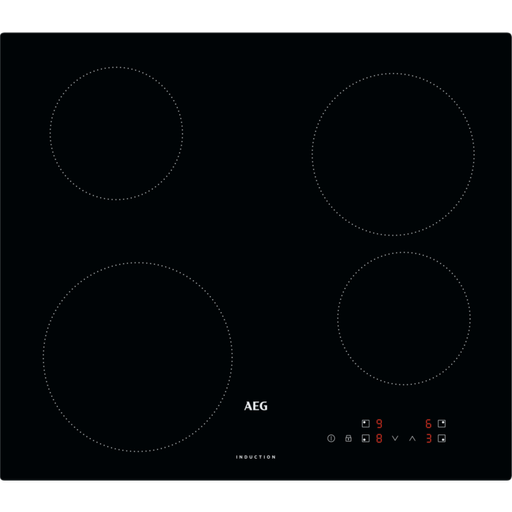 Image unavailable
If you’re replacing a hob, first check that induction is compatible with your cookware and the way you cook.
This model is described as semi-integrated and two-phase Perilex. Check that the power supply and installation space are compatible, and review the relevant energy information before making your choice.
Compare appliances that do the same job and have similar capacities and configurations. Check the kWh per year for fridges and freezers, or the kWh per 100 cycles for a dishwasher. These figures are a guide, not a guarantee of how much your household will use: energy consumption can vary depending on how you use and set up the appliance.
Check the energy class, then look at the kWh per 100 cycles, litres of water per cycle, capacity, duration of the Eco programme and noise level. ADEME recommends considering all this information together. For example, make sure a longer Eco cycle fits in with the way you use your dishwasher.
No. First check whether the issue is related to maintenance, a fault or a capacity that no longer suits your needs. ADEME highlights defrosting a fridge as one of the steps that can help prevent breakdowns. Getting a diagnosis can help you decide whether to repair or replace it.
Yes. For dishwashers covered by the repairability rating system in France, the score out of 10 provides a useful point of comparison alongside electricity consumption. According to the French ministry responsible for ecological transition, the rating gives consumers information about how repairable an appliance is. It doesn’t replace checking the energy label.