
Livraison le jour même ou le lendemain

Qualité garantie

Débloquez vos offres de bienvenue: Livraison GRATUITE | Jusqu'à -80 % | 30 jours d'essai gratuits à JoyPlus
Téléchargez l'application
Kitchen accessories play a key role in organisation, safety and everyday comfort. But a tempting promise isn't always enough to guarantee a worthwhile purchase. A lid that's difficult to close, a pan that isn't compatible with induction hobs, or an oven glove that's too short can quickly turn an appealing product into something destined to gather dust.
Before comparing kitchen utensils, kitchen storage solutions or cooking equipment, it's best to know the most common pitfalls.
A large set might seem economical, but several pieces could end up forgotten at the back of a drawer. In a standard-sized kitchen, focus on accessories that genuinely match your habits: meal preparation, baking, food storage or everyday cooking.
Check the actual number of pieces. In a storage set, some lids, labels or accessories may be counted separately. A claim like "24 pieces" doesn't necessarily mean you'll receive 24 containers.
Terms like "durable", "non-stick" or "airtight" should always be backed up by concrete information. Look at the material, dimensions, dishwasher compatibility and temperature tolerance.
For airtight food storage containers, examine the closure system and whether a seal is present. For a cookware set, check the type of coating, the base material and compatibility with your hob.
An accessory that's pleasant to use but a pain to clean quickly loses its appeal. Removable handles, dishwasher-safe surfaces and non-porous materials can make everyday life much easier.
More technical equipment, such as a food waste disposer, also requires checking the available space under the sink, the connection, the power supply, local plumbing regulations and safety instructions. This type of installation isn't something to improvise.
For accessories that come into contact with food, consult the product sheet and any available compliance information. Containers must be specifically designed for food storage. Glass, stainless steel and certain suitable plastics each offer different trade-offs in terms of weight, impact resistance and preservation.
A set like the High-quality Kitchen Storage Set, available in 4, 16 or 24-piece formats, includes containers with lids, labels and markings for organising pasta, rice, flour or sugar. Before ordering, compare the volume of each box with the depth of your cupboards:
Before choosing frying pans and saucepans, check the type of hob you have: gas, electric, ceramic or induction. A thick, perfectly flat base generally promotes stability, but only the technical sheet can confirm compatibility.
The PURECOOK 304 stainless steel tri-ply frying pan claims compatibility with several hob types. Its construction combines stainless steel with an aluminium core. It may suit households looking for a 28 cm pan for everyday cooking, provided you check the recommended temperatures and care instructions before first use.
Redchef and SENSARTE sets take a different approach: multiple pieces, compact storage or non-stick coating, according to the manufacturer's information. To properly compare a cookware set, examine the exact contents of the box, the diameter of the pieces, whether lids are included and the maximum oven temperature allowed.
Heat-resistant oven gloves should cover your hands and wrists sufficiently, stay dry on the inside and offer a suitable grip for the intended use. Silicone makes cleaning easier and can provide a non-slip surface, but the maximum temperature stated by the manufacturer must be strictly observed.
For kitchen knives, the handle shape, balance and blade length matter just as much as the initial sharpness. A 19-piece set may suit a well-equipped kitchen, while a versatile stainless steel knife is simpler to store in a smaller space. In all cases, use a suitable chopping board and keep blades out of reach of children.
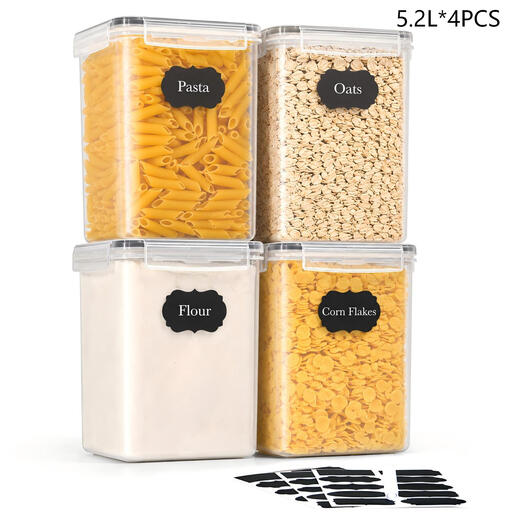
Why this choice suits this profile: This small set lets you start organising dry foods without cluttering your cupboards or investing in a large batch straight away.
The limited size reduces the risk of accumulating unused containers and makes it easy to check dimensions before moving on to a larger purchase.
Containers supplied with labels and markings, designed for storing dry foods such as rice, flour or pasta.
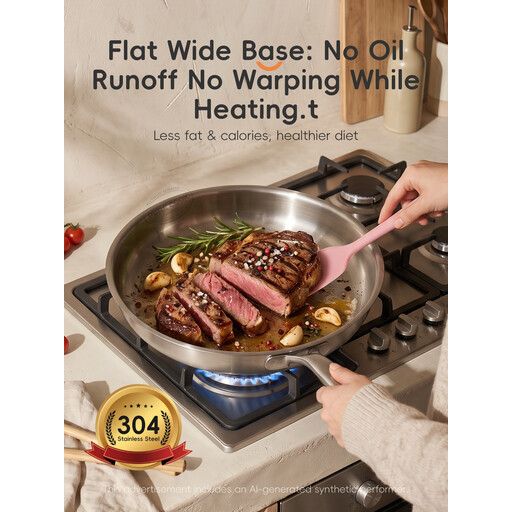
Why this choice suits this profile: This pan is aimed at those who prioritise a stainless steel construction with an aluminium core for regular cooking.
The product sheet details the material, the tri-ply construction and compatibility with different hobs, rather than relying on a vague promise of even heating.
304 stainless steel, aluminium core, 28 cm diameter and claimed compatibility with gas, induction, ceramic and halogen hobs.
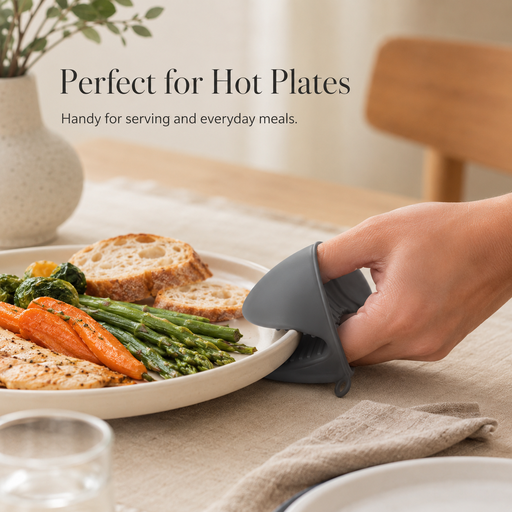
Why this choice suits this profile: These silicone mitts are aimed at cooks who regularly use the oven, air fryer, barbecue or hot dishes.
The product sheet specifies the dimensions, material and temperature instructions. It remains essential to keep the mitts dry and to respect the stated limit.
Three pairs in silicone, claimed to be dishwasher-safe, with a textured surface designed to improve grip.
We've selected a complete range, updated in real time, of products that meet these demanding selection criteria and European safety regulations.
Asian sauces and condiments also need suitable storage. Lee Kum Kee Panda oyster sauce should be kept in a cool, dry place before opening, then refrigerated once opened. It contains molluscs: those with allergies should read the label carefully.
Rice vinegar, like Zhenjiang vinegar, can be used in sauces, marinades, stewed dishes or sweet and sour preparations. Check the allergens listed, particularly the possible presence of wheat depending on the reference.
Cooking sake and Chinese cooking wine are not necessarily intended to be consumed as drinks. J.B JAPON Cooking Sake states it contains alcohol and must be stored according to the label instructions. According to its product sheet, Wang Zhi He Chinese Cooking Wine also contains wheat. This information deserves particular attention for children, those avoiding alcohol and consumers concerned about certain allergens.
Start with everyday essentials: a versatile knife, a chopping board, a spatula, a storage container, an oven glove and a pan compatible with your hob. You can then build up your equipment based on your recipes and available space.
Look for an explicit mention of induction compatibility and a suitable base. The diameter must also match your hob rings. If in doubt, consult the technical sheet rather than relying solely on the appearance of the base.
The lifespan depends on the material, frequency of use and care. Replace a cracked glove, a box whose seal no longer closes properly, or a pan with heavily damaged coating. For a food waste disposer, follow the maintenance, load and safety instructions to limit premature wear.