Parents preparing a group snack
A 750 g to 1 kg jar can save you from having to buy several smaller containers for multiple snacks. Still, work out how many portions you’ll need before choosing the largest size.


For a group snack, first choose a recipe that takes account of any relevant allergies and the setting’s rules, then pick a size suited to the number of portions you’ll need. Jars of 750 g to 1 kg work well for repeated or shared snacks if you’ll use all the contents; a 3 kg container is better suited to a much larger requirement. Compare the ingredients and nutritional information on the jar you buy. If it carries a Nutri-Score, don’t rely on that alone to make your choice.
A 750 g to 1 kg jar can save you from having to buy several smaller containers for multiple snacks. Still, work out how many portions you’ll need before choosing the largest size.
The exact recipe, any ‘may contain’ warnings and the setting’s rules matter more than the size of the jar. If a child has an individual healthcare plan, check the arrangements that apply to them.
Nutritional values per 100 g and the ingredients list make it easier to compare products. If shown, the Nutri-Score can provide extra context: Santé publique France notes that its use is voluntary.
For a shared snack, first check allergens and whether the product is allowed. Then compare the ingredients, the amount you need and any recipe features that matter to you.
| What to check | What to look for | Who is this for? |
|---|---|---|
| Allergens and school rules | Check the allergens and any ‘may contain’ warnings on the jar you buy. Confirm the rules of the setting or any relevant individual healthcare plan (PAI). | For a shared snack, I need to know whether every child concerned can have this recipe. Around 31% of consumers put this compatibility first. |
| Nutritional composition | Compare the sugars and saturates per 100 g in particular. Check the Nutri-Score only if it’s shown. | When I compare several jars for children’s snacks, I want to see their values on the same basis. This is the top priority for around 31% of consumers. |
| Amount needed | Match the net weight to the number of portions you’re planning and check the storage instructions for the product you choose. | When several snacks are planned, I want enough spread without leaving a large jar open unnecessarily. Around 25% of consumers prioritise getting the quantity right. |
| Recipe features | Check the specific claim, such as ‘organic’ or ‘no palm oil’, then read the ingredients and allergen information again. | I might be looking for a particular recipe feature, but that doesn’t mean it meets my other requirements. Around 13% of consumers put this criterion first. |
Santé publique France explains that displaying this label is voluntary. Its absence doesn’t tell you what a product’s nutritional composition is like.
Read the nutritional information per 100 g and the ingredients list. If present, use the Nutri-Score as an additional guide.
Ingredients and possible traces vary from one product to another. For example, Carrefour warns that its 1 kg Carrefour Classic’ jar may contain traces of cereals containing gluten. This doesn’t apply to the whole category.
Check the packaging of every jar intended for sharing, as well as the setting’s rules, especially if an individual healthcare plan (PAI) applies.
A 1 kg jar, and especially a 3 kg one, may be more than you need for a one-off snack.
Estimate how many portions you’ll need and check the storage instructions before choosing a container.
A claim such as ‘organic’ or ‘no palm oil’ doesn’t tell you everything about the ingredients or possible traces. Carrefour Bio’s 700 g product, for example, lists hazelnuts and milk.
Check the feature you’re looking for, the allergens and the nutritional values per 100 g separately.
These products illustrate different sizes and recipes. A brand name doesn’t guarantee that all its spreads have the same characteristics.
Auchan and Carrefour offer a 1 kg jar of Nutella hazelnut and cocoa spread.
Carrefour offers a 1 kg jar of hazelnut spread.
E.Leclerc offers Nustikao spread in a 1 kg size.
Carrefour offers a 700 g jar of organic spread with no palm oil.
ALDI offers a 750 g jar of TARTICHOC® hazelnut spread.
These 750 g, 1 kg and 3 kg jars suit different needs when you’re planning repeated or group snacks. Before taking one to school, always check its label and the rules that apply.
 Image unavailable
The 1 kg jar may suit you if you’re planning several snacks. For this recipe, check the packaging for information about hazelnuts, milk and soya before sharing it.
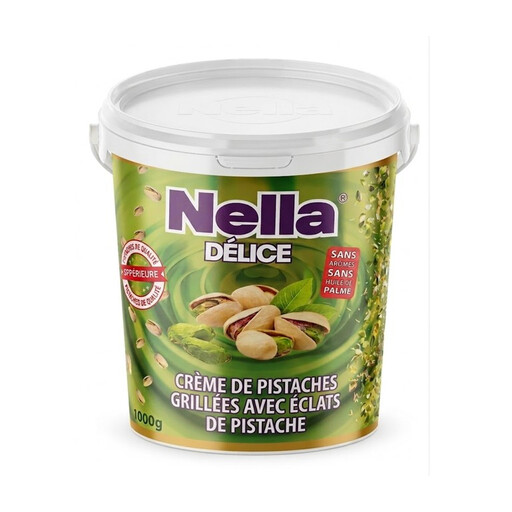 Image unavailable
This 1 kg jar is suited to a larger requirement, with a pistachio recipe and crunchy pieces. Check the full ingredients list and the allergens on the jar before sharing it.
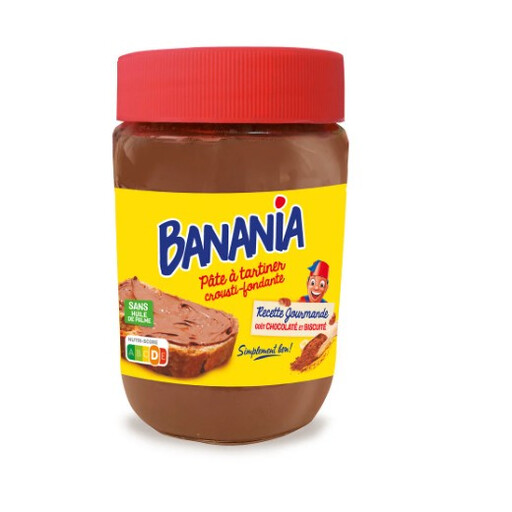 Image unavailable
The 750 g jar is smaller than a 1 kg one, so may suit you if you’re planning fewer snacks. The ‘no palm oil’ claim doesn’t mean you can skip checking the other ingredients, allergens and possible traces on the label.
 Image unavailable
This 3 kg container calls for a much greater level of use than family-sized 750 g or 1 kg jars. Make sure you’ll use the quantity, and check the storage instructions and allergens on the container you buy.
 Image unavailable
This 750 g size may be enough for several snacks without stepping up to a 1 kg jar. Before sharing it, read the ingredients list, allergens and any trace warnings on the jar you buy.
No. According to Santé publique France and the Directorate-General for Competition Policy, Consumer Affairs and Fraud Control, displaying the Nutri-Score is voluntary. If it appears on the product, also check the nutritional information per 100 g and the ingredients list.
No. The presence of gluten-containing ingredients or trace warnings varies from one product to another. For example, Carrefour warns that Carrefour Classic’ 1 kg may contain traces of cereals containing gluten. Check the jar you buy rather than assuming it has the same ingredients as another recipe.
First check the setting’s rules and the needs of the children concerned. The French Ministry of National Education explains that an individual healthcare plan can set out adjustments for a pupil with specific needs, including dietary requirements.
Match the amount to the number of snacks and portions you’re planning: 750 g may be enough for a smaller requirement, while 1 kg calls for more occasions to use it. In both cases, check the allergens, the best-before date and the storage instructions for the product you choose.