
Livraison le jour même ou le lendemain

Qualité garantie

Débloquez vos offres de bienvenue: Livraison GRATUITE | Jusqu'à -80 % | 30 jours d'essai gratuits à JoyPlus
Téléchargez l'application
Choosing the right kids' scooter can sometimes be a real headache. Between models that promise the world and spec sheets that are often confusing, it's easy to make the wrong choice. I'm the Head of Product Curation at Joybuy, and my mission is simple: to help you cut through the noise and navigate the marketing traps to make a choice that's both safe and long-lasting.
Before you dive in, here are three common pitfalls to avoid:
To avoid these unpleasant surprises, let's move on to the criteria that truly make a difference.
A few technical details are all it takes to distinguish a quality model from a simple gadget. Here’s what you absolutely must check before you buy.
The choice depends directly on the child's age and confidence level.
A good scooter should be able to grow with your child.
Durability and ease of daily use are two points not to be overlooked.
To illustrate these criteria in action, here are a few models suited for different profiles.
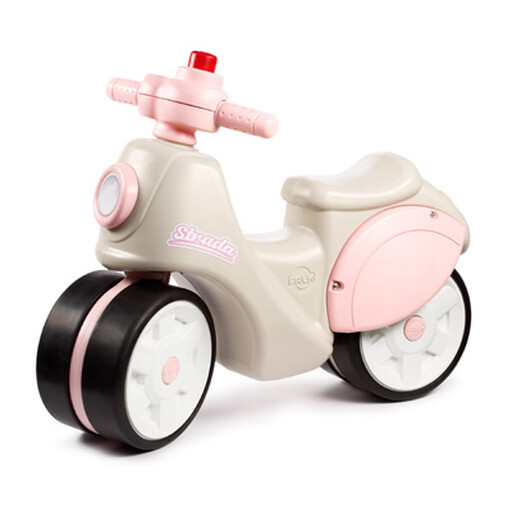
Why it's a match: Ideal as a first toddler scooter, this ride-on helps little ones develop their balance gently and safely before they move on to a push scooter. Its retro style and pastel colours also make it a beautiful object.
Specifically designed for the 1-3 age range, it avoids the pretence of an ill-suited "one-size-fits-all" model. Its wide, quiet wheels are perfect for indoor use without scratching floors.
Maximum stability thanks to its wide, soft rubber wheels, which ensure a quiet and reassuring glide for their very first rides.
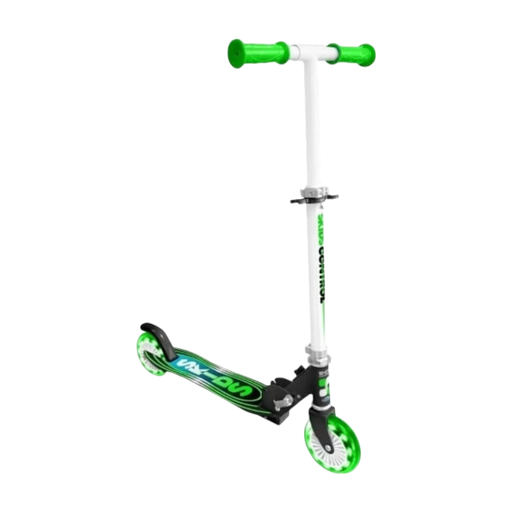
Why it's a match: Perfect for children starting to master their balance, this foldable scooter combines the fun of light-up wheels with the practicality of an adjustable handlebar. An excellent kids' scooter for outdoor fun.
Its push-button folding system is both simple and secure, avoiding the problem of flimsy mechanisms. The adjustable handlebar adapts perfectly to the child's growth.
The wheels light up without batteries as you ride, adding a touch of fun and a real bonus for visibility at dusk. Its polypropylene (PP) deck is ergonomic and highly durable.
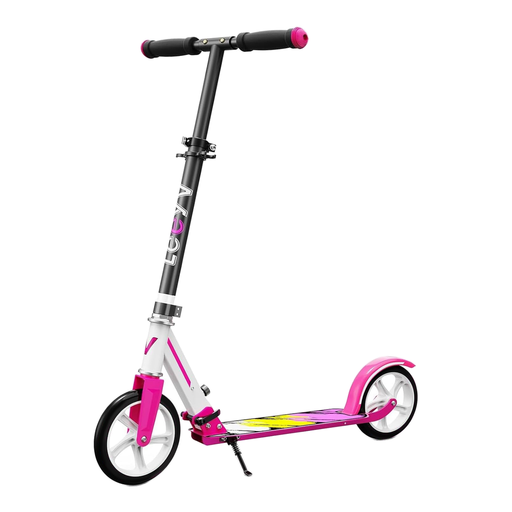
Why it's a match: Designed for pre-teens, teenagers, and even adults, this 2-wheel scooter supports up to 100 kg. A durable choice for both recreation and short daily commutes.
Its large 205 mm polyurethane wheels are much better at absorbing bumps in the road, avoiding the pitfall of a jerky, uncomfortable ride. Its weight capacity and adjustable handlebar make it an excellent long-term investment.
The aluminium and steel frame is both lightweight and robust. Its folding system makes it easy to store and transport, a plus for teens who use it for their commutes.
Explore our full selection of models that meet our demanding selection criteria and current safety regulations.
There's no fixed age, but most children start to show interest around 2 or 3 years old. For the youngest ones (1-3 years), a ride-on or a 3-wheel scooter is ideal for developing balance gently. The transition to a 2-wheel scooter usually happens around age 5 or 6, once the child is more confident in their balance.
It all depends on the child's motor skills and confidence.
For non-motorised scooters, helmet laws vary by region. In France, for example, it is not legally required for children under 12, but it is very strongly recommended. For personal light electric vehicles (PLEVs), like an electric kids' scooter, helmets are often mandatory outside of urban areas and highly advised in the city. Also consider knee and elbow pads for optimal protection. Safety first