
Livraison le jour même ou le lendemain

Qualité garantie

Débloquez vos offres de bienvenue: Livraison GRATUITE | Jusqu'à -80 % | 30 jours d'essai gratuits à JoyPlus
Téléchargez l'application
Choosing a scooter for a child? It seems easy enough. Yet, many parents end up regretting their purchase, stuck with a model that's either unsafe or just gathers dust in a closet. With the jungle of options out there, it's easy to fall into the classic traps that turn a great gift into a disappointment. To help you avoid that, we're revealing the top 3 mistakes you absolutely must not make.
To avoid making the wrong choice, just focus on a few essential points. Far from being mere technical details, these are the keys to ensuring your child's safety, comfort, and ultimately, their enjoyment.
This is THE first question you need to ask. The choice between two or three wheels depends directly on your child's age and agility.
A well-designed scooter should grow with your child and fit seamlessly into your daily life.
Safety also comes down to details that might seem minor but make all the difference in practice.
To help you make a clear choice, here are a few models that check all the boxes for each age group.
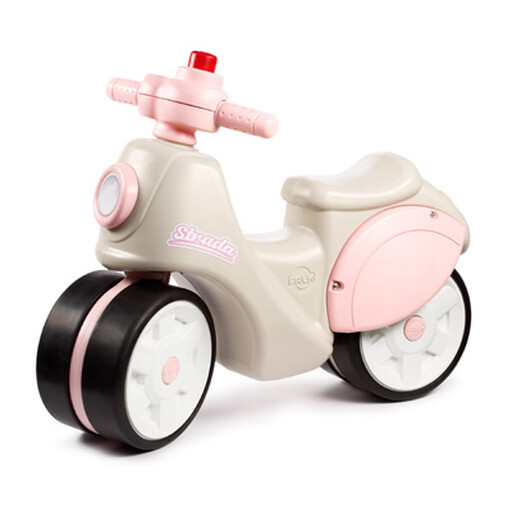
Why we chose it: Perfect as a first baby ride-on, this retro-looking model is designed to help toddlers confidently develop their balance and motor skills, whether at home or outdoors.
Perfectly calibrated for ages 1-3, it eliminates the risk of an ill-fitting model. Its solid design and wide wheels guarantee maximum stability, preventing the frustration of early tumbles.
Its wide elastomer wheels are ultra-quiet and won't scuff floors. Ideal for use in an apartment without disturbing the neighbours!
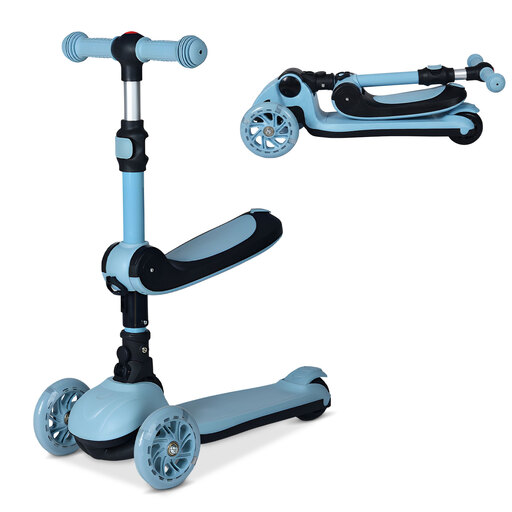
Why we chose it: This 3-wheel scooter is ideal from age 3. It combines the essential stability for beginners with fun features like light-up wheels and a removable seat.
Its adjustable handlebar and removable seat make it an adaptable model that grows with the child. No more single-use purchases! Its 3-wheel structure ensures perfect stability for beginners.
Its dual function (ride-on mode with the seat, then scooter mode) and its wheels that light up while rolling make it a smart, adaptable gift that always impresses.
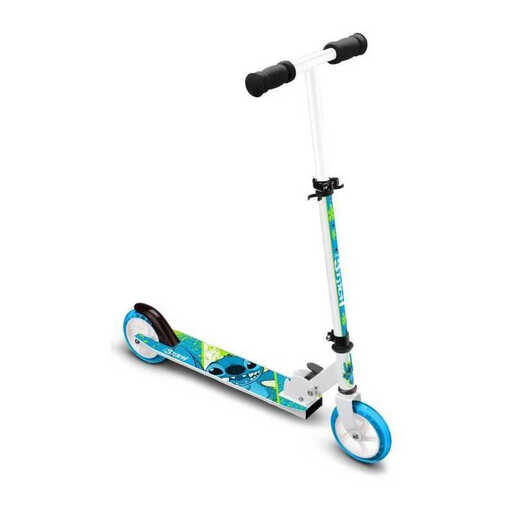
Why we chose it: This foldable two-wheel scooter is aimed at older, more confident children. With its fun design, it's suitable for both a girl and a boy for more regular use.
Steel frame, aluminium deck, supports up to 100 kg: it's built to last and withstand heavy use, a far cry from cheap, low-end models. Its adjustable handlebar guarantees several years of use.
Its large 145 mm wheels, paired with ABEC 5 bearings, ensure a smooth and comfortable glide, even on slightly uneven tarmac. Its secure folding mechanism makes it ultra-practical to transport and store.
Explore our full selection of models that meet our quality criteria and current safety standards.
A child can start as early as 12-18 months with a ride-on or a balance bike to work on their balance. A 3-wheel scooter is perfect around age 2 or 3 for gradual learning. The transition to a 2-wheel model generally happens around age 5-6, once the child has good coordination.
For a child under 5 or a complete beginner, the 3-wheel scooter is without a doubt the best choice. Its excellent stability builds the child's confidence and allows them to focus on steering. The 2-wheel model, which requires more skill and control, should be reserved for children who are already comfortable with their balance.
Safety is not an option. Wearing a helmet is non-negotiable for every ride. Knee and elbow pads are also highly recommended to prevent scrapes and bruises from falls. Finally, be sure to remind your child that scooters should only be used in safe areas (parks, yards, pedestrian paths) and not on the road.