
Livraison le jour même ou le lendemain

Qualité garantie

Débloquez vos offres de bienvenue: Livraison GRATUITE | Jusqu'à -80 % | 30 jours d'essai gratuits à JoyPlus
Téléchargez l'application
Balance bikes, tricycles, scooters... Navigating the world of children's ride-on toys can be overwhelming. For parents, it's tough to sort through the options and choose the model that will best support their little one's first adventures. Don't worry: this guide is here to help you see clearly and find the perfect ride—one that combines safety, development, and, of course, hours of fun.
Before diving into our top picks, let's review the key criteria that will guide your choice.
The choice of a child's ride-on toy primarily depends on your child's developmental stage. Each type of ride-on corresponds to a key phase in their learning journey.
The golden rule: whether on a balance bike or a tricycle, the child must be able to place both feet flat on the ground while seated. The handlebar height should also be comfortable to ensure good posture and complete control.
A good outdoor toy for kids must be sturdy and guarantee optimal safety. Be sure to check the following points:
From theory to practice! Here are three models that caught our eye for their smart design and excellent value for money.
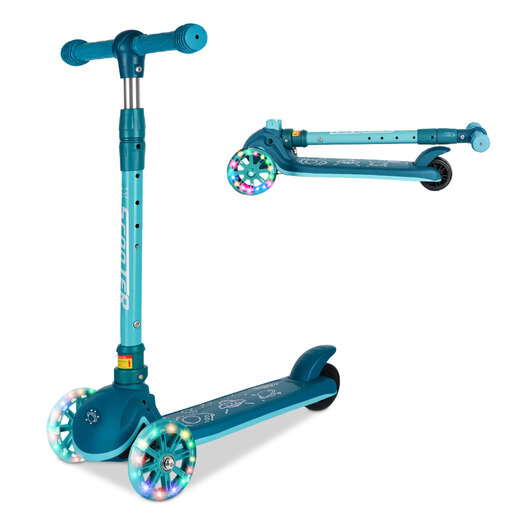
Why it stands out: This scooter ticks all the boxes: it delights kids while reassuring parents. Its three wheels provide rock-solid stability, ideal for beginners. The "lean-to-steer" system is highly intuitive and helps develop coordination. The icing on the cake: the wheels light up as you ride, creating a "wow" factor that also improves visibility.
Advantages:
Who is it for? For children from 3 years old who want to discover the joy of gliding, and for parents looking for a stable, adjustable, and easy-to-store model.

Why it stands out: This balance bike has all the makings of the perfect first bike. Its lightweight frame makes it easy for little ones to handle, while the absence of pedals forces them to focus on the essential: balance. It's the best way to prepare a child for a full-sized bike, often allowing them to skip training wheels entirely.
Advantages:
Who is it for? For children aged 2 to 5 who are ready to work on their balance while having fun. It's the smart choice for parents who want to smoothly prepare their child for learning to ride a bike.
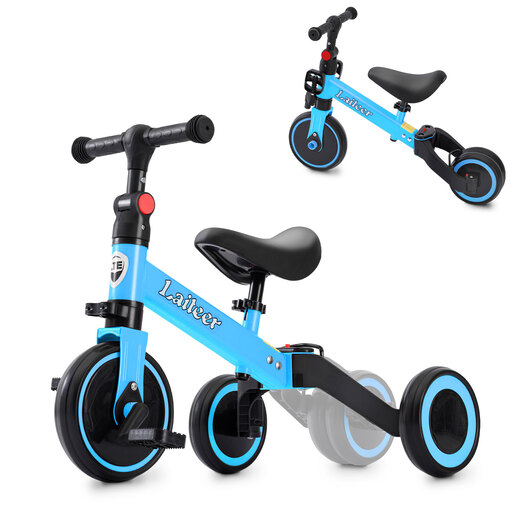
Why it stands out: This model is the very definition of a smart convertible tricycle. It starts its life as a stable tricycle for toddlers, then transforms into a balance bike in a snap: just remove the pedals and bring the rear wheels together. It's a wise investment that supports a child through the key stages of learning mobility.
Advantages:
Who is it for? For parents seeking an all-in-one, cost-effective solution for a child between 2 and 5 years old. It's the perfect choice for a first ride, combining the safety of a tricycle with the balance-building benefits of a balance bike.
Not completely convinced by our selection? Feel free to explore our other categories to find the perfect gem.
? Discover our wide range of toys for 3-year-olds for more inspiration.
Generally, a child can be introduced to a balance bike around age 2 or 3, as soon as they are walking confidently. The key criterion is that their feet must be able to touch the ground flat while they are seated on the saddle. This is essential for them to be able to push off and stop safely.
It's all about the learning objective. The tricycle, with its three wheels, is ultra-stable and allows a child to learn how to pedal. The balance bike, or pedal-less bike, has only two wheels and focuses on one thing: mastering balance. A child who masters a balance bike almost always transitions to a pedal bike without ever needing training wheels.
Safety is non-negotiable. Wearing a helmet is essential, even for short rides in the garden. Also, teach your child to always use their ride-on toy in safe areas, away from traffic. Finally, make it a habit to check the toy's condition before each use (screw tightness, tyre condition, seat height, etc.).