
Livraison le jour même ou le lendemain

Qualité garantie

Débloquez vos offres de bienvenue: Livraison GRATUITE | Jusqu'à -80 % | 30 jours d'essai gratuits à JoyPlus
Téléchargez l'application
A kids' off-road bike needs to keep pace with its young rider's growth, remain easy to control on trails, and offer braking that matches their skill level. Yet some purchases fall short after just a few rides: a bike that's too heavy, poorly proportioned wheels, or off-road kit chosen more for its looks than its real value.
This guide helps you choose between a kids' mountain bike, a versatile bike, and a kids' BMX bike, based on age, build, and the types of journeys you have in mind.
The age listed on a product page gives you a rough idea, but it's not enough on its own. Two children of the same age can have very different heights and leg lengths. A 20-inch kids' bike will suit one perfectly, while the other may need a larger frame or a different saddle adjustment.
Before you place your order, check:
A 24-inch kids' bike generally suits an intermediate build, while a 26-inch kids' bike is aimed more at teenagers. However, these guidelines should always be compared against the actual frame dimensions.
A steel frame can be robust, but a bike that's too heavy becomes a chore to lift, push up a hill, or control around a corner. On the other hand, a kids' aluminium bike is often more manoeuvrable. That said, you still need to look at the overall design, the components, and the maximum load stated.
Total weight plays a big part in everyday riding. A bike weighing around 17 kg might feel stable on loose ground thanks to its wide tyres, but it can become genuinely awkward for a child who regularly has to carry it up or down stairs.
Front or full suspension doesn't guarantee better comfort in every situation. On the road, a cycle path, or hard-packed trails, it can mainly add weight and increase maintenance needs. Similarly, a kids' bike with gears is only worthwhile if your child knows how to pick the right gear and keep a steady cadence.
For leisure riding, a simple bike is often easier to get to grips with. On hilly trails, 7 or 21 gears can offer more versatility, provided the controls are easy to reach and clearly marked.
Between the ages of 5 and 9, 18- or 20-inch wheels are usually the first sizes to consider. From 6 to 10 years old, a 20-inch kids' bike can handle daily trips, rides around the neighbourhood, and dirt tracks. Around 10 to 14 years old, 24- and 26-inch formats become more common.
The ideal riding position lets your child keep their arms slightly bent and their back naturally inclined. A saddle that's too low makes pedalling awkward; one that's too high makes stopping less safe. If possible, have your child try the bike on a flat surface before you buy.
Knobbly tyres improve grip on gravel, dirt, and uneven trails. Wide models give the bike more stability on sand or loose ground, but they also increase rolling resistance. The Hiland Roon, featured later, comes with 20 × 4.0-inch fat tyres: this setup is designed for loose terrain, but its stated weight of 16.8 kg is worth bearing in mind.
For urban riding, hybrid tyres can be more versatile. Check the recommended pressure on the tyre sidewall regularly: under-inflation increases the risk of pinch punctures and makes the bike harder to steer.
A kids' bike with disc brakes can offer consistent mechanical braking, but its cables, pads, and discs need to be checked periodically. V-brakes are simpler to maintain and are often sufficient for everyday use on less technical terrain.
Before every ride, check:
To check that the bike complies with regulations, consult its manual, the information provided by the manufacturer, and any markings on the model. For minors, wearing a suitable helmet is essential. Adult supervision is also needed on rough terrain or when introducing a child to BMX.
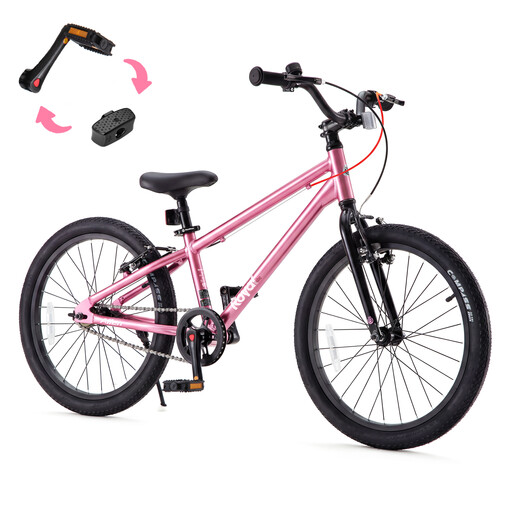
Why this choice suits this profile: with its aluminium frame, stated at 6.9 kg, and its 2-in-1 design, it can make early learning and short rides around the house easier.
Its manageable weight reduces effort during manoeuvres, while the tool-free mode change avoids fiddly adjustments.
Aluminium frame, adjustable saddle, hybrid tyres and dual V-brakes.
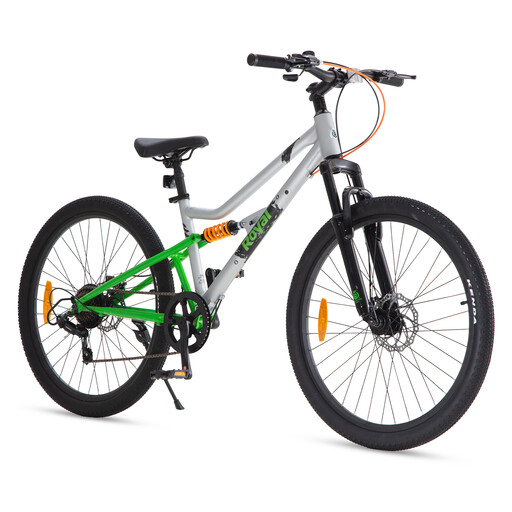
Why this choice suits this profile: this kids' mountain bike, aimed at teenagers aged 13 and over, combines an aluminium frame, 7 gears and full suspension for rough terrain.
The wheel size and stated age range reduce the risk of choosing a bike that will soon be too small for a teenager.
26-inch wheels, stated weight of 15.9 kg, front and rear suspension, dual disc brakes.
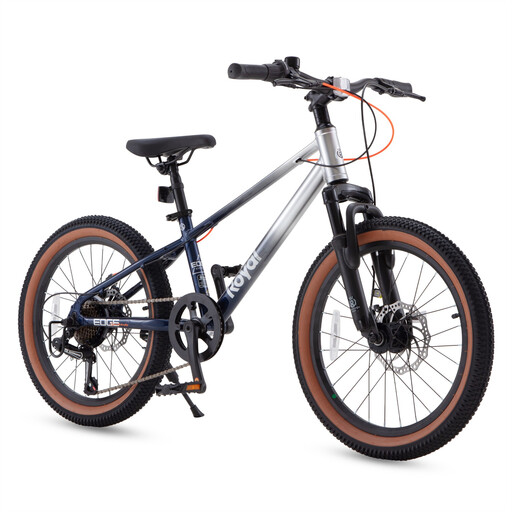
Why this choice suits this profile: its 7 gears, suspension fork and knobbly tyres are ideal for children aged 6 to 10 who mix neighbourhood rides, trails and gentle climbs.
The product page highlights the equipment that's genuinely useful on trails: front fork, 7-speed transmission, off-road tyres and disc brakes.
Aluminium frame, stated weight of 12.6 kg, 7 gears and dual disc brakes.
A bike delivered partially assembled means you need to check that the handlebars, pedals, saddle and wheels are all tight before the first ride. Follow the manufacturer's instructions carefully. If you're unsure about adjusting the brakes or gears, it's best to have the bike checked by a workshop.
How long the bike lasts depends mainly on your child's growth, how often they ride, and how well it's maintained. An adjustable model can see them through several stages, but don't keep a bike that's become too small just because it still works. After a muddy ride, clean the frame, dry the chain, and keep an eye on the wear of the pads, brake blocks, tyres and cables.
We've put together a full, real-time selection of products that meet these demanding criteria, as well as European safety regulations.
Start with a model that's the right size, with an adjustable saddle, easy-to-reach controls, and brakes that are simple to operate. On gentle trails, a 20-inch kids' bike with hybrid tyres can be more than enough. Gears and suspension become worthwhile when the routes include hills, gravel, or frequent bumps.
The regular costs mainly involve cleaning, inflating the tyres, lubricating the chain, and periodically replacing the brake blocks or pads. The wear parts on a bike with disc brakes or suspension can cost more than those on a basic model. However, regular checks help keep unexpected repairs to a minimum.
Not really. BMX bikes are built for manoeuvrability, tricks, and short courses. They usually have a single gear and a geometry designed for quick movements, which is less suited to long distances or climbs. For trail riding and adventures, go for a kids' mountain bike with multiple gears and tyres suited to the terrain you'll be tackling.