
Livraison le jour même ou le lendemain

Qualité garantie

Débloquez vos offres de bienvenue: Livraison GRATUITE | Jusqu'à -80 % | 30 jours d'essai gratuits à JoyPlus
Téléchargez l'application
Fear of the dark, late-night feedings, calls for a cuddle... New parents' nights are rarely restful. Fortunately, a well-chosen kids' night light can make all the difference. It's a reassuring beacon of light that soothes little anxieties without disrupting sleep, while providing just enough clarity to tend to your baby without having to switch on the main light.
But with the overwhelming array of models available, how do you make the right choice? This guide breaks down the essential criteria and presents a selection of night lights that combine safety, convenience, and design to help you find the perfect one for your family.
Before you fall for an adorable design, a few technical points deserve your full attention to ensure comfort and safety.
This is a non-negotiable criterion for an item in a toddler's room, as it will inevitably be handled. Opt for a soft silicone night light with no sharp edges. This material is not only soft to the touch but also shock-absorbent if dropped. Also, ensure that any plastics (like ABS) are certified non-toxic and durable enough. CE and RoHS certifications are essential: they guarantee compliance with European safety standards.
A rechargeable night light offers two major advantages. Firstly, no more dealing with batteries! It's more budget-friendly and much more eco-friendly. Secondly, the absence of a constantly plugged-in cord eliminates any electrical hazards near the bed. A battery-powered model becomes a portable night light: your child can carry it to the bathroom, or you can easily move it from one room to another. One last tip: prioritise models with a USB-C (Type-C) charging port, the new and far more convenient standard.
Not all lights are created equal, especially when it comes to sleep. LED technology is the clear winner for its low energy consumption and incredible longevity. The most important factor is the colour: always opt for a warm light (yellow, orange) and steer clear of blue light. Warm tones are far less disruptive to the production of melatonin, the sleep hormone. One final crucial point: the ability to adjust the intensity. This is a real bonus for adapting the brightness to any situation, from a subtle glow for nighttime to a slightly brighter light for a diaper change.
Here are some models that tick all the boxes: safety, convenience, comfort, and adorable design.

Its standout feature: With its smiling sloth face, it brings an instant dose of tenderness and comfort. Its warm yellow light is particularly soothing.
Key features:
Who is it for? Ideal as a newborn gift or for parents looking for an original and warm night light to soothe their baby.

Its standout feature: Its minimalist and clean cloud design will blend seamlessly into any decor. An option that is as discreet as it is poetic.
Key features:
Who is it for? Perfect for parents who prefer a minimalist and timeless design. It works equally well as a baby night light or as a bedside lamp for older children.

Its standout feature: The capybara is the ultimate zen animal, and this night light perfectly captures that relaxed spirit. Its friendly look makes it as much a decorative object as a light source.
Key features:
Who is it for? The perfect gift for a slightly older child who will appreciate its quirky look, or to surprise someone with a gift that stands out from the crowd.
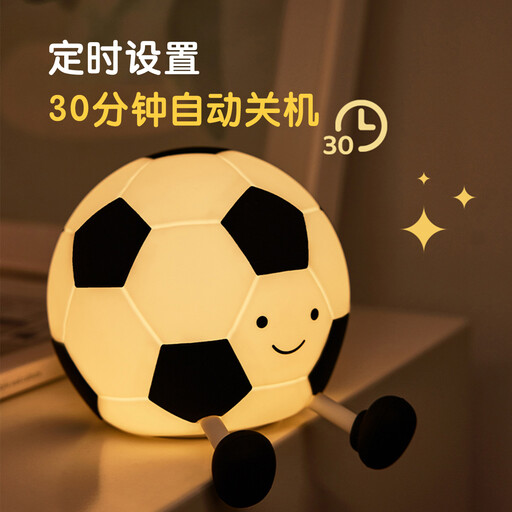
Its standout feature: This football-shaped night light combines the useful with the fun, serving as both an auxiliary light and a decorative item.
Key features:
Who is it for? The dream bedside lamp for a young football fan, adding a personal and playful touch to their room.
Our selection focuses on playful models, but the world of night lights is much broader. To discover other styles, shapes, or features, feel free to browse our complete category.
Discover our full range on the rechargeable LED light page.
A night light can be useful right from birth. For a newborn, it's mainly an ally for parents during nighttime changes and feedings. It truly comes into its own for the child around age 2 or 3, when fear of the dark often begins to appear.
Without a doubt, opt for a light with warm tones (yellow, orange, or even red). These colours have a much lower impact on the production of melatonin, the sleep hormone. Conversely, avoid bright blue or white lights, which send a wake-up signal to the brain.
Absolutely, it's the smartest choice. With no cord near the bed, it's safer. Being portable, it can be moved wherever it's needed. Finally, it's more budget-friendly and eco-friendly than battery-operated models.