
Livraison le jour même ou le lendemain

Qualité garantie

Débloquez vos offres de bienvenue: Livraison GRATUITE | Jusqu'à -80 % | 30 jours d'essai gratuits à JoyPlus
Téléchargez l'application
Finding the right kids' camera can quickly become a daunting task. Faced with promises of durability and an overwhelming number of features, it's easy to get lost or pick a model that will end up in the back of a drawer after just a few uses. As the Head of Product Recommendations at Joybuy, I'm here to help you see things more clearly and identify the criteria that truly matter for a successful gift, whether for a birthday or for Christmas.
Before you start, watch out for these three common pitfalls that can ruin the experience:
To avoid these disappointments, focus on a few simple but fundamental technical points. These are what will make the difference between a short-lived gadget and a genuine tool for creative development.
A camera intended for a child must be designed for their hands and energy. Check these points:
The choice between a digital kids' camera and an instant kids' camera depends on the experience you want to provide.
The interface must be designed for its user. For a toddler (3-5 years), look for models with clear icons and as few buttons as possible. For an older child (6-10 years), a kids' camera with creative filters, a selfie mode, or video capabilities will be much more engaging. Always trust the manufacturer's recommended age: it's the best indicator of the product's complexity.
Here are a few options that cater to different needs and child profiles, taking into account our criteria for durability and ease of use.
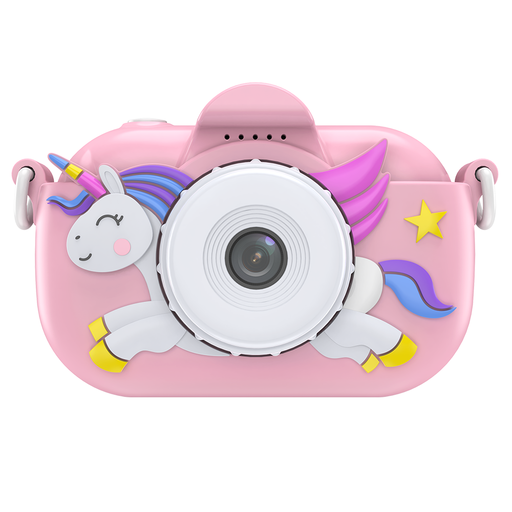
Why we love it: Ideal as a first camera, it's perfectly designed for toddlers. Its soft silicone shell and fun design make it as endearing as it is easy to handle.
Its thick, removable shell offers real protection against drops (goodbye, deceptive durability!). Its ultra-simple interface prevents any frustration (avoiding the complexity pitfall).
The winning combination of effective protection and extreme simplicity makes it the most reassuring choice for a first introduction to photography.
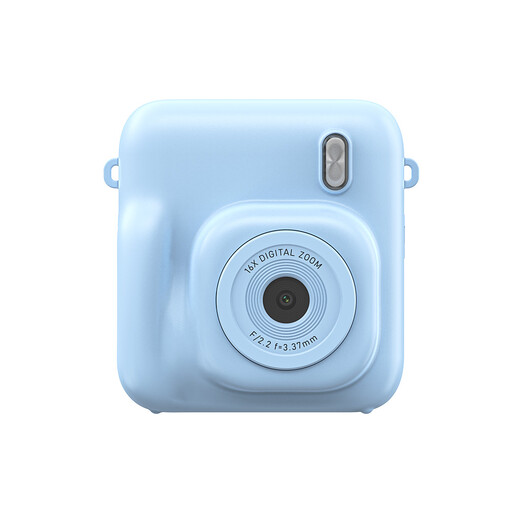
Why we love it: For the child who loves to create and see the results instantly. It's an excellent birthday gift that turns a photo into a tangible object to collect or share.
Its built-in rechargeable battery solves the problem of limited runtime and replacing batteries. The ink-free thermal printing is both simple and safe.
Instant black-and-white printing stimulates creativity in a different way than digital, while remaining budget-friendly thanks to thermal technology.
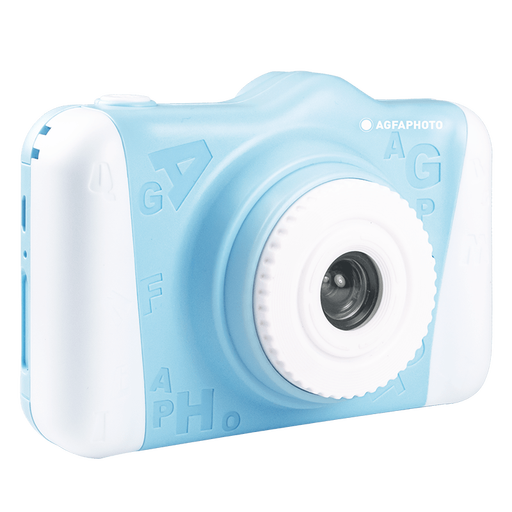
Why we love it: For older kids who want more features. With its large screen, dual lens for selfies, and HD video capability, it's closer to a real compact digital camera while remaining a durable toy.
Its large 3.5-inch LCD screen makes navigation and applying filters very intuitive, sidestepping the complexity trap. Its lithium battery ensures a comfortable runtime.
The dual lens (front/rear) and large screen are perfect for selfies and encourage experimentation with the built-in frames and filters.
Explore our full selection of kids' cameras, all approved based on our criteria for durability and safety.
Most models use microSD cards. The maximum supported capacity is typically 32 GB, which is more than enough. An 8 GB or 16 GB card can already store thousands of photos. Remember to check if the card is included or if you need to purchase it separately.
Battery life varies greatly from one model to another. To avoid unpleasant surprises, opt for a device with a rechargeable lithium battery, which simply charges via a USB cable. Continuous use time generally ranges from 1 to 3 hours. This is an important criterion to check in the product specifications.
Since these cameras use thermal printing technology, they don't need ink cartridges. The cost is therefore limited to rolls of thermal paper. This consumable is much more affordable than the colour film used in classic instant cameras (like Polaroid). One roll can print dozens of black-and-white photos, making it a recurring but manageable cost.