Joybuy Insights

How to Choose the Right Camera for Your Child

Finding a gift that is creative, durable, and safe can often be a challenge. A kid's camera is a fantastic way to introduce youngsters to the art of photography and give them the chance to capture the world through their own eyes. But with a vast array of choices, it's hard to know where to start. This guide is here to help you choose the ideal camera, tailored to your child's age and interests, with a focus on ergonomics, durability, and fun.

How to Choose a Kid's Camera?

Before diving into our top picks, let's review the key criteria for finding the first camera for your child that's sure to be a hit.

Durability First: A Shockproof Camera

Let's be honest: children aren't exactly known for being gentle. A camera designed for them must therefore be able to withstand bumps and drops. Look for models with a silicone shell or a reinforced design, built to be true shockproof cameras. A good grip, suited to their small hands, also ensures safety and comfortable use.

Balancing Features with Ease of Use

The camera should remain a creative toy, not a source of frustration.

  • Digital Kid's Camera: This is the Swiss Army knife for little photographers. It allows them to store hundreds of photos and often videos on a memory card. Ideal for documenting all their adventures without limits.
  • Instant Camera for Kids: The magic of instant photography! It offers the immediate joy of holding a photo in their hands. Thermal printing, often in black and white, is a clean and cost-effective, ink-free solution.
  • Video Camera for Kids: Most digital models include a video mode. If your child is a budding director, check the resolution (720p is a decent starting point).

Built-in fun filters and frames add a playful touch without ever complicating operation.

Safety and Practicality

Safety is non-negotiable. Check that the materials are non-toxic and that the device complies with European standards (CE marking). Models with a USB-rechargeable battery are far more practical and eco-friendly than those that use disposable batteries. Finally, a wrist strap is an almost essential accessory to minimise the risk of drops. Remember that use should always be under adult supervision, especially for children under 3.

Recommended Cameras for Kids

To guide you, here is our selection of the best cameras for kids in 2026, tested and approved by our editors.
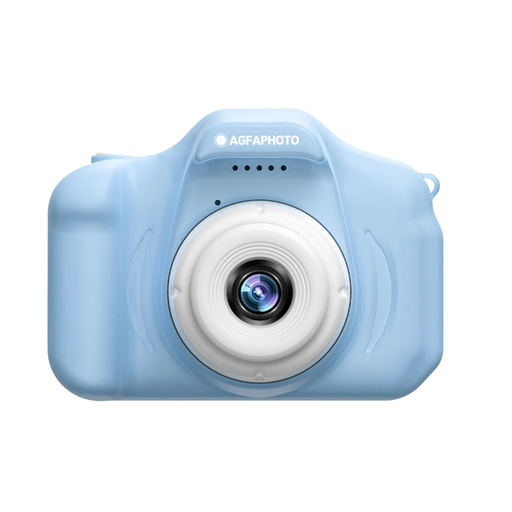
1. AgfaPhoto Realikids Mini Blue Digital Camera
AgfaPhoto Digital Camera for Kids Realikids Mini Blue

AgfaPhoto Realikids Mini Blue Digital Camera

  • Key Feature: Its pocket-sized format and feather-light weight (58g!) make it an ideal playmate, easy to slip into a backpack.
  • Advantages:
    • HD Photo and Video: It takes photos up to 12MP and records videos in 720p HD.
    • Comfortable Screen: The 2-inch IPS screen offers good comfort for framing shots and reviewing pictures.
    • Digital Stabiliser: It helps reduce motion blur, a real plus for young photographers who are always on the move.
    • Fun Filters: Filters are included to customise photos directly on the camera.
  • Who is it for?: Perfect as a first camera for little ones (3-5 years old) who are just discovering photography. Its simplicity and easy handling are its greatest strengths.

2. AgfaPhoto Realikids Cam 2 Blue Digital Camera
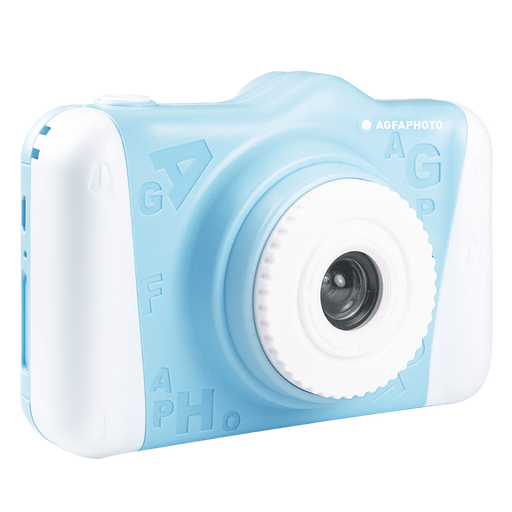
AgfaPhoto Realikids Cam 2 Waterproof Digital Camera for Kids, Blue

AgfaPhoto Realikids Cam 2 Blue Digital Camera

  • Key Feature: Its dual lens (front and rear) makes it the king of selfies, while its extra-large 3.5-inch LCD screen offers unmatched viewing comfort.
  • Advantages:
    • Perfect for Selfies: A CMOS sensor on the front and back allows for easy switching between standard photo mode and self-portraits.
    • XXL Screen: The 3.5-inch screen is one of the largest in its class, providing perfect visibility.
    • Good Image Quality: It captures 12MP photos and 720p HD videos.
    • Secure Grip: Its design is built to withstand drops and fit comfortably in small hands.
  • Who is it for?: For kids aged 5-8 who love taking selfies and playing with the 16 built-in filters and frames. The large screen is a real bonus for them.

3. AgfaPhoto Blue Digital Camera Printer

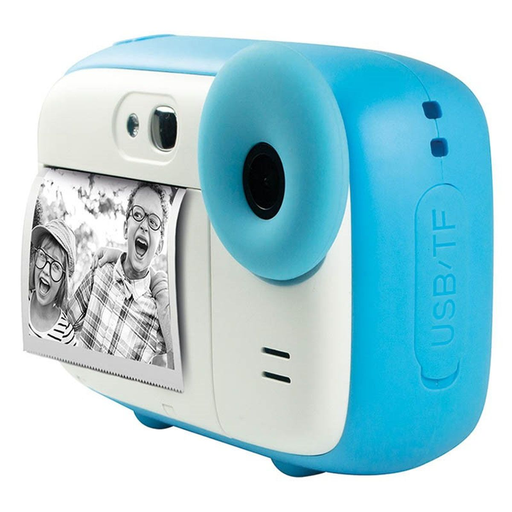
AgfaPhoto Blue Digital Camera Printer for Kids

AgfaPhoto Blue Digital Camera Printer

  • Key Feature: The best of both worlds! It takes digital photos and prints them instantly with its ink-free thermal printing technology. The gratification is instant!
  • Advantages:
    • Instant Thermal Printing: Prints black and white photos on thermal paper—a safe, clean, and economical process.
    • Photo, Video, and Printing: It captures photos (2MP) and records videos in Full HD (1080p) on a microSD card (not included).
    • Selfie Mirror: A small mirror on the front helps kids frame their self-portraits perfectly.
    • Control Screen: The 2.4-inch LCD screen lets you preview photos before printing.
  • Who is it for?: The perfect birthday gift for budding artists who love to craft, colour, and share their creations on the spot.

Looking for Other Options?

Not convinced by these models? Looking for a different colour or other features? Check out our full collection of kids' cameras to find the gift that's guaranteed to be a hit.

Discover More Blue Cameras

Your Questions, Our Answers

At what age should you give a child their first camera?

From the age of 3 or 4, a child can start with a very simple, durable model with large buttons and basic functions. For 5-8 year olds, you can look at more advanced cameras with a video mode, selfie capabilities, and creative filters.

Digital or instant camera for a child: which to choose?

It all depends on the experience you want to offer. Digital is versatile: it allows them to store everything (photos and videos) without a second thought. Instant offers a more magical and tangible experience. Each shot becomes a unique object to collect or give away, which encourages the child to compose their photo more carefully before clicking.

Is a memory card needed for a kid's camera?

Yes, for almost all digital cameras, a memory card (usually microSD) is essential for saving photos and videos. Note that it is rarely included. A 32GB capacity, often the maximum supported, is more than enough for thousands of pictures. Even some instant cameras require one if you want to keep a digital copy of the printed photos.