
Livraison le jour même ou le lendemain

Qualité garantie

Débloquez vos offres de bienvenue: Livraison GRATUITE | Jusqu'à -80 % | 30 jours d'essai gratuits à JoyPlus
Téléchargez l'application
Choosing a kids' bike isn't just about picking a colour or a wheel size. Between a frame that's too heavy, brakes that are hard to operate and a wheel size chosen purely by age, certain mistakes can make the bike uncomfortable – or even unusable – within a few months.
For a purchase that suits daily journeys, learning to ride or family outings, it's far better to consider the child's build, the bike's weight, the braking system and the intended use.
Age gives you a rough starting point, but the child's height and inside leg measurement are far more useful. Two children of the same age can have very different builds. A bike that's too big will be hard to control; one that's too small will quickly restrict the pedalling position.
Labels like 14-inch kids' bike, 16-inch kids' bike or 20-inch kids' bike should therefore be checked against the manufacturer's size chart.
An aluminium frame can make the bike lighter, but accessories, wheels, suspension and brakes all affect the final weight too. A heavy model is harder to lift, manoeuvre and carry up stairs.
For learning, a lightweight kids' bike generally makes steering and stopping easier. However, do check the weight of the complete bike, not just the frame.
Full suspension, multiple gears or wide tyres can be useful on rough terrain. For rides on cycle paths or around the neighbourhood, these features sometimes add weight and maintenance without any real benefit.
On the other hand, a child who rides on forest trails or uneven ground can make the most of a kids' mountain bike fitted with knobbly tyres, suspension and more progressive braking.
Here are some general guidelines to compare with the child's actual height:
When stationary, the saddle height should allow the child to place at least the balls of their feet on the ground. When pedalling, the knee should remain slightly bent when the pedal is at its lowest point. The handlebars should not be too far from the body.
An aluminium kids' bike resists corrosion better and can be easier to handle than a steel model. However, the stated weight should be looked at as a whole. A step-through or low-top-tube frame makes getting on and off easier, especially for beginners.
For road rides or smooth paths, a rigid fork is often sufficient. A front suspension, or full suspension, makes more sense on uneven terrain. It doesn't, however, replace the need to adjust the saddle and tyre pressure correctly.
The brakes must be easy for small hands to reach. V-brakes are simple and common on learner bikes. Mechanical disc brakes can be useful on varied terrain, but they require regular adjustment and checking.
A kids' bike with gears allows the child to adapt their effort on hills and gentle slopes. For a first bike, a single speed keeps things simple. For more demanding sporty or family use, 7 or 21 speeds can be relevant, provided the child knows how to use the gear shifter.
In the UK, check conformity information, the presence of an English-language manual and any equipment that is mandatory or recommended for the intended use. Wearing a helmet is strongly advised, along with adult supervision for younger children.

Why this choice suits this profile: Its single-speed drivetrain is ideal for first rides, while the step-through frame makes it easy for children aged around 4 to 7 to get on and off.
The design stays simple, without multiple gears or adjustments, making learning more intuitive.
16-inch wheels, front V-brake, rear coaster brake, chainguard and accessories included.
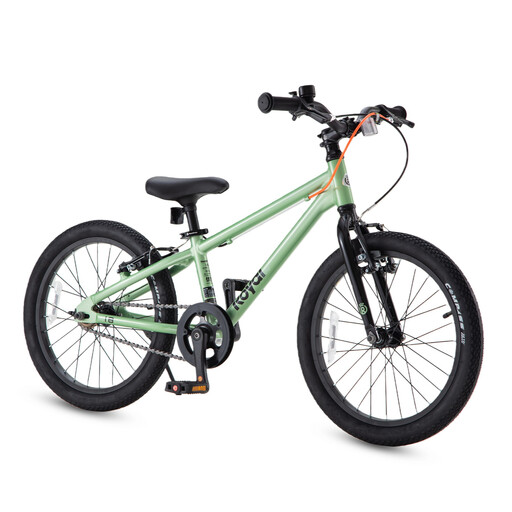
Why this choice suits this profile: With a claimed net weight of 6.9 kg and an aviation-grade aluminium frame, it's aimed at families who want a bike that's easier to handle day to day.
The stated weight lets you compare the complete bike directly, rather than relying on a mere promise of a light frame.
Aluminium frame, dual V-brakes, adjustable saddle and tyres suited to multiple surfaces.
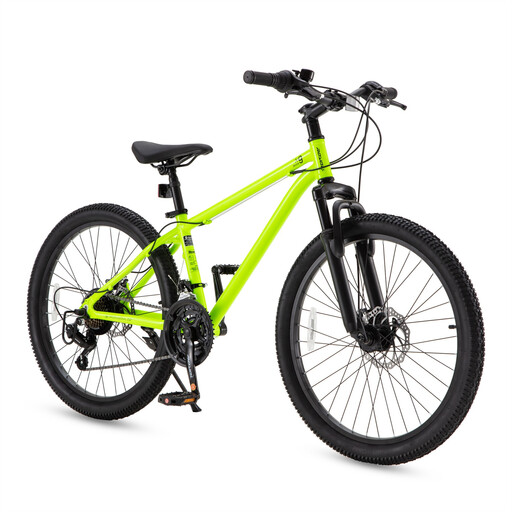
Why this choice suits this profile: It's aimed at children aged around 10 to 14, who mix urban journeys, paths and longer rides.
The suspension fork works with the off-road tyres and 21-speed drivetrain, for consistent performance on varied terrain.
Aluminium frame, 21 speeds, front suspension fork, knobbly tyres and quick-release front wheel.
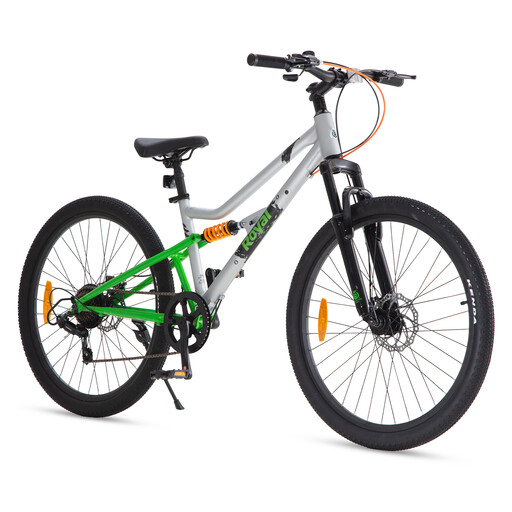
Why this choice suits this profile: This model is aimed at teenagers from around 13 years old, who want a bike for rough paths and off-road rides.
The front and rear suspension matches use on uneven ground, while the dual disc brakes allow each wheel to be controlled independently.
Aluminium frame, 7 speeds, dual suspension, knobbly tyres and a claimed net weight of 15.9 kg.
We've put together a comprehensive, real-time updated selection of products that meet these demanding criteria, as well as European safety regulations.
Start by measuring the child's height and inside leg, then compare these figures with the manufacturer's chart. The inches refer to the wheel diameter, but they aren't enough to determine whether the frame will be comfortable.
Stabilisers can provide reassurance during the first attempts, but they don't replace learning balance. Depending on the child's confidence and independence, you could also consider a balance bike or a model with a transition system.
Before every ride, check the brakes, tyre pressure, wheel tightness and saddle height. Clean the frame with a damp cloth and have the drivetrain, cables and suspension components checked if the bike is used regularly.