
Livraison le jour même ou le lendemain

Qualité garantie

Débloquez vos offres de bienvenue: Livraison GRATUITE | Jusqu'à -80 % | 30 jours d'essai gratuits à JoyPlus
Téléchargez l'application
Buying a kids' bike isn't just about picking a colour or your child's favourite character. With different wheel sizes, sometimes gimmicky accessories and very approximate age recommendations, a wrong decision can quickly turn the bike into a cumbersome object.
This guide helps you compare models suitable for children aged 3 to 7, teenagers and adults. Electric bikes are not included in this selection.
Two 5-year-olds can have very different heights and body shapes. Age is therefore only a secondary indicator. It's your child's height and inside leg measurement that should guide your choice.
A bike that's too big makes starting and stopping more difficult. Conversely, a model that's too small restricts the pedalling position and is likely to be quickly abandoned. For a girls' bike for ages 4 to 7 as well as a boys' bike, always check the saddle height and the adjustability of the handlebars.
A lightweight frame makes manoeuvring easier, but the specification should also detail the materials used and the total weight of the bike. A model that's too heavy can be difficult to lift, carry up stairs or control around corners.
Aluminium is generally appreciated for its reduced weight and resistance to corrosion. Steel often offers a robust construction, but at the cost of greater weight. To compare models properly, consider the whole bike: frame, wheels, brakes, chainguard and accessories.
A basket, a kickstand or stabilisers can be practical, but no accessory will replace a properly adjusted bike. Stabilisers should be installed at the same height, then removed as soon as your child has mastered their balance sufficiently.
A large number of gears is also not essential for beginners. A simple system can make learning easier. Similarly, a BMX bike for kids or a kids' mountain bike should be chosen based on the intended use, not its sporty appearance.
Here are some common guidelines, to be adjusted according to your child's build and confidence:
When stationary, your child should be able to place at least the balls of their feet on the ground, reach the brake levers without straining and step over the frame without difficulty. An adjustable saddle allows the bike to be used for longer, but it won't turn a model that's too big into a suitable bike.
A kids' bike can be equipped with a front rim brake, a rear coaster brake or two hand brakes. In all cases, your child must understand how they work and be able to operate the levers easily.
V-brakes, a type of rim brake, are common on learning models. Mechanical or hydraulic disc brakes are found more on mountain bikes, but they require regular checking. Before every ride, check the lever travel, the condition of the pads or discs and the tightness of the wheels.
For use in the UK, choose a bike supplied with its instructions, conformity information and safety warnings. Wearing a helmet is strongly recommended for all children cycling. Adult supervision remains essential, especially in public spaces.
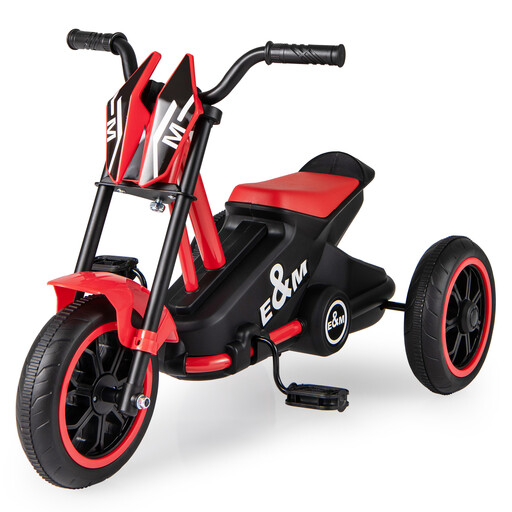
Why this choice suits this profile: This tricycle is aimed at children from 3 years old who are starting to move around on surfaces like concrete, wooden floors or park paths.
Its triangular structure and wide wheelbase avoid the need for separate stabilisers at the start.
Handlebars that limit sharp turns, non-slip pedals, a saddle height of 30 cm and a stated maximum load of 30 kg.
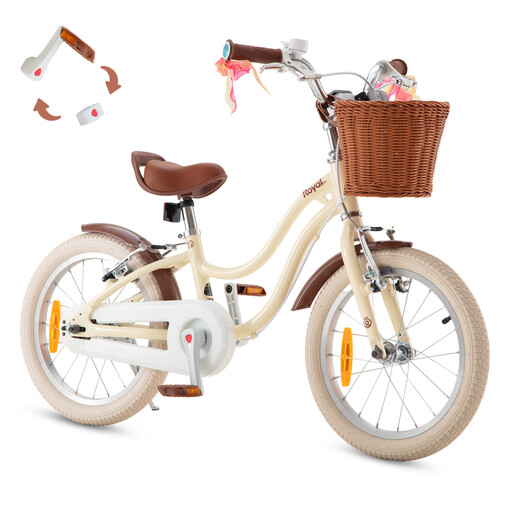
Why this choice suits this profile: Its aluminium alloy frame and 2-in-1 system are aimed at families looking for a gentle progression from balancing to pedalling.
The quick-release crank system allows you to switch from one mode to the other without tools, keeping pace with your child's progress.
Low step-through frame, hybrid tyres, two hand brakes and a stated net weight of 10 kg for the 16-inch version.
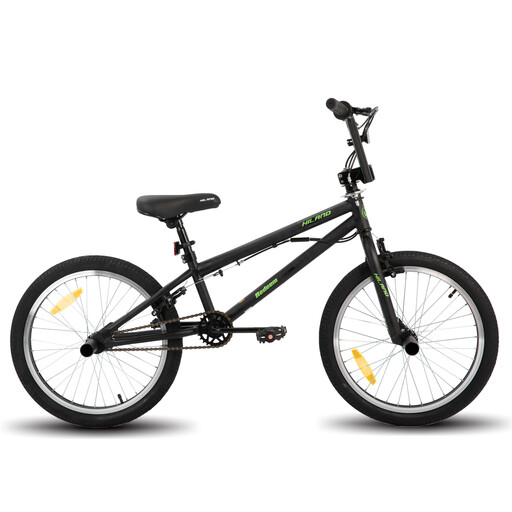
Why this choice suits this profile: This 20-inch BMX is aimed at teenagers and children who are already confident and enjoy tricks, small jumps or light off-road riding.
It is designed for BMX, rather than being presented as a versatile bike meant to suit all uses.
360-degree rotor, four peg mounts, wide 20 × 2.35-inch tyres and dual U-brakes. A helmet and protective gear remain essential.
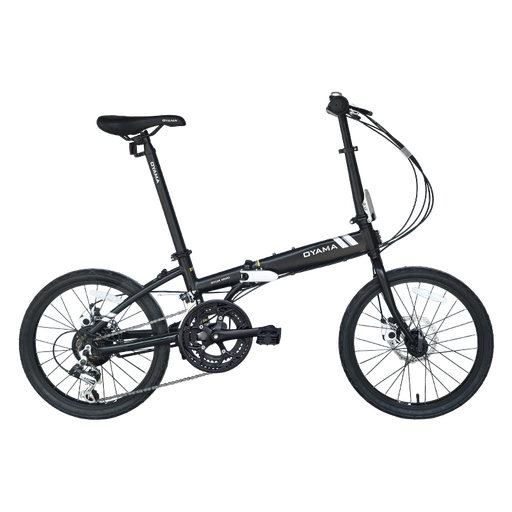
Why this choice suits this profile: This 20-inch folding bike is suitable for urban journeys, storage in a flat or combined use with public transport.
Its folding mechanism and carrying handle address a real need, rather than adding accessories that are rarely used.
Aluminium frame, Shimano 7-speed transmission, linear-pull brakes and stated folded dimensions of 76 × 63.5 × 30.5 cm.
We have compiled a comprehensive list, updated in real time, of products that meet these strict selection criteria as well as European safety requirements.
After assembly, check the tightness of the handlebars, pedals, saddle and wheels. Also test the brakes before the first ride. Models delivered partially assembled must be put together carefully following the manufacturer's instructions.
To make the bike last:
A 16-inch bike is often recommended for this age group, but your child's actual height remains the deciding factor. Some manufacturers indicate a height range, for example 105 to 135 cm. Measure your child and check the precise dimensions of the model before ordering.
They can help during the first few pedal strokes, but they are not essential for every child. A grow-with-me bike or a balance bike can allow your child to develop their balance before moving on to pedals. The right choice depends on your child's experience and confidence.
A quick check before each ride is usually enough to spot a flat tyre, a poorly positioned brake or a loose part. Regular cleaning, combined with a more thorough check of the chain, wheels and braking system, helps keep the bike working well over time.