
Livraison le jour même ou le lendemain

Qualité garantie

Débloquez vos offres de bienvenue: Livraison GRATUITE | Jusqu'à -80 % | 30 jours d'essai gratuits à JoyPlus
Téléchargez l'application
For a parent, a child's safety is non-negotiable. Especially when they're zipping around on their bike, scooter, or rollerblades. Choosing a kids' bike helmet seems easy at first glance, but the shelves are overflowing with flashy models that sometimes hide subpar protection. To help you sort through the options, we've broken down the pitfalls to avoid and the criteria that truly matter before you check out.
The equation is simple: find a helmet your child will actually want to wear, while being certain that it fulfils its primary mission: protecting their head in a fall. Here's our guide to outsmarting the marketing traps and making the right choice.
To avoid these pitfalls, focus on a few non-negotiable technical specs. These are what guarantee reliable protection, far beyond stickers and colours.
This is THE starting point. It's non-negotiable. The European standard EN 1078 certifies that the helmet has successfully passed a whole battery of impact and resistance tests. It guarantees a sufficient level of protection for cycling, skateboarding, and rollerblading. Any helmet that doesn't display this standard on its label or spec sheet should be dismissed immediately. It's your only assurance that the product is a real kids' bike protection device and not just a gadget.
A perfect fit is crucial. A good adjustable kids' helmet should offer two complementary systems:
To find the right size, it's simple: measure your child's head circumference with a soft measuring tape, positioning it about 2 cm (0.8 inches) above their eyebrows.
A helmet consists of a hard outer shell and an EPS (expanded polystyrene) foam liner. It's the liner that absorbs energy during an impact. There are two main assembly technologies:
To guide you, here are a few options that meet specific needs while respecting all safety and functionality criteria.
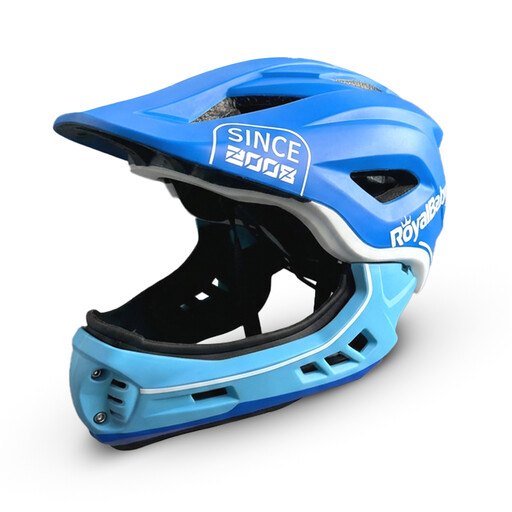
WHY IT'S A GREAT FIT: Perfect for young daredevils who love MTB or BMX. This full-face helmet offers enhanced face and chin protection, which is essential for more demanding disciplines.
It sidesteps the single-use trap by offering a 2-in-1 solution. Its removable chin guard transforms it into a full-face kids' MTB helmet for maximum security, or a classic helmet for more casual rides.
Its versatility, thanks to the detachable chin guard. Bonus: the LED light integrated into the adjustment dial for better visibility.
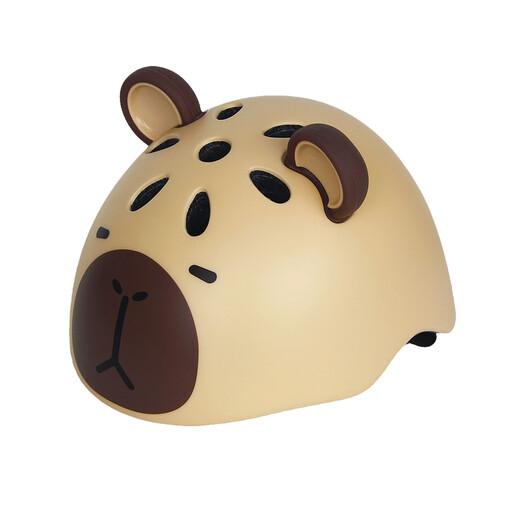
WHY IT'S A GREAT FIT: For the youngest riders, wearing a helmet is often a chore. A fun design like this original kids' helmet with 3D ears turns safety gear into a cool accessory they'll be proud to wear.
It never sacrifices safety for style. This helmet combines an irresistible look, In-Mold construction, and EN 1078 certification. Proof that you can have both.
Its animal design turns wearing a helmet into a game. Lightweight (In-Mold construction) and easy to adjust.
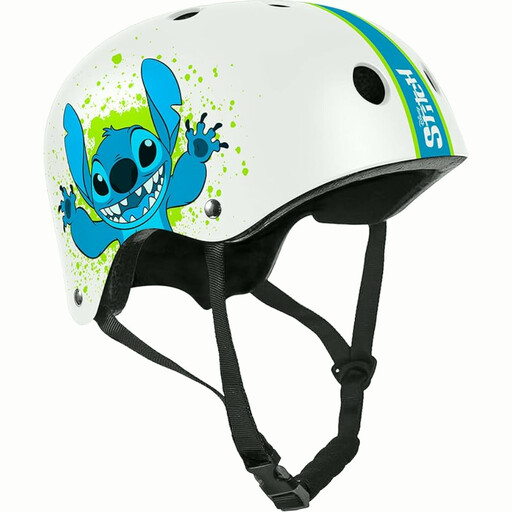
WHY IT'S A GREAT FIT: For the child who swears by their favourite characters, wearing a Stitch-themed helmet is a no-brainer. It's the best way to reconcile their passion with safety rules.
This isn't just merchandise. Certified EN 1078, it's real protective equipment for biking, skating, and rollerblading (kids' rollerblade helmet), much more than a simple fan gadget.
The official Disney design is an obvious draw. Its multi-sport versatility and additional foam pads for a custom fit.
Explore our full selection of helmets that meet all our safety criteria and current standards.
The golden rule: a helmet must be replaced after any impact, even if no damage is visible on the outside. The internal EPS foam structure can be compromised and may no longer perform its shock-absorbing function. It's also recommended to replace it every 3 to 5 years. Over time, UV rays and temperature changes degrade the materials and reduce their effectiveness.
Take a soft measuring tape. Wrap it around the widest part of your child's head, about 2 cm (0.8 inches) above the eyebrows and ears. The measurement in centimetres corresponds to the helmet size. Simply check that this measurement falls within the adjustment range of the chosen model.
Yes, absolutely, as long as it is EN 1078 certified. This standard specifically covers helmets for "cyclists and for users of skateboards and roller skates." A single certified helmet is therefore sufficient for all these activities. A smart and budget-friendly choice for kids who love to do it all.