
Livraison le jour même ou le lendemain

Qualité garantie

Débloquez vos offres de bienvenue: Livraison GRATUITE | Jusqu'à -80 % | 30 jours d'essai gratuits à JoyPlus
Téléchargez l'application
Choosing a kids’ bike isn’t just about picking a colour and a wheel size at random. Balance bikes, bikes with stabilisers or kids’ mountain bikes with gears: the weight, frame geometry and brake type all have a direct impact on handling, learning and everyday comfort.
Certain pitfalls crop up time and again when buying:
Wheel size gives you a starting point, but it never replaces checking the saddle height and the child’s build. With a 12-inch kids’ bike, the child should be able to place their feet flat on the ground — or at least touch it easily with the balls of their feet — depending on the model’s design.
Here are some general guidelines, which you should confirm against the product details and your child’s measurements:
The saddle should be easy to adjust without complicated tools, and the handlebars shouldn’t force the child into an overly stretched position. A low step-through frame also makes getting on and off easier.
A lightweight kids’ bike is easier to move, store and control. However, you should weigh its weight against the materials and features: steel is sturdy but generally heavier than aluminium or magnesium alloy.
Tyres should be chosen according to the terrain:
In town, off-road equipment mostly adds weight without any real benefit. On hilly trails, however, a suspension fork and suitable tyres can make rides more comfortable.
A kids’ bike must offer braking that’s easy to understand and operate with small hands. Beginner models often use a coaster (back-pedal) brake, a V-brake operated from the handlebars, or a combination of the two.
A kids’ bike with disc brakes can be useful for trails and downhill routes, but this system requires regular adjustment and maintenance. For a young cyclist, ease of operation often matters as much as the brake technology.
Before buying, check:
In the UK, it is strongly recommended that children wear a helmet when cycling. As a parent or guardian, you should also choose a route that matches your child’s ability and provide appropriate supervision.

Why this choice suits this profile: This pedal-less balance bike supports those first balance sessions at home, in the park or on a quiet path. The adjustable saddle and handlebars let you tweak the position as your child grows.
Without pedals, this model avoids charging for features your child doesn’t yet need to learn steering and balance. The puncture-proof tyres also cut down on inflation checks.
Adjustable saddle and handlebars, described as lightweight and simple to assemble according to the product page.
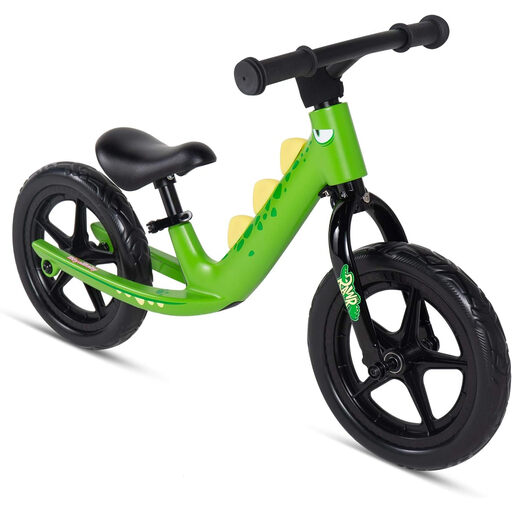
Why this choice suits this profile: This model is aimed at families looking for a well-equipped balance bike, with a magnesium alloy frame, a wide footrest and a quick-release saddle.
The steering limiter and non-slip grips improve control — a point often overlooked on the most basic balance bikes.
EVA foam tyres (no inflation needed), footrest and a claimed weight of around 2.77 kg according to the detailed product page.
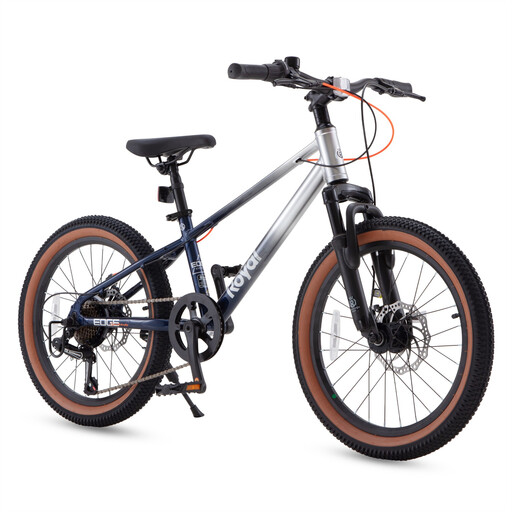
Why this choice suits this profile: This kids’ mountain bike is designed for 6–10 year olds who are already confident on two wheels and ride on trails, slopes or uneven surfaces.
Its features genuinely match off-road use, rather than adding gears just to make the product page look more appealing.
Aluminium frame, 7-speed transmission, front suspension fork and disc brakes front and rear.
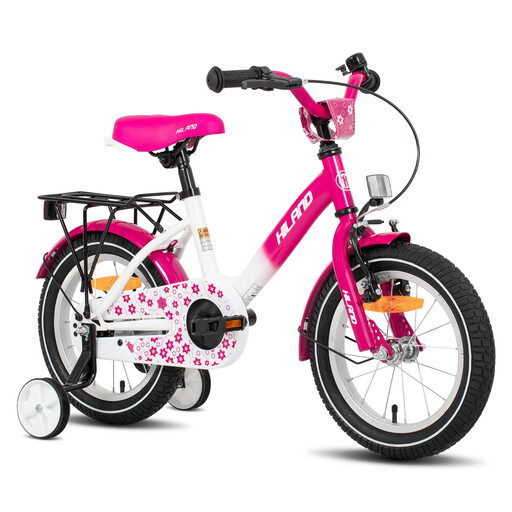
Why this choice suits this profile: With its stabilisers, this bike is ideal for the first rides of a child aged 2 to 4 years, measuring around 80 to 105 cm. Its simple setup is perfect for family outings.
There’s no point adding multiple gears here: the single-speed drivetrain keeps things simple. The two braking systems and chain guard cover everything a beginner needs.
V-brake at the front, coaster brake at the rear, adjustable saddle, basket and stabilisers included.
We’ve put together a full selection, updated in real time, of products that meet these exacting criteria and European safety standards.
A balance bike, or pedal-less bike, is primarily for learning balance and steering. It’s suitable once your child walks confidently and can control their speed with their feet. A pedal bike becomes interesting when they’re ready to co-ordinate pedalling, braking and steering.
It all depends on your child’s growth, the range of adjustment and how the bike is used. An adjustable saddle and handlebars extend the usable life, but they can’t compensate for an unsuitable wheel size. Check the bolts, brakes, tyres and overall frame condition regularly.
Gears can be useful on hilly routes or off-road, especially from a 20-inch bike upwards. For a beginner riding on the flat, a single-speed drivetrain is generally more intuitive and simpler to maintain. The right choice depends on the terrain you’ll actually be riding on, not the number of gears listed on the product page.