
Livraison le jour même ou le lendemain

Qualité garantie

Débloquez vos offres de bienvenue: Livraison GRATUITE | Jusqu'à -80 % | 30 jours d'essai gratuits à JoyPlus
Téléchargez l'application
Choosing your child's first (or next) bike can often be a daunting task. With different wheel sizes, brake types, and materials, it's easy to get lost. Our mission? To give you clear, practical guidance for finding the ideal bike: a model that's safe, durable, and, most importantly, perfectly suited to their size and age.
As the Head of Product Recommendations at Joybuy, my role is to do the groundwork for you. I analyse the technical specs to filter out the noise, helping you make the right choice with complete confidence.
Before diving into our selection, keep these three essential criteria in mind.
This is THE number one criterion. A bike's size, expressed in inches ("), refers to its wheel diameter. A bike that's too big is dangerous and difficult to control, while one that's too small will quickly become uncomfortable and discouraging.
Here are some general guidelines:
The golden rule: while seated on the saddle, your child should be able to touch the ground with the tips of their toes.
It's often overlooked, but weight is crucial. A lightweight kids' bike is easier to manoeuvre, get going again after a stop, and, most importantly, pick up after a minor fall. This makes all the difference for their confidence and enjoyment! An aluminium kids' bike offers the ideal balance of lightness, durability, and rust resistance. It's perfect for making learning easier and enjoying long rides.
How your child will use their bike is just as important. For their very first rides, a convertible balance bike is a brilliant option, as it later transforms into a pedal bike. Planning family outings on country paths or in the forest? A kids' MTB, with its suspension and knobby tyres, will offer more comfort and versatility. For daily use in the city or at the park, a classic or "Freestyle" model will be a perfect fit.
Now, let's get to our top picks. Here are the models that caught our eye, designed from the ground up for young cyclists.
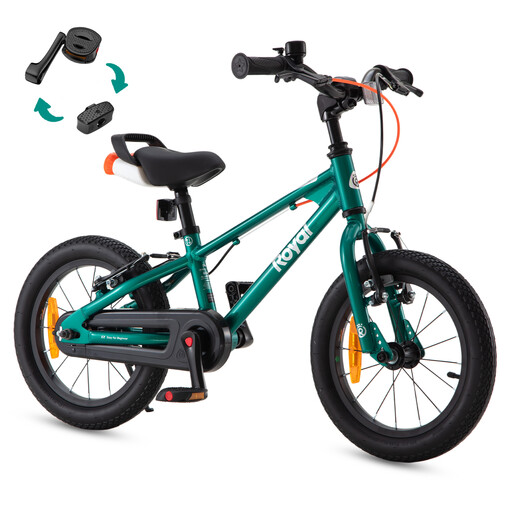
Why it stands out: It's the Swiss Army knife of first bikes. This model is a convertible balance bike: its pedal assembly can be installed and removed without any tools. You can switch from balance mode (to learn balance) to pedal mode in seconds. It's an ingenious solution to support the early years of learning.
Key features:
Who is it for? Ideal for children aged 3 to 5. It's the smart choice for parents who want a single bike to cover the entire learning phase, from finding their balance to their first pedal strokes.
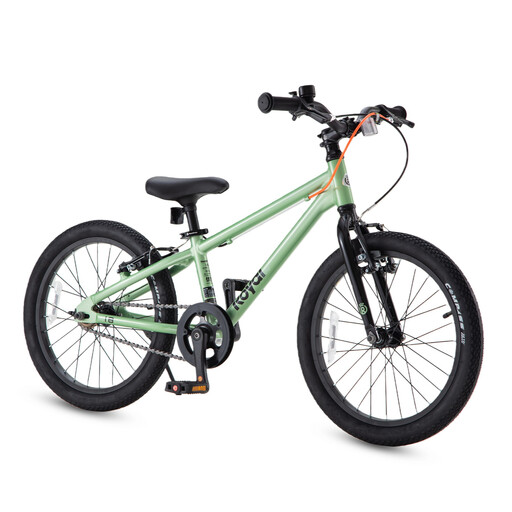
Why it stands out: Its feather-light weight. That's its main advantage. With an aerospace-grade aluminium frame weighing just 0.9?kg (for a total bike weight of 6.9?kg), this bike is a true feat of lightweight engineering. The result: enhanced control, balance, and confidence for the young rider.
Key features:
Who is it for? Perfect for kids aged 5 to 9 who have already mastered the basics and are looking to improve their agility. Here, the lightweight design becomes a real boost to their fun and performance.
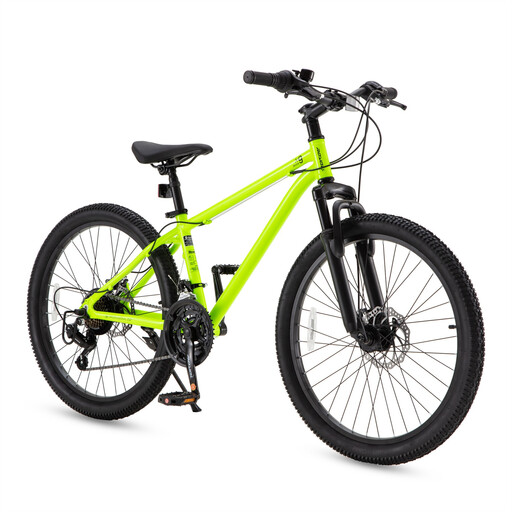
Why it stands out: This is a true kids' MTB, built for adventure. With its 21-speed drivetrain and front suspension fork, it's ready to tackle trails, climb hills, and adapt to any terrain for a decidedly more athletic ride.
Key features:
Who is it for? For pre-teens aged 10 to 14 who want a do-it-all bike: just as comfortable for daily commutes as it is for their first real off-road adventures.
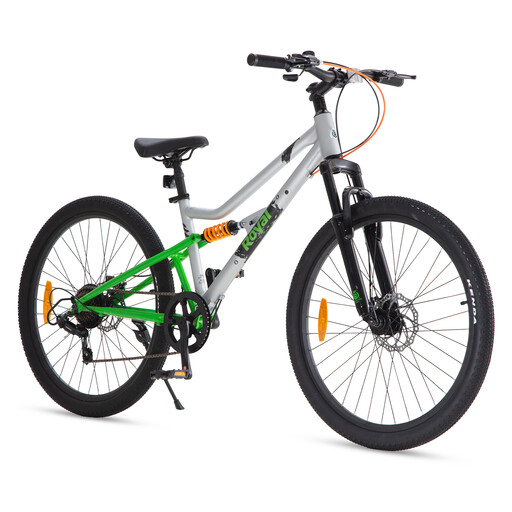
Why it stands out: This bike takes things to the next level. It's a true teen MTB, equipped with full suspension (front and rear). This "full-squish" system ensures optimal comfort and control on the roughest terrain and most technical trails.
Key features:
Who is it for? For teens aged 13 and up who are serious about mountain biking. This is the ideal bike for those looking for a machine that can handle more technical and demanding courses.
Green is a dynamic and very popular colour for kids' bikes. If you liked the models in our selection, we've gathered all our green bikes here to give you even more ideas. ? Discover our complete selection of green kids' bikes.
1. How can I be sure to choose the right size kids' bike? The most reliable method is the inseam measurement. While standing, your child should be able to straddle the bike with both feet flat on the ground. There should be a 2 to 5?cm (1-2 inch) gap between their inseam and the top tube of the frame. Also, trust the manufacturers' size guides, which are generally very accurate.
2. Is an aluminium frame really an advantage for a kids' bike? Absolutely, and it's a crucial point. A lightweight kids' bike made of aluminium is much easier to handle. Your child will build confidence, be able to pick up their bike on their own after a small fall, steer it more easily, and tire less quickly. Family rides will be that much more enjoyable!
3. At what age can a child switch to a bike with gears? Generally, a child is ready for gears around age 7 or 8, once balance and braking are fully mastered. The first geared bikes often appear on 20-inch models. Introduce them gradually: start on flat ground so they can get familiar with the mechanism without any stress.