
Livraison le jour même ou le lendemain

Qualité garantie

Débloquez vos offres de bienvenue: Livraison GRATUITE | Jusqu'à -80 % | 30 jours d'essai gratuits à JoyPlus
Téléchargez l'application
Choosing a child's first bike is an unforgettable moment, but the search for the perfect model can quickly become a headache. Faced with a jungle of models, technical jargon, and marketing promises, it's easy to make a mistake and choose an unsuitable bike that could discourage your budding cyclist. As a Product Recommendation Manager at Joybuy, my job is to clear the path for you. Together, let's break down the pitfalls to avoid and the key criteria for finding the bike that will join your child on their greatest adventures.
The market is full of attractive models, but some hide flaws that can spoil the fun of those first rides. Here are the most common mistakes.
To make the right choice, focus on objective technical criteria that guarantee safety and the joy of riding.
The type of bike should match the child's developmental stage.
Beyond the type of bike, several technical details deserve your full attention.
To illustrate this advice in practice, here are a few models that meet specific needs while avoiding the pitfalls we've just discussed.
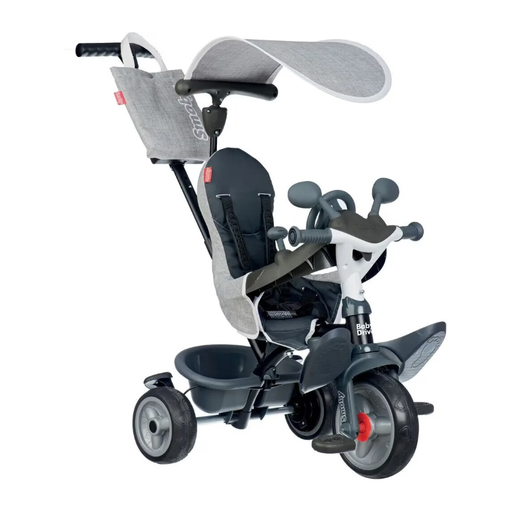
Why it stands out: Ideal for parents looking for a safe and comfortable solution for those first outings. It combines the function of a stroller with the fun of a tricycle, accompanying the child from 10 months to over 3 years old.
This is no "deceptively convertible" model. Its certification under the EN 1888-1 stroller standard guarantees maximum safety in guided mode. The intuitive parent handle, parking brake, and safety harness are all proof of a well-engineered design.
Well-designed 3-in-1 convertibility: transitions from stroller mode to an independent tricycle. Comfort and safety: padded seat, anti-UV sun canopy, retractable footrest, and silent wheels.
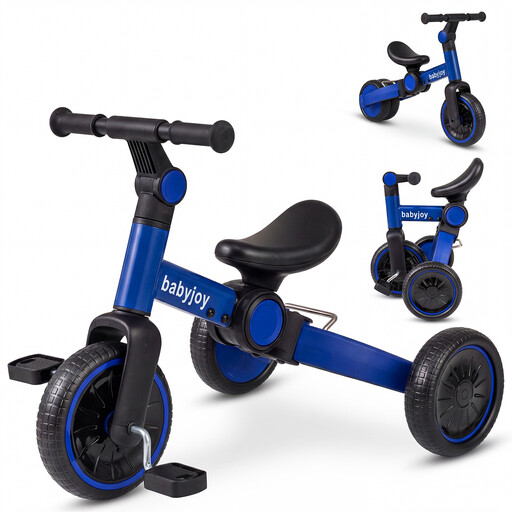
Why it stands out: Perfect for parents who want a single product for both the balance-learning phase and the transition to pedalling. Its versatility makes it a smart investment for ages 2-4.
It avoids the "deceptively convertible" trap by offering a simple and effective transformation. The pedals are tool-free and removable, allowing you to switch from balance bike to pedal bike mode in seconds without compromising stability.
5-in-1 versatility: transforms into a balance bike, tricycle, or bicycle. Smart design: removable pedals with on-board storage, adjustable seat and handlebars to grow with the child.
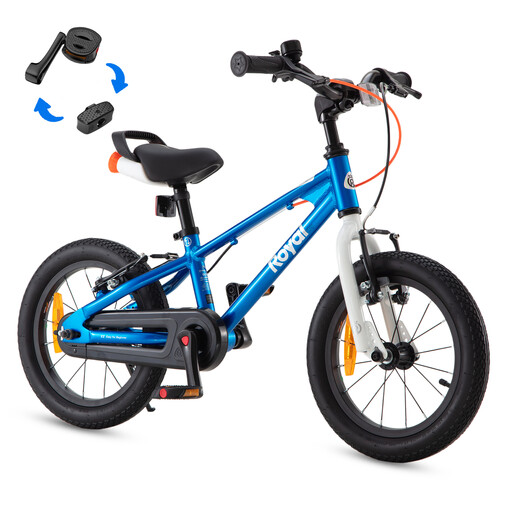
Why it stands out: For children who already have good balance (whether from a balance bike or not) and are ready to pedal. This model is designed to ease that crucial transition to independence.
It avoids the trap of a bike that's too heavy and unwieldy. Its ultra-lightweight aluminium frame (7.4 kg) is easy to master. The patented quick-release crank system allows for a tool-free switch from balance bike to pedal mode.
Ultra-lightweight aluminium frame: makes control and learning easier. Tool-free 2-in-1 transition: ideal for practising balance before adding pedals. Secure braking: dual hand brakes adapted for small hands.
We have compiled a complete, up-to-date list of products that meet our strict selection criteria and European safety regulations.
There's no fixed age; it all depends on the child. The main indicator is their mastery of balance. If they can glide for long distances with their feet up, take corners with ease, and stop by controlling their speed, they are probably ready for a pedal bike.
For a balance bike, the seat should be adjusted so that the child, when seated, can place both feet flat on the ground with their knees slightly bent. For a pedal bike, the child should be able to touch the ground with the tips of their toes while on the seat. This gives them the confidence they need to stop safely.
No, and in fact, they are increasingly discouraged. Stabilisers teach a child to pedal but not how to balance. They can even create bad habits (like leaning the wrong way in turns). The transition from a balance bike is much more natural and faster because balance—the most complex skill to acquire—has already been mastered.