
Livraison le jour même ou le lendemain

Qualité garantie

Débloquez vos offres de bienvenue: Livraison GRATUITE | Jusqu'à -80 % | 30 jours d'essai gratuits à JoyPlus
Téléchargez l'application
Choosing a kids’ bike isn’t just about picking a colour or a wheel size. From balance bikes and trikes to bikes with stabilisers and BMXs, the differences in weight, use and ergonomics can completely change a child’s experience.
Some marketing claims are also worth taking with a pinch of salt. A bike described as “grow-with-me” won’t necessarily suit every stage of development, while a model packed with features can quickly become difficult to handle. Here are the key factors to consider before buying a kids’ bike in the UK.
The suggested age gives you a rough idea, but it’s your child’s height and inside leg measurement that should really guide your choice. Two children of the same age may need different wheel sizes. A bike that’s too big makes starting and stopping less safe; one that’s too small quickly limits comfort and pedalling position.
For a kids’ bike aimed at 4 to 7 year olds, 14 or 16-inch wheels are common. However, it’s still essential to check the height ranges specified by the manufacturer. For a 20-inch bike, make sure the saddle and handlebars can be adjusted without forcing your child into an uncomfortable position.
A lightweight bike is easier to lift, steer and carry. But this focus on lightness shouldn’t come at the expense of braking, stability or frame strength. Conversely, a heavily equipped model — with a rack, basket, mudguards and other accessories — can end up much heavier than expected.
Weight matters especially for beginners. Compare it to your child’s own weight and ask yourself whether they’ll be able to pick the bike up on their own after a fall, without help from an adult.
A kids’ BMX with a 360° rotor and pegs is designed for tricks and suitable courses, not necessarily for everyday road riding. Similarly, a kids’ mountain bike with wide tyres and multiple gears can prove impractical for simple trips on the pavement.
The right choice therefore depends above all on the intended terrain: park, cycle path, gravel track, forest or just occasional rides in the garden.
The most common sizes generally break down as follows:
The saddle should allow your child to place their feet flat on the ground easily, especially during the learning phase. A low step-through frame makes getting on and off easier, particularly when your child is wearing clothes that aren’t ideal for cycling.
A kids’ bike can be fitted with a coaster brake, V-brake rim brakes or a mechanical disc brake. The system you choose should be suited to your child’s strength and independence.
The levers must be easily reachable from the grips. Before the first ride, check their travel, the cable return and the condition of the brake pads or shoes. For a model used on public roads, also check that the required safety equipment and visibility features are present.
In the UK, wearing a helmet is strongly recommended for all children when cycling, whether they are riding or being carried as a passenger. Choose a helmet with a CE mark that complies with EN 1078, and adjust the chin strap correctly.
A Hi-Ten steel frame offers robust construction, but it’s generally heavier than an aluminium frame. The latter makes handling, carrying and learning easier, as seen on certain RoyalBaby models.
Wide tyres improve stability and grip on uneven surfaces, but they can also increase weight and rolling resistance. Check their pressure regularly, along with the wheel tightness, pedals, chain and brakes. After a ride in the rain or on a muddy path, wipe down the bike and lubricate the chain following the manufacturer’s recommendations.

Why this choice suits this profile: This kids’ bike aimed at beginners is designed for 4 to 7 year olds measuring approximately 105 to 135 cm, with a single-speed drivetrain and 16-inch wheels.
The two braking systems, chain guard and handlebar protectors prevent the common oversights found on many learner models.
Low step-through frame, adjustable saddle, kickstand, basket and reported 90% pre-assembly.
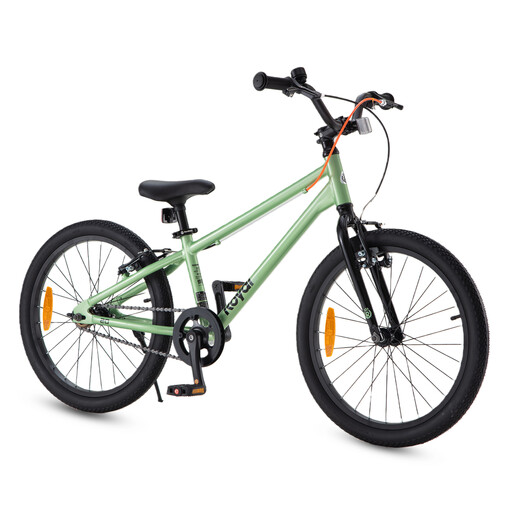
Why this choice suits this profile: Its aluminium frame and adjustable components make it suitable for children aged 6 to 10 who ride regularly.
The bike’s stated weight and aluminium frame reduce the risk of choosing a model that’s too heavy to control.
Frame reported at 0.9 kg, dual V-brakes, all-terrain tyres and adjustable saddle.
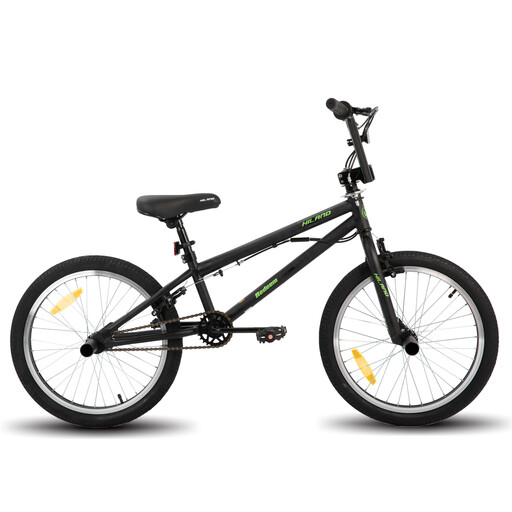
Why this choice suits this profile: This kids’ BMX is aimed at young riders who want to practise freestyle, jumps or riding on suitable terrain.
The product page clearly states it’s intended for freestyle and recommends checking the brakes, rotor and fixings before every ride.
360° rotor, four pegs, 20 × 2.35-inch tyres and dual U-brakes.
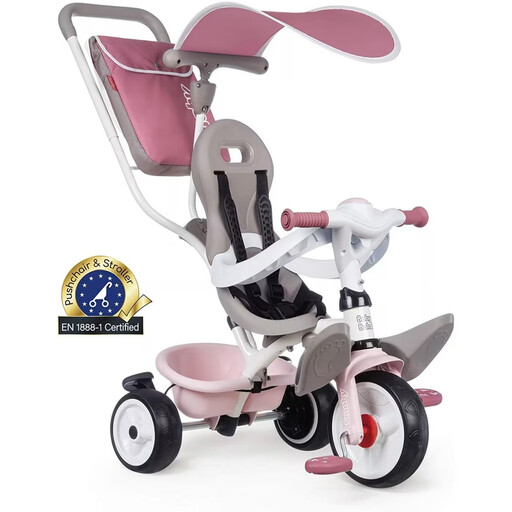
Why this choice suits this profile: This tricycle supports walks from 10 months, with steering controlled by an adult before gradually giving way to independence.
The harness, roll bar, footrest and parking brake meet the needs of a young child who isn’t yet pedalling independently.
Adjustable and removable parent handle, two-position seat, silent EVA wheels and adjustable canopy.
We’ve put together a comprehensive, real-time updated list of products that meet these demanding selection criteria and European safety regulations.
Start by measuring their height and inside leg. A 14 or 16-inch model may be suitable depending on their build and ability. Stabilisers can sometimes help with early attempts, but a balance bike or a grow-with-me model can also help your child work on their balance before moving on to pedalling.
Before every ride, check the brakes, tyre pressure, wheel tightness and chain condition. Clean the frame with a damp cloth, dry the metal parts and store the bike away from damp conditions. A service is needed if you notice any play, uneven braking or a damaged part.
A folding bike like the DAHON K9 is mainly designed for riders measuring 145 to 190 cm and weighing up to 105 kg. It isn’t a conventional kids’ bike, even though its 16-inch wheels might be confusing. Always check the height range and maximum authorised load before buying.