
Livraison le jour même ou le lendemain

Qualité garantie

Débloquez vos offres de bienvenue: Livraison GRATUITE | Jusqu'à -80 % | 30 jours d'essai gratuits à JoyPlus
Téléchargez l'application
Choosing a child's very first bike is a milestone. But with a jungle of available models, it's not always easy to find your way. The balance bike, also known as a pedal-less bike, has quickly established itself as the ideal solution for introducing young ones to the joys of balance and coordination.
This guide is here to give you everything you need to choose the perfect model for your child, whether for a birthday, Christmas, or simply for rides out in the sun. We'll break down the essential points to check before you buy and present our top picks to help you make the right choice.
To ensure you make the right choice, here are the points to examine closely.
This is the number-one criterion: the balance bike must be perfectly suited to your child's size.
Pro Tip: Measure your child's inseam height (from the floor to the groin). The golden rule: the minimum seat height of the balance bike should be equal to or slightly less than this measurement.
The market is divided into two main categories.
Safety is non-negotiable. Check the following points:
To move from theory to practice, here is our selection of models that perfectly illustrate the different options on the market.

Why this model stands out: This balance bike represents the very essence of a balance bike. Its simple, lightweight design is entirely dedicated to learning stability. It's ideal for children who are ready to focus on balance before moving on to pedals.
Advantages:
Who is it for? Parents looking for a simple, effective, and durable first kid's bike that gets straight to the point: learning balance.
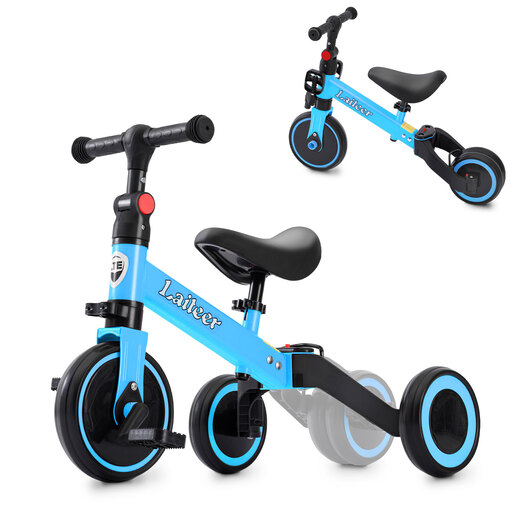
Why this model stands out: This is the ultimate all-in-one solution. This convertible balance bike starts its life as a stable tricycle for toddlers, then transforms into a balance bike when the child is ready to work on their balance. The removable pedals allow for a seamless transition to a classic bike.
Advantages:
Who is it for? Families looking for a smart, versatile product that can adapt to their child's development, from the stability of a tricycle to the balance of a bike.

Why this model stands out: Although it's not a balance bike, this kids' electric motorcycle is an exciting alternative for those who love the thrill of their first ride. With its three wheels, it offers maximum stability while introducing the child to steering and managing acceleration (very gentle, of course).
Advantages:
Who is it for? For those looking for an out-of-the-ordinary child's gift that's all about fun and the first thrill of speed.
Every child is unique. If our selection doesn't exactly match what you're looking for, or if you want to explore other types of vehicles and gift ideas, feel free to browse our dedicated category.
? Discover our Toys for 5-Year-Old Boys category for more options.
Most children can start around 18 months to 2 years old, as soon as they can walk confidently. The only requirement is that their feet must be able to touch the ground flat while they are seated on the saddle.
Yes, and it's non-negotiable. Wearing a helmet is essential from the very first ride. Even at low speeds, a fall can happen quickly. Making this a habit from a young age is the best thing you can do for their safety.
The two approaches are different. Training wheels let a child learn to pedal without worrying about balance. A balance bike does the opposite. Experience shows that learning balance first, thanks to the balance bike, makes the transition to a pedal bike much faster and more natural. As a result, the training wheels stage often becomes unnecessary.